

Landlord Vs Investment Insurance: Choosing the Right Coverage for Your Portfolio
Owning rental properties in Connecticut requires the right insurance strategy, and the difference between landlord vs investment insurance can significantly impact your financial protection.
At Evaristo Insurance, we help property owners understand which coverage actually fits their portfolio. The choice isn’t one-size-fits-all-it depends on your specific properties, business structure, and risk exposure.
What Landlord Insurance Actually Covers
The Three Core Layers of Protection
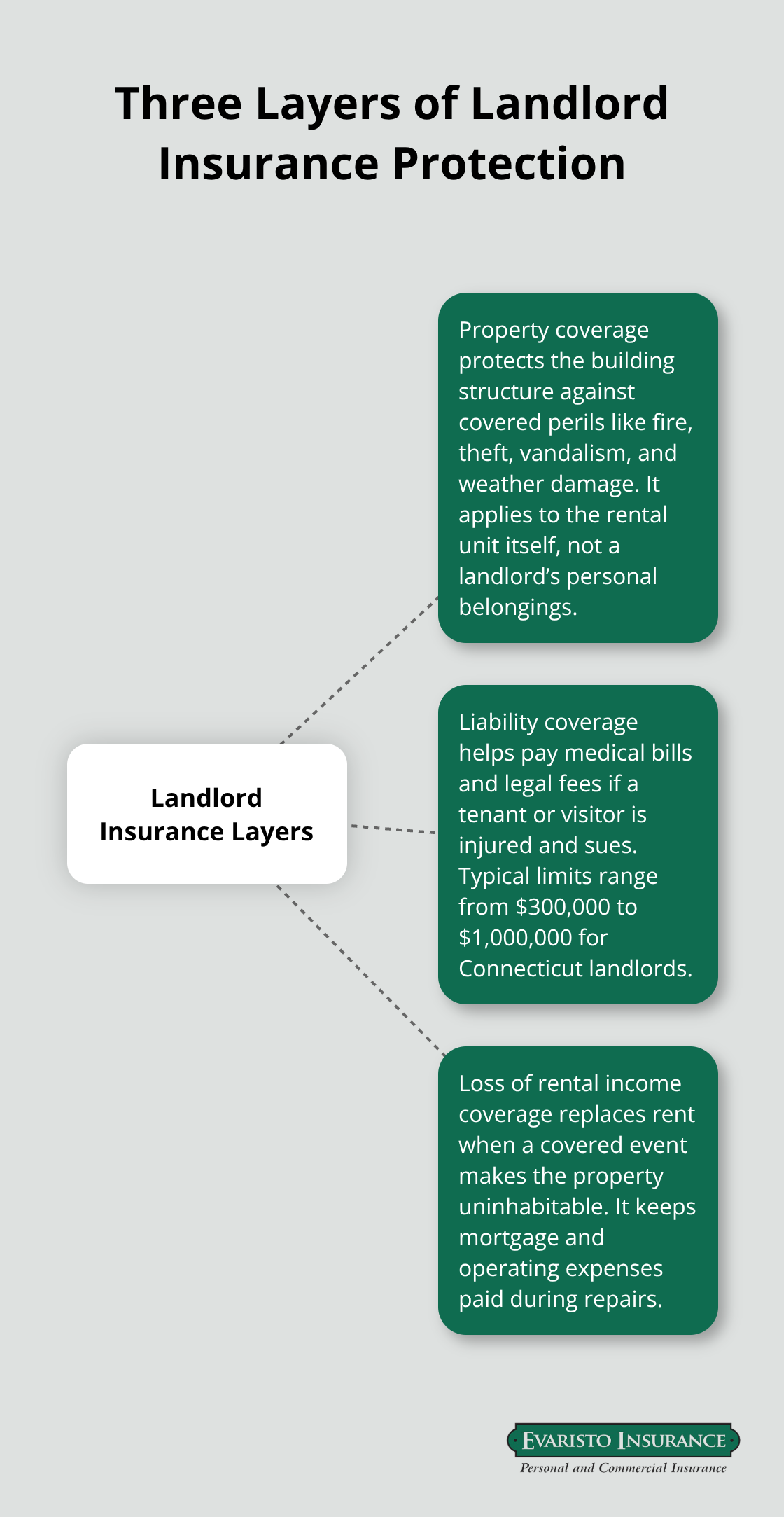
Landlord insurance in Connecticut protects your rental property investment with three core layers of coverage that standard homeowners policies simply don’t provide. The building structure itself receives protection against fire, theft, vandalism, and weather damage, but this protection applies only to the rental unit itself-not your personal belongings inside it. If a tenant causes $15,000 in damage to walls, flooring, or fixtures, your landlord policy covers the repairs.
Liability Coverage Protects You from Tenant and Visitor Injuries
Liability coverage is where landlord insurance becomes essential for Connecticut property owners. If a tenant or visitor suffers an injury on your property and sues, this coverage handles medical bills and legal fees up to your policy limits, typically ranging from $300,000 to $1,000,000. Connecticut courts have awarded significant liability judgments in recent years, making this protection non-negotiable.
Loss of Rental Income Keeps Your Cash Flow Stable
Loss of rental income coverage addresses the financial gap when your property becomes uninhabitable due to a covered event like fire or storm damage. If your property is damaged and takes three months to repair, this coverage replaces the rent you would have collected, keeping your mortgage and expenses paid during the downtime.
What Landlord Insurance Excludes
Most Connecticut landlords miss critical exclusions in their policies. Landlord insurance excludes damage caused by tenant neglect or intentional acts, flood damage, and maintenance failures. You’ll need separate flood insurance if your property sits in a flood zone, and you should document your property’s condition before tenants move in to dispute damage claims later.
Deductibles, Discounts, and Coverage Limits Matter
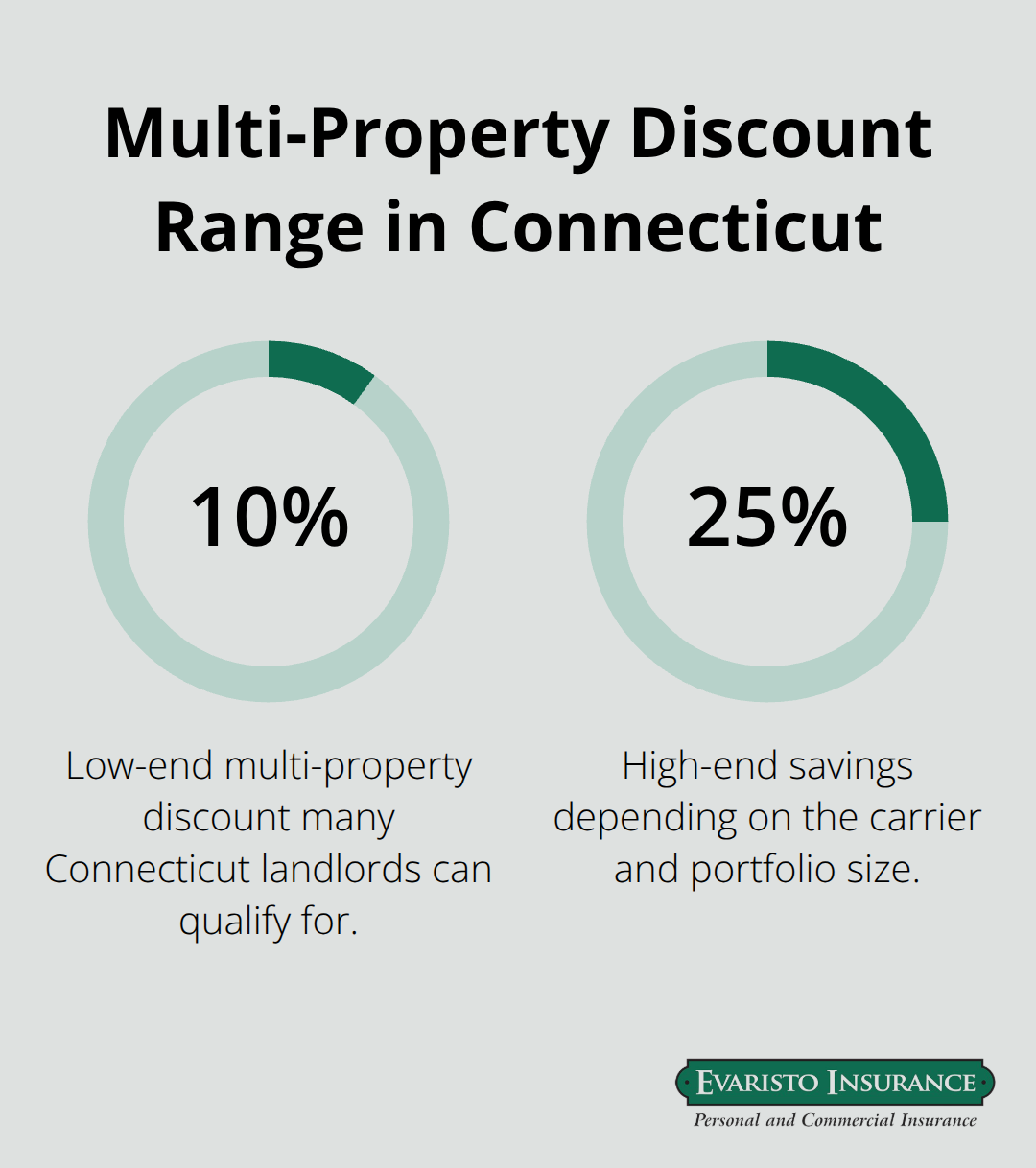
Deductibles typically range from $500 to $2,500, and selecting a higher deductible directly lowers your premium. Connecticut landlords with multiple properties should explore multi-property discounts, which can reduce costs by 10% to 25% depending on your carrier. The coverage limits matter enormously-underinsuring your building means you absorb the loss for damage exceeding your policy limit, a costly mistake that many new landlords make by guessing at replacement costs rather than obtaining professional appraisals.
Understanding these coverage layers sets the foundation for your decision. Investment property insurance, however, operates under a different framework entirely and offers options that landlord policies simply cannot match.
How Investment Property Insurance Expands Your Protection
Investment Property Insurance Operates on Different Terms
Investment property insurance functions on fundamentally different terms than landlord coverage, and Connecticut property owners managing multiple assets or mixed-use properties must understand this distinction immediately. Landlord insurance locks you into a specific structure designed for single residential rentals, while investment property insurance accommodates the complexity that comes with diversified portfolios. If you own a mixed-use building with retail space on the ground floor and apartments above, or you’re scaling from single-family rentals into small commercial properties, landlord insurance won’t cover your actual exposure. Investment property policies account for variable occupancy rates, different building classes, and income streams that landlord policies exclude entirely. The coverage adjusts to your portfolio’s composition rather than forcing your portfolio to fit into a one-size-fits-all template. Connecticut property investors who’ve expanded beyond their first rental unit frequently discover that their original landlord policy creates coverage gaps they didn’t anticipate until a claim reveals the limitations.
Customizable Coverage Limits Match Your Actual Assets
Investment property insurance allows you to adjust coverage limits based on each property’s actual replacement cost rather than applying a single limit across dissimilar assets. A commercial office building requires different liability protection than a duplex, and investment policies reflect this reality through customizable coverage tiers. You can add business liability coverage that extends to your management operations, protect against loss of rent at higher limits than standard landlord policies offer, and include coverage for property management equipment or leasehold improvements. Connecticut investors managing properties in different towns or with varying tenant profiles benefit from the ability to tailor individual property schedules within a single policy framework.
Higher Income Protection for Commercial Properties
Investment property insurance carriers typically offer higher coverage limits for loss of rental income, recognizing that commercial or mixed-use properties generate more substantial revenue streams than single residential units. If your commercial space generates substantial monthly revenue and becomes unusable for an extended period, a standard landlord policy’s loss of income protection often proves insufficient, while investment policies can match your actual monthly income exposure. This alignment prevents the financial crisis that occurs when your policy limit falls short of your actual lost revenue.
Streamlined Administration for Multiple Properties
Managing multiple properties under separate landlord policies creates unnecessary complexity, whereas a consolidated investment property portfolio policy simplifies renewals, adjustments, and claims management. This approach aligns your insurance structure with how you actually operate your business. As your portfolio grows and your property types diversify, the question shifts from whether you need investment property insurance to how you structure that coverage to match your specific holdings and risk profile.
Which Coverage Matches Your Connecticut Property Portfolio
Assess Your Current Holdings and Future Growth
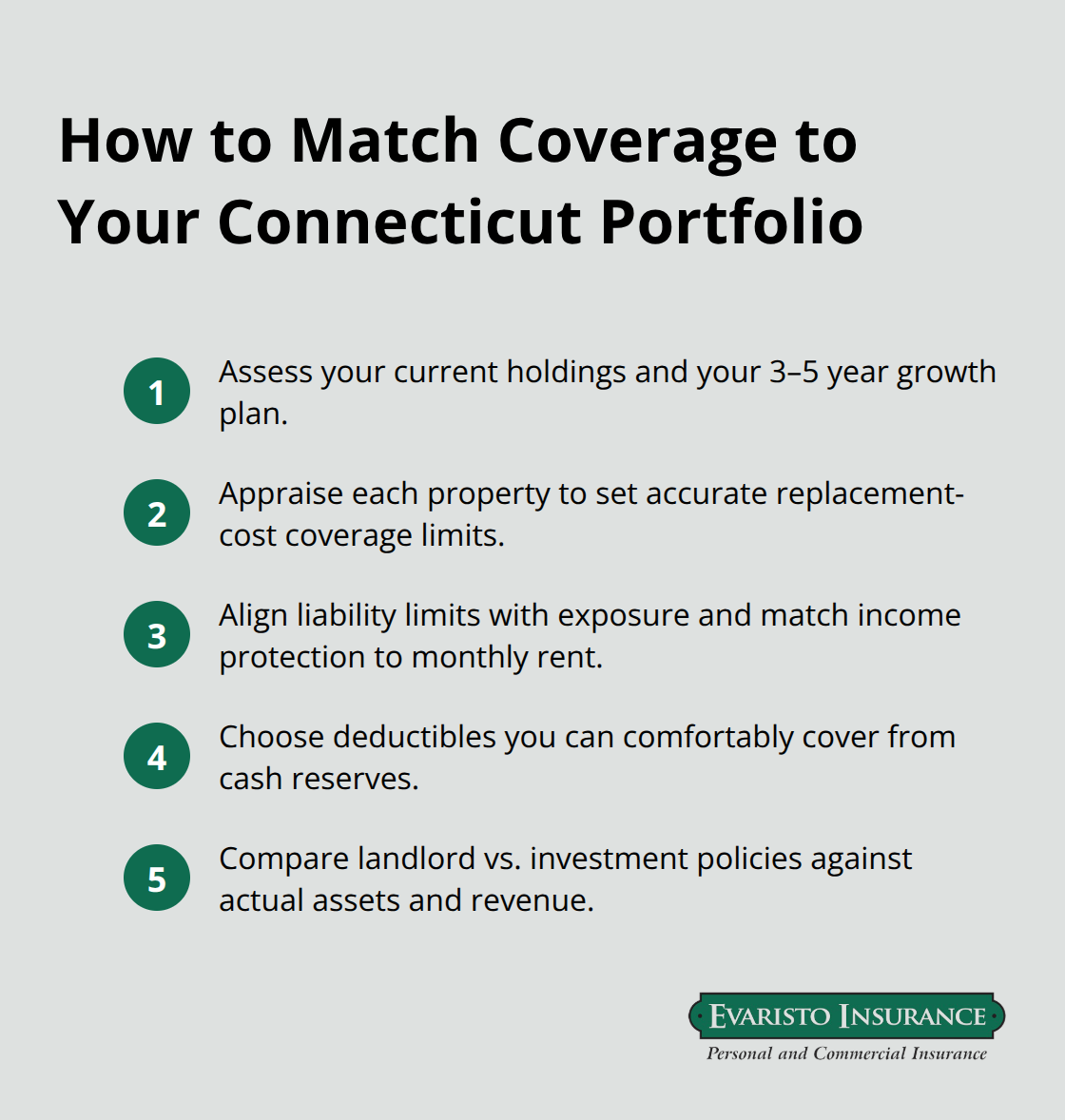
Connecticut property owners face a critical decision that directly impacts their financial exposure, and the answer depends entirely on what you actually own and how you operate your business. Start with an honest assessment of your portfolio’s current composition and realistic growth plans for the next three to five years. If you own a single-family rental in Stamford and plan to keep it that way, landlord insurance likely covers your needs adequately. However, if you own two properties, plan to acquire a third, or already manage mixed-use buildings, investment property insurance becomes the practical choice because it accommodates portfolio evolution without forcing policy changes every time your business expands.
Connecticut property investors who start with landlord insurance and later add a commercial space or second residential property often face coverage gaps during the transition period, creating unnecessary risk exposure. The real question isn’t which policy sounds better in theory but which one actually covers the properties you’ll own twelve months from now.
Calculate Coverage Limits Based on Actual Property Values
Coverage limits and deductibles require specific calculation rather than guesswork, and this is where most Connecticut landlords make costly mistakes. Obtain professional property appraisals for each building you own rather than estimating replacement costs, because underinsurance means you absorb losses exceeding your policy limit. Connecticut commercial properties with inadequate coverage create gaps that come directly from your pocket when fire or major damage occurs.
Match Liability and Income Protection to Your Exposure
Liability coverage limits should reflect your actual exposure, and Connecticut courts have awarded significant judgments in premises liability cases, making insufficient liability coverage dangerously low for most rental properties. Loss of rental income coverage limits must match your actual monthly revenue, not an estimate. If your property generates $4,500 monthly and remains uninhabitable for six months due to covered damage, you need at least $27,000 in income protection coverage.
Choose Deductibles That Align With Your Cash Reserves
Deductibles directly affect your premium costs, and Connecticut landlords often choose higher deductibles to save on premiums, but this strategy backfires when a repair claim falls below your deductible and you absorb the full cost. Higher deductibles make sense only if you maintain sufficient cash reserves to cover them without disrupting your business operations.
Compare Policies Against Your Actual Properties and Revenue
When comparing investment property policies against landlord policies, the premium difference often varies depending on property type and location, but this cost difference disappears entirely if a landlord policy fails to cover a significant loss. Connecticut property owners managing portfolios should request quotes for both policy types and compare actual coverage provided against actual property values and revenue streams rather than focusing solely on premium cost. An independent agency like Evaristo Insurance can compare multiple carriers and help you structure coverage that matches your specific portfolio composition.
Final Thoughts
The landlord vs investment insurance decision hinges on matching your coverage to your actual portfolio composition and business operations. Landlord insurance works well for Connecticut property owners managing a single residential rental with straightforward tenant income, but it creates coverage gaps the moment your portfolio expands or diversifies into mixed-use or commercial properties. Investment property insurance eliminates those gaps by adapting to your specific holdings, adjusting liability limits to your actual exposure, and protecting income streams that vary across different property types.
Calculate your actual property values, document your monthly revenue from each property, and assess your realistic growth plans for the next few years-this information determines whether landlord insurance suffices or whether investment property insurance better protects your financial interests. Connecticut property owners frequently underestimate their coverage needs by guessing at replacement costs or applying single-property limits to multi-property portfolios, creating unnecessary risk exposure that emerges only when a claim occurs. An independent agency can compare multiple carriers and help you structure coverage that actually matches your situation.
Contact Evaristo Insurance to discuss your coverage needs with someone who understands Connecticut’s rental market and can help you avoid the costly mistakes that come from mismatched policies.
Disclaimer: This blog post is for general informational purposes only and does not represent actual coverage, policy terms, or legal requirements. Insurance details vary by individual and jurisdiction. Please consult a licensed insurance professional for advice specific to your situation.

