

Landlord Coverage CT: Comprehensive Protection for Your Rental Properties
Owning rental properties in Connecticut comes with unique insurance needs that standard homeowners policies simply don’t address. Many landlords discover too late that their coverage leaves critical gaps when tenant disputes or property damage occur.
Landlord coverage CT protects your investment by covering liability claims, property damage, and lost rental income-protections you won’t find in a basic homeowners policy. We at Evaristo Insurance help Connecticut property owners build policies that match their actual exposure and keep their rental business secure.
What Landlord Insurance Actually Covers
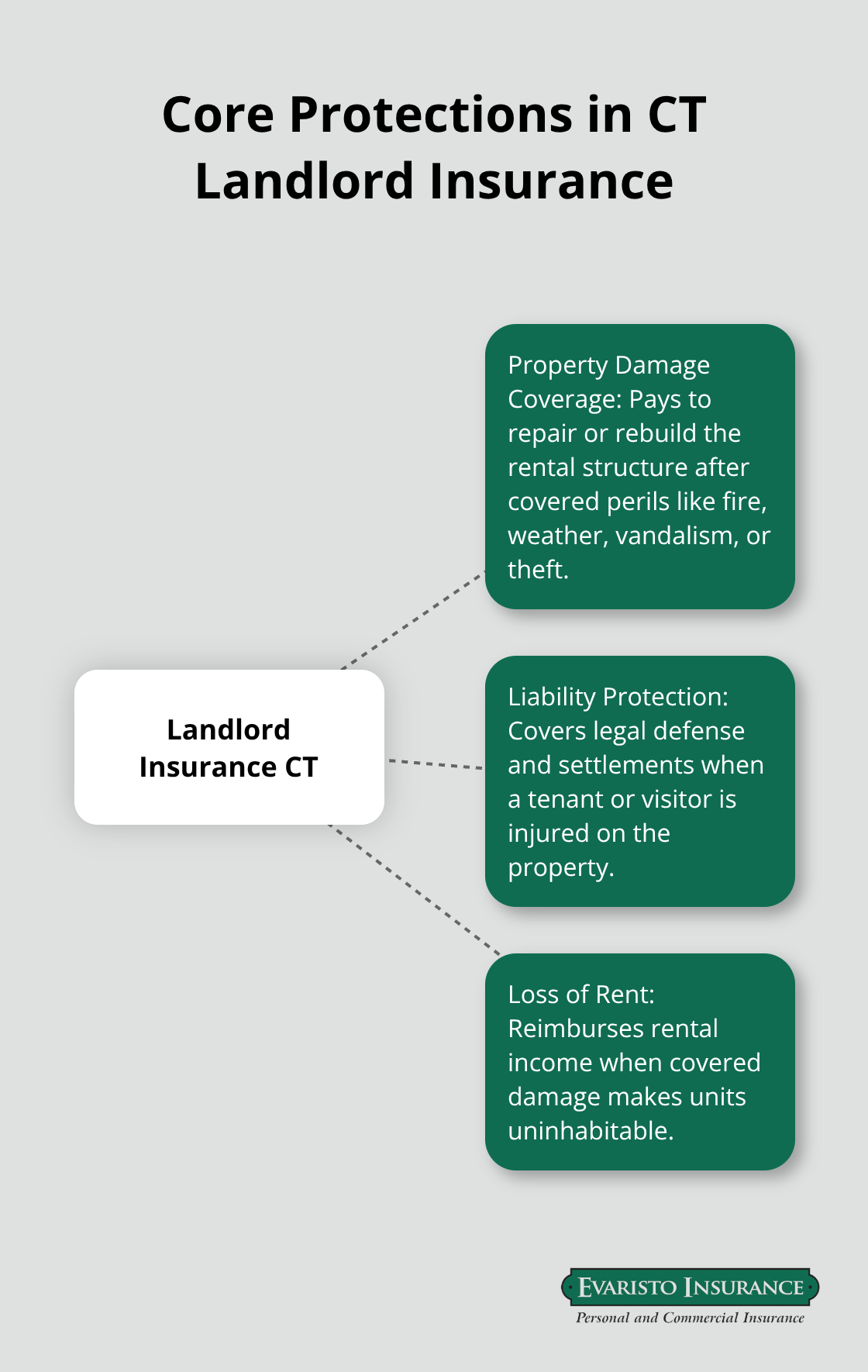
Landlord insurance in Connecticut protects three critical areas that homeowners policies ignore: your building structure, your liability exposure, and your lost income when units sit vacant. Property damage coverage pays for repairs to the rental structure itself when fire, weather, vandalism, or theft strikes-Connecticut experiences an average of 45 tornadoes per year according to NOAA data, making wind and hail damage a real concern for landlords. Liability coverage activates when a tenant or visitor gets injured on your property and sues for medical bills or lost wages. Connecticut premises liability law holds property owners responsible for maintaining safe conditions, which means you face liability for slip-and-fall accidents, dog bites by tenant pets, or injuries from faulty railings. Loss of rent coverage reimburses you when tenants cannot occupy units due to covered damage, meaning you don’t lose income while waiting for repairs to finish.
The Damage Coverage That Homeowners Policies Skip
Standard homeowners policies explicitly exclude rental activities because insurers view tenant-occupied properties as higher risk. Your homeowners policy will deny a claim if a tenant’s guest slips on ice and files a lawsuit. It will refuse to pay if fire damages the building and forces tenants out for three months. Connecticut landlords who discovered these gaps the hard way faced expensive lessons-some paid $40,000 to $75,000 in uninsured losses from water damage or liability judgments. Landlord policies cover the structure, attached garages, storage buildings, and fixtures you install, plus personal property you own (like appliances or furniture in common areas). The coverage applies whether you rent a single-family home or manage a multi-unit building.
Liability Protection That Matches Your Actual Exposure
Liability coverage under landlord insurance pays legal defense costs and settlement amounts when someone gets injured at your rental property. Connecticut premises liability law holds property owners responsible for maintaining safe conditions, which means you face liability for slip-and-fall accidents, dog bites by tenant pets, or injuries from faulty railings. A single lawsuit costs $5,000 to $15,000 just in legal fees before any settlement gets paid. Most landlord policies offer $100,000 to $300,000 in liability limits, though Connecticut landlords with multiple units or properties in high-traffic areas should consider $500,000 or higher. The policy also covers damage you accidentally cause to a tenant’s belongings or injuries to third parties on the property, protecting your personal assets from judgment claims.
Income Protection When Tenants Cannot Occupy Units
Loss of rent coverage pays your monthly mortgage, taxes, and operating costs when a covered event forces tenants out temporarily. If a pipe bursts and requires four weeks of repairs, this coverage reimburses the rent you’d normally collect-typically 12 to 24 months of coverage depending on your policy. Connecticut landlords in older buildings (pre-1980s) face higher water damage risk, making this coverage especially valuable since water damage claims rank among the most common rental property losses. The coverage activates only for specific perils listed in your policy, so you need to verify what triggers payment. Some policies cover loss of rent from fire, theft, or weather damage but exclude tenant non-payment or lease termination, so the specific language matters when you review options.
What Comes Next in Your Coverage Strategy
Understanding what landlord insurance covers is only half the battle. The real challenge lies in recognizing why your standard homeowners policy fails to protect your rental investment-and what gaps still remain even with landlord coverage in place.
Why Standard Homeowners Insurance Won’t Protect Your Rental
Your Policy Explicitly Excludes Rental Activities
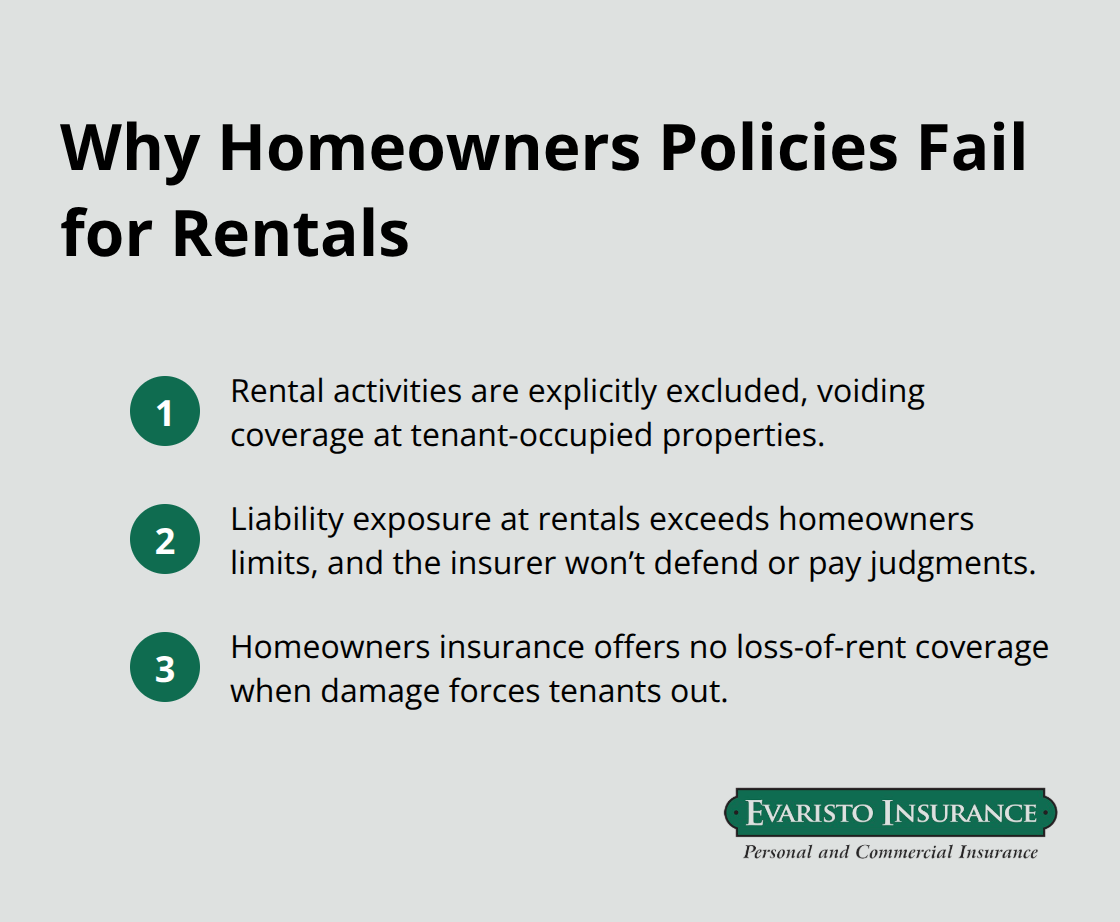
Your homeowners insurance policy contains explicit language that voids coverage the moment you rent out your property. Insurance companies classify tenant-occupied buildings as commercial ventures, not residential occupancies, which means your standard policy becomes null and void for rental activities. If a tenant’s guest slips on your stairs and sues for $50,000 in medical bills, your homeowners insurer will reject the claim outright because the injury occurred at a rental property.
Connecticut landlords who attempted to file claims after tenant-related incidents discovered this rejection happens regardless of whether the damage or injury was foreseeable-the policy simply doesn’t apply to rental situations. The gap isn’t a technicality or fine print most people miss; it’s the fundamental boundary between homeowners coverage and commercial property protection. Your homeowners policy also refuses to pay for loss of rent income, meaning if fire forces tenants out for two months while repairs finish, you absorb the entire income loss yourself.
Liability Exposure Far Exceeds Homeowners Coverage Limits
The liability exposure at a rental property far exceeds what homeowners policies acknowledge. A tenant or their visitor can sue you for injuries from faulty stairs, inadequate lighting, pest infestations, or mold exposure. Connecticut premises liability law places the burden on property owners to maintain safe conditions, which means you face significant legal risk.
Homeowners policies limit liability to owner-occupied residences, which means they won’t defend you or pay judgments when someone gets injured at your rental. A single premises liability lawsuit costs $8,000 to $20,000 in legal defense alone, with settlements often reaching $100,000 or more depending on injury severity. Without landlord coverage, you’re personally liable for these costs and any judgment awarded against you.
Income Loss Leaves You Vulnerable
Connecticut property owners managing single-family rentals face the same exclusion as those running multi-unit buildings, so property size doesn’t matter here. Your homeowners policy won’t cover lost rent when damage forces tenants out, leaving you to cover your mortgage, taxes, and operating costs from your own pocket. This gap can cost you thousands of dollars per month while repairs proceed.
Many landlords attempt to stretch their homeowners policies to cover rental situations, only to face complete coverage denial when claims arise. The solution isn’t hoping your policy covers rental activities-it’s securing dedicated landlord insurance that acknowledges the actual risks you face as a property owner. Understanding these gaps sets the stage for recognizing what landlord coverage actually provides and how to select the right policy limits for your specific situation.
How to Choose the Right Landlord Insurance Policy in Connecticut
Assess Your Property’s True Replacement Cost
Start by calculating exactly what your rental property is worth and what it would cost to replace if destroyed completely. Most Connecticut landlords underestimate replacement costs, according to insurance industry data, which means they purchase insufficient coverage limits. Walk through your property and list the structure itself (foundation, walls, roof, flooring), permanent fixtures (built-in appliances, HVAC systems, cabinets), and common area items you own (furniture, tools, equipment).
Get a contractor’s estimate for full replacement, not just current market value. A 1,500-square-foot home in Connecticut costs $180 to $220 per square foot to rebuild, which translates to $270,000 to $330,000 depending on materials and local labor rates. This number becomes your baseline for property damage coverage limits.
Identify Your Specific Risk Exposures
Next, identify your specific risk exposures to determine whether you need basic coverage or enhanced protection. Ask yourself: Are you renting a single-family home or managing multiple units? Is the building older than 1980, which increases water damage risk significantly? Do you allow pets, which raises liability exposure? Are there previous claims or code violations on the property?
Connecticut landlords with properties in urban areas or near commercial zones face higher liability risk than suburban single-family rental owners, so your coverage should reflect your actual exposure, not a one-size-fits-all approach. This assessment directly impacts your liability limits and the specific protections you need.
Compare Coverage Limits Across Multiple Policies
Compare landlord insurance policies side by side on three specific dimensions: property damage limits, liability limits, and loss of rent duration. Most Connecticut landlords should carry at least $300,000 in liability coverage, though owners with multiple units or properties in dense neighborhoods should consider $500,000 or higher (a single premises liability judgment can easily exceed $100,000 once medical costs and attorney fees accumulate).
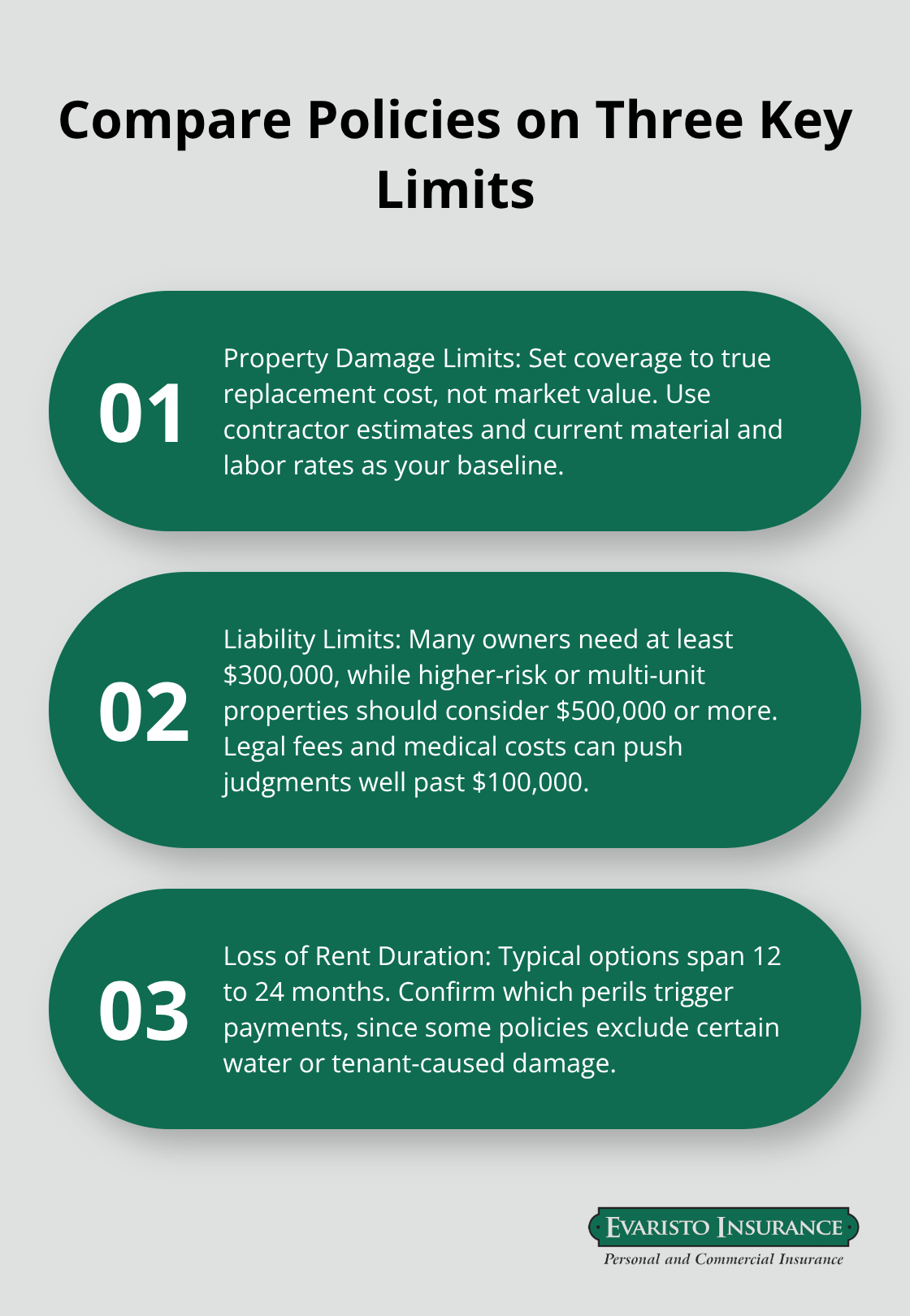
Loss of rent coverage typically ranges from 12 to 24 months of protection. Verify the exact trigger events your policy covers, since fire and weather damage are standard, but some policies exclude water damage or tenant-caused damage. Request quotes from multiple carriers rather than accepting the first offer, since landlord insurance rates vary significantly based on property condition, tenant screening practices, and claims history.
Work with a Local Insurance Agent
A local insurance agent who understands Connecticut’s rental market can explain why specific coverage limits make sense for your situation. An agent can also identify bundling discounts if you carry auto or home insurance with the same carrier. Evaristo Insurance, a second-generation family-owned agency serving Connecticut since 1989, compares multiple top carriers to deliver landlord policies tailored to your actual property risks and competitive pricing. Local offices in Ellington and West Hartford provide hands-on support when claims arise, which matters far more than grabbing the cheapest quote available.
Final Thoughts
Landlord coverage CT protects your rental investment through three essential protections that standard homeowners policies refuse to provide. Property damage coverage pays for structural repairs when fire, weather, or theft strikes your building. Liability protection defends you when tenants or visitors get injured on your property and file lawsuits, while loss of rent coverage reimburses your mortgage and operating costs when damage forces tenants out temporarily.
Connecticut landlords who skip dedicated landlord insurance face substantial financial consequences when claims arise. A single premises liability judgment exceeds $100,000 once medical costs and legal fees accumulate, and water damage claims commonly cost $40,000 to $75,000 when uninsured. Lost rent from fire or weather damage drains thousands of dollars monthly while repairs proceed, making the gap between your homeowners policy and your actual rental property needs impossible to ignore.
Contact Evaristo Insurance today to discuss your rental property protection and receive quotes from carriers that understand Connecticut’s rental market. Our local offices in Ellington and West Hartford provide hands-on support when claims arise, which matters far more than selecting the cheapest quote available. We have served Connecticut property owners since 1989, comparing multiple top carriers to deliver landlord policies tailored to your actual risks and competitive pricing.
Disclaimer: This blog post is for general informational purposes only and does not represent actual coverage, policy terms, or legal requirements. Insurance details vary by individual and jurisdiction. Please consult a licensed insurance professional for advice specific to your situation.

