
Small Business Liability Plan: Affordable Protections for Connecticut Entrepreneurs
Running a small business in Connecticut means facing real liability risks every day. Without a solid small business liability plan, one accident or lawsuit could drain your savings and threaten your operation.
We at Evaristo Insurance have helped hundreds of Connecticut entrepreneurs protect what they’ve built with affordable, practical coverage. This guide walks you through the protection options available and how to pick the right plan for your specific business.
Why Liability Risks Threaten Connecticut Small Businesses
Connecticut’s Small Business Landscape and Exposure
Connecticut small businesses employ nearly half the state’s workforce, according to the U.S. Small Business Administration. Yet most operate without understanding the specific liability exposures that could wipe out years of profit in a single incident. A customer slips on your restaurant floor. A contractor’s work causes property damage at a client’s home.
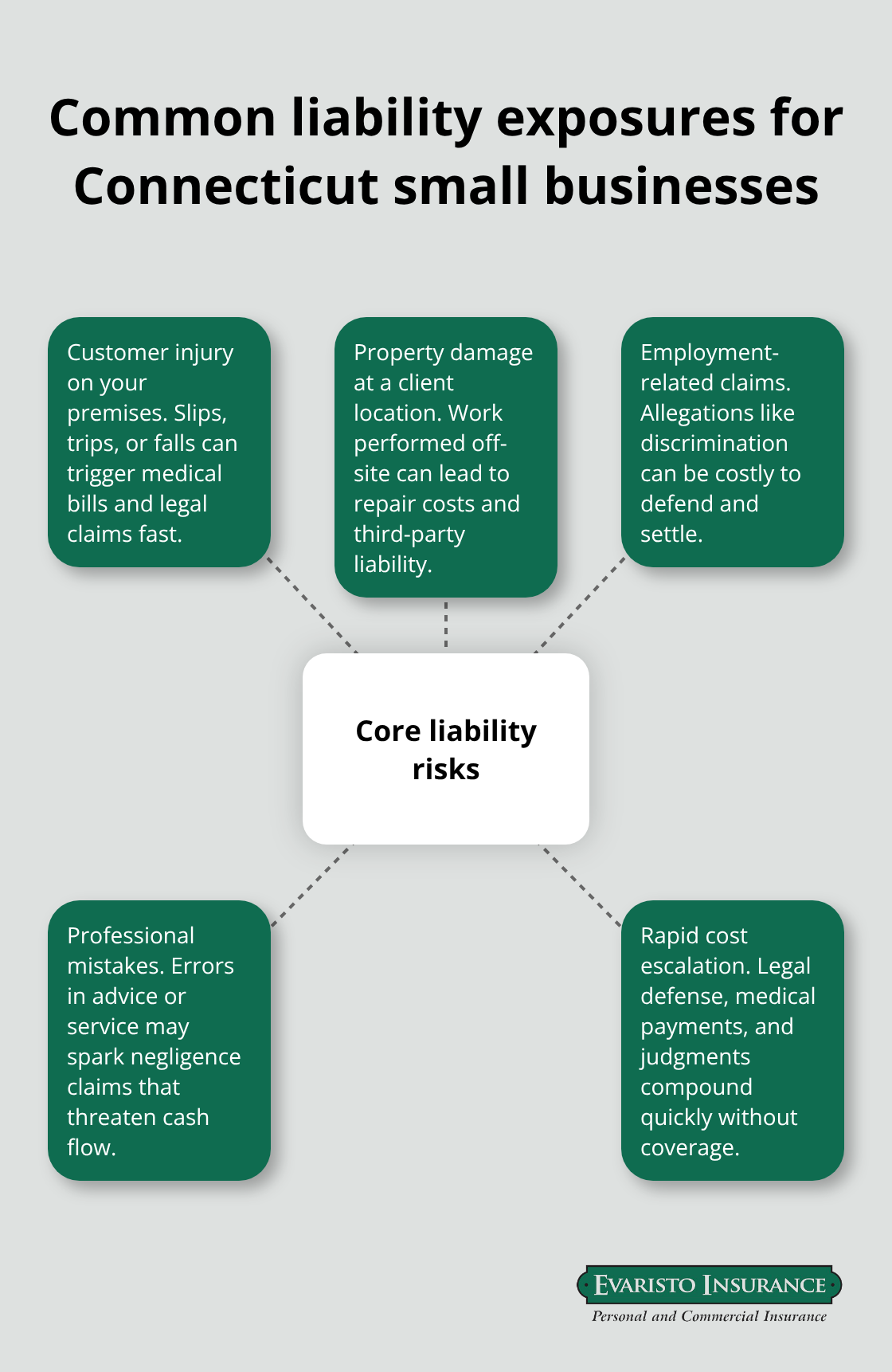
An employee claims discrimination. These aren’t hypothetical scenarios-they happen regularly across Connecticut, and they cost money fast.
Medical bills, legal defense, settlements, and court judgments add up quickly. A premises liability claim can easily exceed $50,000. Professional negligence claims in service industries often run $75,000 to $150,000 or higher. Without liability coverage, you personally absorb these costs from your business bank account and personal assets.
Connecticut’s Legal Requirements and Coverage Gaps
Connecticut law requires workers’ compensation insurance for any business with employees, with limited exceptions for sole proprietors and certain LLC structures according to the Connecticut Workers’ Compensation Board. But workers’ comp only covers employee injuries-it does not protect you from third-party lawsuits, product defects, or professional errors. That gap leaves your business dangerously exposed.
Connecticut’s regulatory environment and lawsuit climate make liability coverage non-negotiable. Service-based businesses like contractors, plumbers, electricians, and consultants face particularly high exposure because their work directly impacts client property or safety. A single faulty installation or missed deadline triggers a professional negligence claim that damages your reputation and finances simultaneously.
Industry-Specific Risks Across Connecticut
Retail and food service businesses encounter premises liability risks daily. Construction and home service companies need commercial auto coverage because personal auto policies explicitly exclude business use-meaning you have zero protection if a work vehicle causes an accident. Real estate agents, accountants, and consultants need professional liability insurance to defend against claims of errors or omissions in their advice.
Cyber liability is no longer optional either. Connecticut businesses that handle customer data face breach notification costs, regulatory fines, and legal defense expenses if a cyberattack compromises sensitive information. The average data breach costs small businesses between $200,000 and $400,000 according to industry data.
Building Your Foundation with Bundled Coverage
A Business Owners Policy combines general liability, property, and business interruption into one package. This approach costs far less than purchasing these coverages separately-many providers advertise discounts up to 10% when you bundle with workers’ compensation. Starting with a solid liability foundation protects your livelihood and positions you to focus on growth instead of worrying about financial catastrophe. Understanding which coverage types match your specific business operations helps you move forward with confidence.
What Liability Coverage Do You Actually Need
General Liability: Your Foundation Coverage
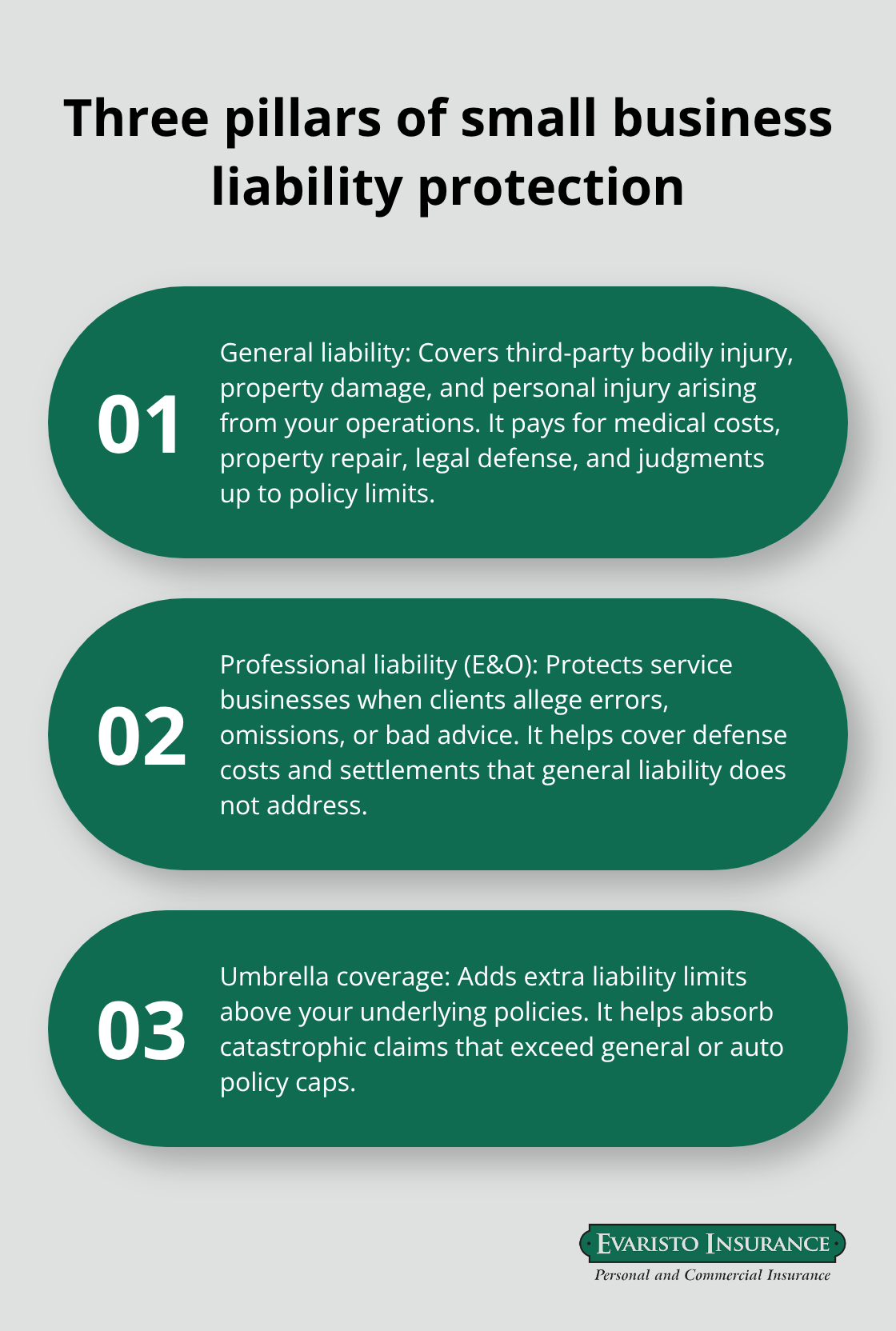
General liability insurance forms the foundation of any Connecticut small business protection plan, and it should be your starting point regardless of industry. This coverage protects you when a third party claims bodily injury, property damage, or personal injury caused by your business operations. A customer trips in your retail store and breaks their arm. Your contractor damages a client’s roof during installation. Your advertising accidentally infringes on someone’s trademark. General liability covers medical expenses, property repair costs, legal defense, and court judgments up to your policy limits.
Most Connecticut businesses operate with limits between $300,000 and $1,000,000 per occurrence, depending on their size and risk exposure. However, general liability has clear boundaries-it does not cover professional mistakes, product defects, or employee-related claims.
Professional Liability for Service-Based Businesses
Service-based businesses like accountants, consultants, real estate agents, and contractors absolutely need professional liability insurance, sometimes called errors and omissions coverage. This protects you when a client claims you made an error, gave bad advice, or failed to deliver promised results. A consultant recommends a flawed business strategy that costs a client $200,000 in losses. An accountant misses a tax deduction that triggers an audit. A real estate agent fails to disclose a property defect. Without professional liability, you pay these defense costs and settlements personally.
Connecticut service professionals should carry limits between $500,000 and $2,000,000 depending on their client base and contract requirements. This coverage fills the gap that general liability leaves open.
Product Liability and Umbrella Protection
Product liability protects manufacturers, wholesalers, and retailers when a product causes injury or property damage-a defective appliance causes a fire, contaminated food makes customers sick, or a toy causes choking. This coverage is non-negotiable if you manufacture or sell physical products. Umbrella coverage sits above your general and auto policies, providing additional liability limits when claims exceed your underlying policy caps.
Connecticut entrepreneurs who operate higher-risk businesses or work with significant client assets should seriously consider umbrella protection as essential, not optional. The combination of general liability plus professional liability plus umbrella creates comprehensive protection that scales with your business growth and risk exposure.
Selecting the Right Limits for Your Operation
Choosing appropriate coverage limits depends on your industry, client base, and asset exposure. A sole proprietor operating a low-risk service business may operate safely with $300,000 in general liability limits, while a contractor working on high-value residential projects needs $1,000,000 or more. Your lease agreement or client contracts often specify minimum coverage requirements, so review these documents before selecting limits. Underestimating your exposure leaves you personally liable for claims that exceed your policy caps. Overestimating creates unnecessary premium costs that drain your operating budget.
An independent agent can review your specific operations and recommend limits that match your actual risk profile. This personalized approach prevents both coverage gaps and wasted spending, allowing you to invest premium dollars where they matter most for your Connecticut business.
Matching Coverage to Your Actual Business Operations
Assess Your Daily Operations and Risk Exposure
Picking the right liability plan starts with honest assessment of how your business actually operates, not how you wish it operated. A plumbing contractor who occasionally installs water heaters faces different risks than one who regularly works on commercial HVAC systems. A freelance graphic designer working from home has minimal exposure compared to a design agency with ten employees and a physical office. The difference matters because it directly impacts which coverages you need and what limits protect your assets adequately.
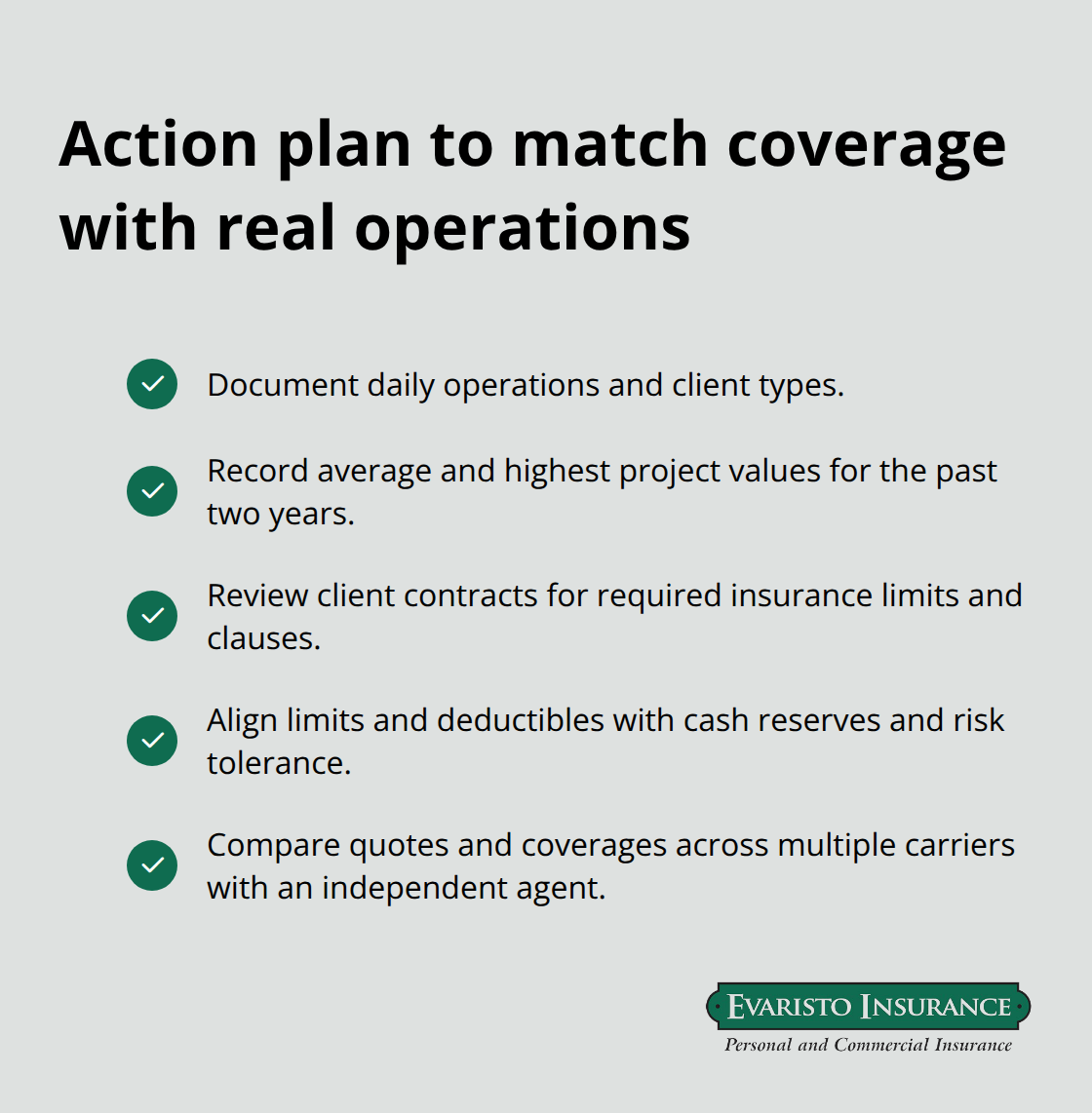
Start by documenting your daily operations, the types of clients you serve, the dollar value of projects you handle, and the assets at risk if something goes wrong. Connecticut contractors should calculate their average project value and their highest single project value over the past two years, because these figures determine appropriate general liability limits. Service professionals should review client contracts to identify specific insurance requirements they’re contractually obligated to carry.
Review Contract Requirements and Client Expectations
Your client agreements often specify minimum coverage amounts you must maintain. A commercial real estate client might require $1,000,000 in general liability before you step foot on their property. A retail landlord might demand $500,000 in property coverage as a lease condition. These contractual obligations aren’t suggestions-they’re binding requirements that affect your ability to work with certain clients.
Failing to meet contractual insurance requirements exposes you to breach of contract claims and loss of business relationships. Review every client contract, vendor agreement, and lease document to extract specific insurance language. This foundation of operational reality prevents you from either underinsuring and facing personal liability or overpaying for protections you don’t actually need.
Select Deductibles That Match Your Cash Position
Deductibles directly affect both your premium and your cash flow when claims happen. A higher deductible like $2,500 or $5,000 significantly reduces your annual premium, but it means you pay more out of pocket when a claim occurs. Many Connecticut small business owners choose $1,000 deductibles because this balance keeps premiums manageable while protecting against catastrophic losses without requiring large out-of-pocket payments.
However, if your business maintains strong cash reserves and you want to minimize monthly expenses, a higher deductible makes financial sense. Conversely, if cash flow is tight, a lower deductible prevents unexpected large expenses during a claims event. Determine how much you could realistically pay immediately if a claim happened next week. That number guides your deductible selection more reliably than generic recommendations.
Compare Multiple Carriers and Coverage Combinations
An independent agent becomes invaluable because they compare quotes from multiple carriers and identify which combination of coverage limits, deductibles, and policy types delivers maximum protection for your specific situation at the lowest cost. This personalized approach takes time but prevents both coverage gaps that expose you to financial ruin and wasted premium dollars on unnecessary protections.
We at Evaristo Insurance, a second-generation family-owned agency serving Connecticut since 1989, compare multiple top carriers to deliver tailored protection and competitive pricing. Our local offices in Ellington and West Hartford work with you to match your actual operations to the right coverage mix, ensuring your liability plan protects what you’ve built without draining your operating budget.
Final Thoughts
A solid small business liability plan protects your Connecticut operation from financial devastation while keeping premiums affordable. The coverage types we’ve outlined-general liability, professional liability, umbrella protection, and industry-specific options-form a practical foundation that scales with your business growth. Your actual risk exposure, client contract requirements, and cash position determine which combination makes sense for your specific situation.
Document your daily operations, review your client agreements for insurance requirements, and obtain quotes from multiple carriers. This process takes a few hours but prevents costly coverage gaps or wasted premium spending. Many Connecticut entrepreneurs discover they’re either underinsured and exposed to personal liability or overpaying for protections they don’t need.
Contact Evaristo Insurance to discuss your small business liability plan needs. We’ll review your operations, identify coverage gaps, and show you how affordable comprehensive protection actually is. Your liability plan should give you confidence to focus on growth instead of worrying about financial catastrophe.
Disclaimer: This blog post is for general informational purposes only and does not represent actual coverage, policy terms, or legal requirements. Insurance details vary by individual and jurisdiction. Please consult a licensed insurance professional for advice specific to your situation.

