
Hybrid Vehicle Insurance CT: Balancing Efficiency and Coverage
Hybrid vehicles are becoming the standard choice for Connecticut drivers who want to cut fuel costs and reduce their environmental footprint. At Evaristo Insurance, we’ve noticed more customers asking about hybrid vehicle insurance in CT as these cars gain traction across the state.
The challenge isn’t just finding coverage-it’s finding the right coverage that protects your hybrid’s unique components without overpaying. This guide walks you through what matters most for hybrid owners in Connecticut.
Why Hybrids Make Sense for Connecticut Drivers
Hybrid vehicles have moved beyond niche territory in Connecticut. The numbers tell the story: the U.S. Department of Transportation reports the average American drives about 13,500 miles per year, and hybrid owners consistently beat that efficiency mark by cutting fuel consumption significantly. Connecticut drivers particularly benefit because our state’s mix of urban commuting and suburban driving patterns aligns perfectly with hybrid technology. A Toyota Corolla Cross Hybrid costs roughly $200 per month to insure according to The Zebra’s analysis of over 83 million insurance rate observations, making it one of the most affordable hybrid options to cover. The real savings kick in when you factor fuel costs: hybrids typically reduce annual fuel spending compared to conventional gas vehicles, which translates to hundreds of dollars annually for Connecticut commuters.
State Support Makes Hybrids More Affordable
Connecticut actively encourages hybrid ownership through tax incentives and rebates that reduce your upfront purchase price. These state-level programs directly lower your total ownership cost, which is critical when deciding between a hybrid and a conventional vehicle. Combined with federal tax credits that may still apply depending on vehicle model and your income level, the financial case for going hybrid strengthens considerably. Calculate your break-even point by comparing total ownership costs, not just purchase price. The Zebra offers a Gas vs. Hybrid vs. Electric Cost Calculator specifically for Connecticut drivers that factors in insurance, fuel, and maintenance to show when a hybrid investment pays for itself. Most Connecticut drivers find this happens within three to five years of ownership.
Repair Costs Demand the Right Coverage
Here’s where hybrid owners often face unexpected expenses: while fuel savings are real, repair costs can exceed conventional vehicle repairs. Hybrids have specialized electrical systems and batteries that require trained mechanics, and not every repair shop in Connecticut has invested in the equipment and expertise to handle them properly. This reality shapes your insurance strategy significantly. Standard auto policies cover hybrids the same way as conventional vehicles, but you need to verify that your insurer’s repair network includes shops qualified to service your specific hybrid model. Collision and comprehensive coverage become even more important for hybrids because a battery replacement can cost thousands of dollars. Gap coverage also makes sense if you finance or lease a hybrid, protecting you from being underwater if the vehicle is totaled.
Finding Coverage That Fits Your Hybrid
The insurance market in Connecticut offers multiple carriers with varying approaches to hybrid coverage. Some insurers provide hybrid-specific discounts (typically around 5 percent per six-month policy), while others focus on mileage-based pricing that rewards lower annual miles-something many hybrid owners achieve. Lemonade, for example, offers mileage-based pricing for hybrids and provides extra coverage for home chargers if you install one. Your choice of hybrid model matters significantly: a Lexus ES 300h runs about $278 per month to insure, substantially higher than the Corolla Cross Hybrid, because repair costs and parts availability vary by manufacturer. Shopping quotes from multiple carriers reveals these differences and helps you balance premium costs with the coverage your hybrid actually needs. Local independent agents in Connecticut can compare options across dozens of top carriers, saving you time and often uncovering discounts you wouldn’t find shopping alone.
What Coverage Protects Your Hybrid’s Most Expensive Parts
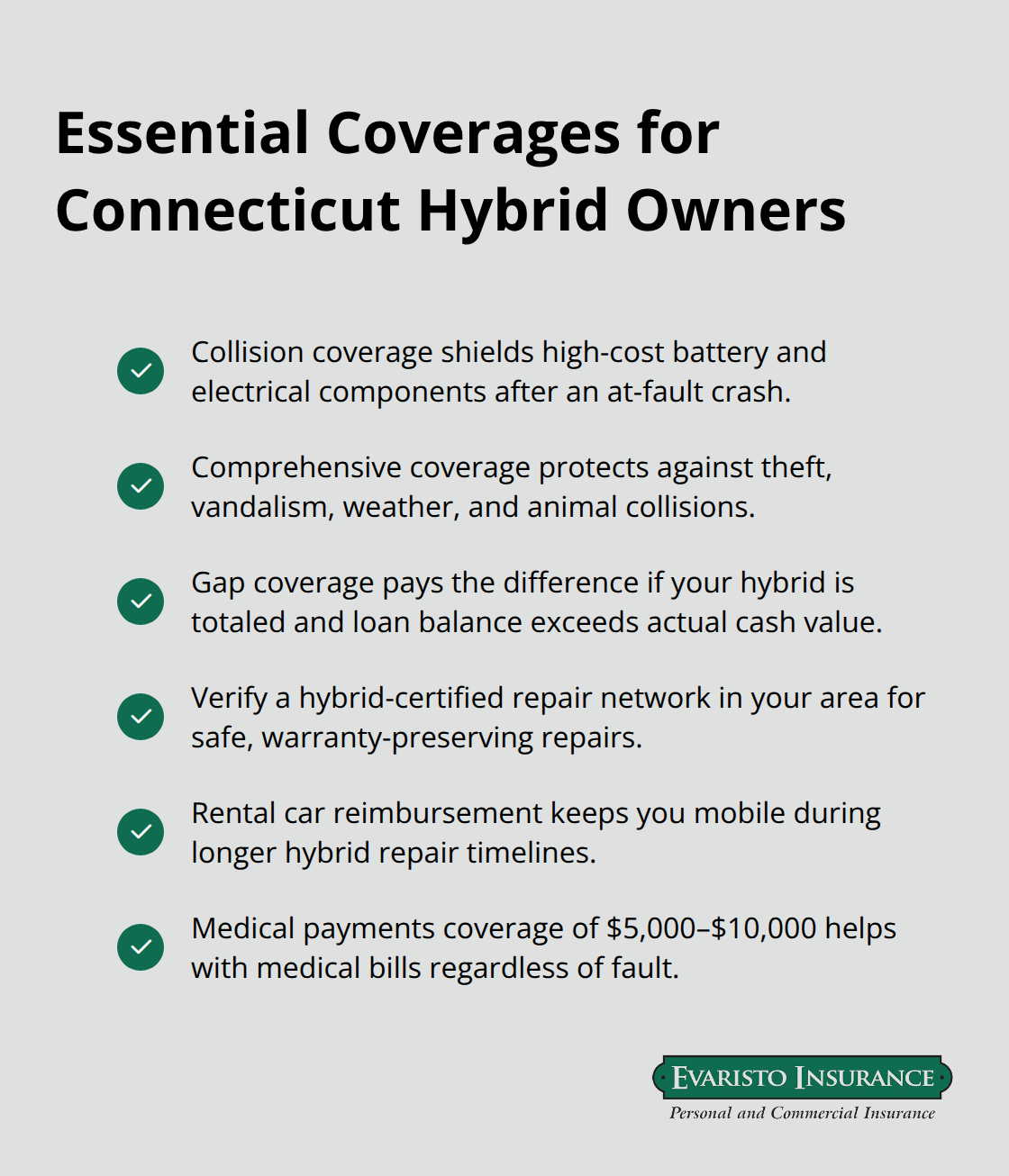
Hybrid owners in Connecticut face a coverage decision that gas-car owners rarely consider: how to protect a battery system that can cost thousands to replace. The battery in your hybrid isn’t just another component-it’s often the second-largest expense after the vehicle itself, making it central to your insurance strategy. Standard collision and comprehensive coverage applies to hybrids the same way as conventional vehicles, but the financial impact of damage differs significantly. A hybrid battery replacement can exceed $5,000 to $22,000 depending on your hybrid model, which means that collision coverage isn’t optional if you finance or lease your vehicle. Your lender will require it anyway, but even if you own your hybrid outright, skipping collision coverage exposes you to catastrophic financial risk.
Comprehensive coverage matters equally for hybrids because it protects against theft, vandalism, weather damage, and animal collisions-all events that could trigger expensive battery or electrical system repairs. Gap coverage deserves serious consideration if you financed your hybrid; this coverage pays the difference between your vehicle’s actual cash value and what you still owe if it’s totaled, preventing you from being underwater on a loan when repair costs exceed the vehicle’s value.
Specialized Repair Shops Require Your Attention
Connecticut has a growing network of hybrid-certified repair facilities, but availability varies dramatically by location and hybrid manufacturer. Not every mechanic can safely work on hybrid electrical systems and battery components-the training requirements are strict, and the equipment investment is substantial. When you compare insurance quotes, ask each carrier specifically about their repair network in your area and whether they have shops qualified to service your hybrid model.
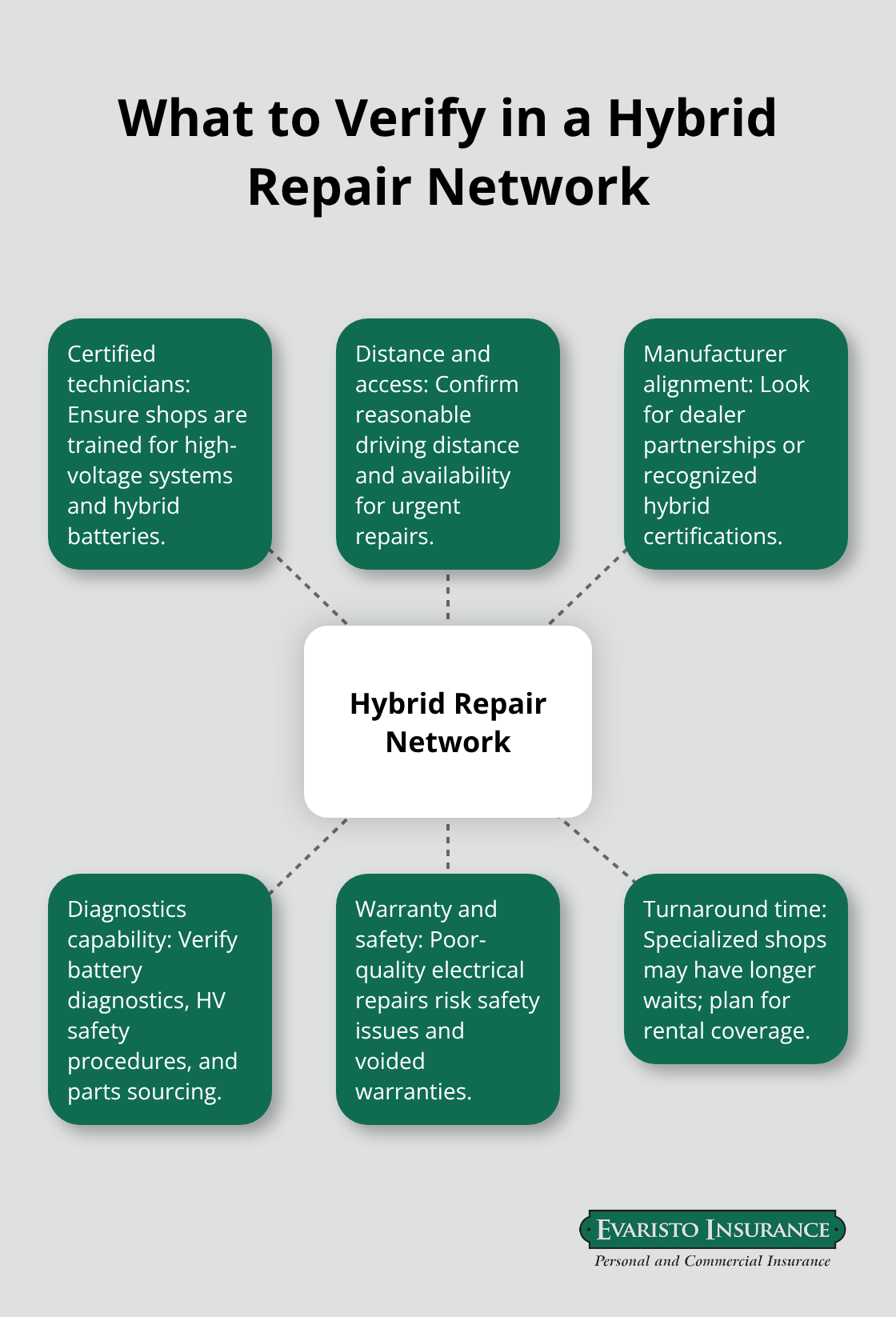
A carrier that forces you to drive 30 miles to the nearest authorized hybrid repair facility will cost you time and money even if the premium seems cheap.
Travelers ranks among the lowest-cost insurers for hybrids nationwide, with average premiums around $275 per month according to The Zebra’s analysis, but that value disappears if you can’t access quality repair shops quickly. Some carriers partner with manufacturer-specific networks-Toyota dealers for Toyota hybrids, Honda for Honda models-while others use independent shops with hybrid certification. During the quoting process, verify that your chosen carrier’s repair partners have experience with your specific hybrid and can handle battery diagnostics and replacement. Poor repair quality on hybrid electrical systems can create safety hazards and void manufacturer warranties, making this more than just a convenience issue.
Discounts Reduce Your Premium When You Claim Them
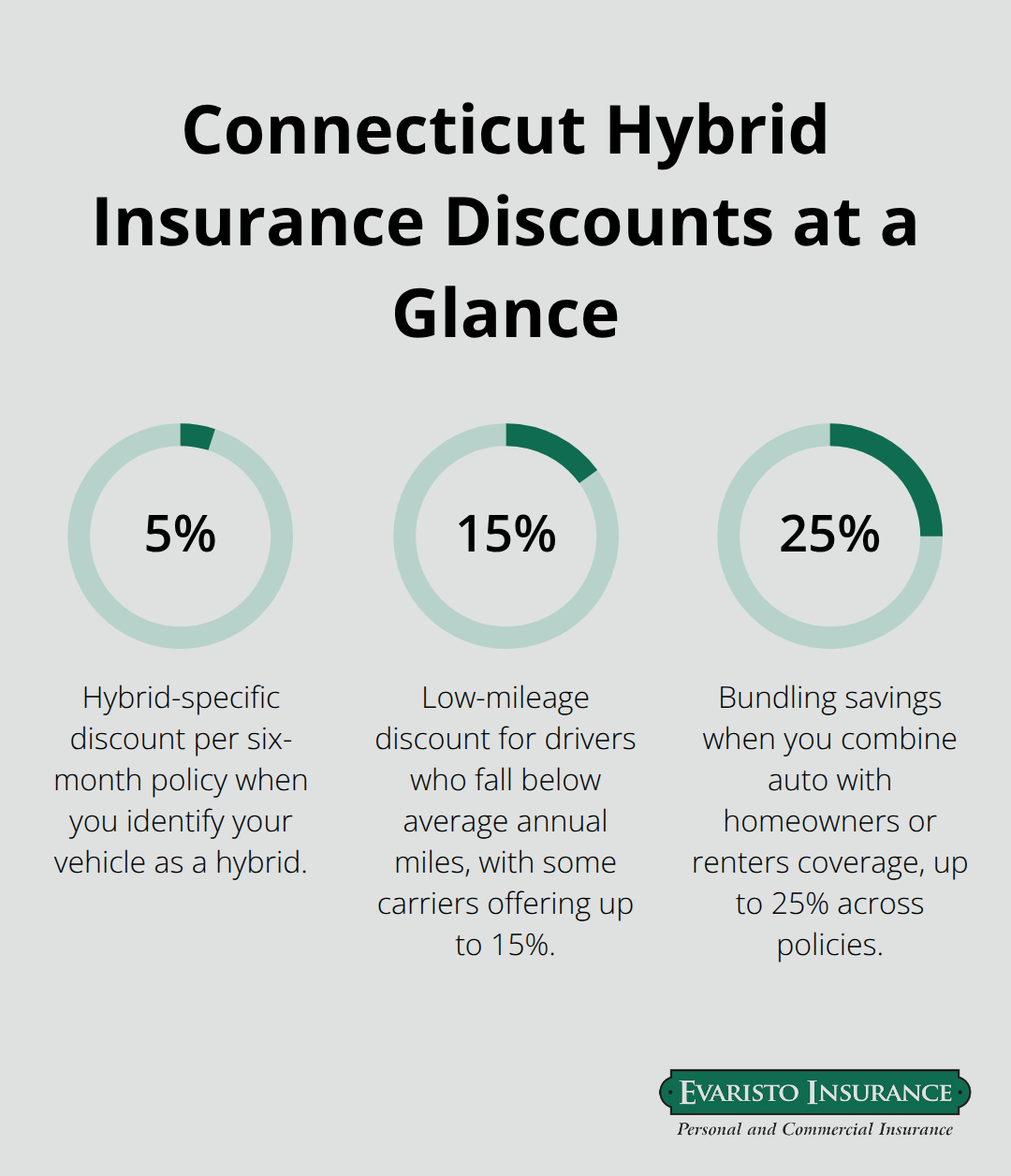
Hybrid-specific discounts typically reduce your premium by around 5 percent per six-month policy period, according to The Zebra, but many Connecticut drivers never claim them because they don’t ask. This discount appears under different names across carriers-some call it a hybrid discount, others label it a fuel-efficient vehicle discount or alternative fuel discount-so you need to explicitly mention your vehicle type when requesting quotes.
Low-mileage discounts often benefit hybrid owners more than conventional car owners because many people buy hybrids specifically to reduce driving costs, which naturally leads to lower annual miles. The U.S. Department of Transportation reports the average American drives 13,500 miles yearly, and if you fall below that figure, you qualify for low-mileage discounts that can reach 10 to 15 percent with some carriers. Bundling your hybrid auto policy with homeowners or renters coverage typically saves 10 to 25 percent across your policies.
Telematics or usage-based insurance programs monitor your driving habits through a smartphone app or in-car device and can lower premiums for safe drivers, though availability varies by insurer and state. Pay-in-full discounts also apply to hybrid policies-paying your six-month or annual premium upfront rather than monthly installments often saves 5 to 10 percent. The combination of these discounts can substantially offset the higher repair costs that hybrids carry, but you’ll only access them when you shop multiple carriers and ask specific questions about each discount’s eligibility requirements.
Shopping Multiple Carriers Reveals Hidden Savings
Connecticut’s insurance market includes many carriers with varying approaches to hybrid coverage, and your premium can swing hundreds of dollars depending on which company you choose. Independent agents in Connecticut can compare options across dozens of top carriers, saving you time and often uncovering discounts you wouldn’t find shopping alone. Your choice of hybrid model matters significantly: a Lexus ES 300h runs about $278 per month to insure, substantially higher than the Corolla Cross Hybrid at roughly $200 per month, because repair costs and parts availability vary by manufacturer. These price differences reflect real variations in repair complexity and parts supply across the hybrid market. When you request quotes, provide accurate information about your vehicle, annual mileage, and driving habits so carriers can calculate premiums that reflect your actual risk profile. This comparison process also reveals which carriers maintain strong repair networks in your specific area and which ones offer the discounts that matter most to your situation.
Getting the Best Hybrid Quote in Connecticut
Gather Your Hybrid Information and Request Multiple Quotes
Finding the right hybrid insurance in Connecticut requires moving beyond price alone and evaluating which carriers actually understand your vehicle’s unique needs. Start by collecting basic information about your hybrid: the exact year, make, model, annual mileage estimate, and whether you finance or own it outright. This data accelerates the quoting process and ensures carriers calculate accurate premiums. Request quotes from at least three to five major carriers because premium differences for the same hybrid model can vary significantly across insurers.
When you submit quotes online or by phone, explicitly state that your vehicle is a hybrid and ask whether the carrier offers hybrid-specific discounts, low-mileage discounts, bundling discounts, or usage-based insurance programs. Many Connecticut drivers miss savings simply because they don’t mention their vehicle type or ask about specific discounts during the quoting process. Verify that each carrier’s repair network includes shops certified to handle your hybrid model in your area-a cheap premium means nothing if you face a 45-minute drive for battery diagnostics or authorized repairs.
Verify Repair Network Quality and Hybrid Expertise
Ask carriers directly about their EV and hybrid repair partner locations and their experience with your specific vehicle manufacturer. This step separates carriers that genuinely serve hybrid owners from those treating hybrids as a secondary market. A carrier’s repair network quality matters more than its premium price because specialized repair shops sometimes require longer wait times than conventional mechanics, potentially leaving you without transportation for days.
Understand Connecticut’s Coverage Requirements and Hybrid-Specific Needs
Understanding your coverage needs starts with Connecticut’s minimum requirements: 25/50/25 liability limits (bodily injury per person $25,000, per accident $50,000, property damage $25,000) plus uninsured/underinsured motorist coverage. These minimums are inadequate for hybrid owners because medical costs from accidents quickly exceed the per-person limit, and your hybrid’s higher repair costs demand stronger protection. If you finance or lease your hybrid, your lender requires collision and comprehensive coverage regardless of your preference, so factor these into your cost calculations.
Gap coverage becomes essential for financed hybrids because a battery-damaged vehicle can trigger repair bills exceeding the car’s market value, leaving you owing more than the vehicle is worth. Collision coverage protects your hybrid’s expensive battery and electrical components from accidents, while comprehensive coverage guards against theft, vandalism, weather damage, and animal collisions-all events that could trigger costly battery or electrical system repairs. Medical payments coverage of $5,000 to $10,000 offers practical protection for you and passengers, covering medical bills or funeral expenses regardless of fault.
Compare Coverage Options Across Multiple Carriers
Rental car reimbursement becomes valuable during hybrid repairs because specialized repair shops sometimes require longer wait times than conventional mechanics, potentially leaving you without transportation for days. Local independent insurance agents in Connecticut can compare options across dozens of top carriers, revealing which combinations of coverage and discounts actually save you money versus which carriers charge premiums that don’t justify their coverage terms. Agents with established relationships in Connecticut also understand local repair shop networks and can guide you toward carriers maintaining quality hybrid-certified facilities in your area.
This local expertise prevents the common mistake of choosing a carrier solely on premium price, only to discover their repair network forces inconvenient service locations or lacks hybrid expertise. Evaristo Insurance, a second-generation family-owned independent agency serving Connecticut since 1989, compares multiple top carriers to deliver tailored protection and competitive pricing with hands-on customer advocacy. Their local offices in Ellington and West Hartford provide direct access to agents who understand Connecticut’s hybrid market and can match you with carriers offering both strong premiums and quality repair networks in your specific area.
Final Thoughts
Hybrid vehicle insurance in CT requires a different approach than coverage for conventional gas cars. The higher repair costs, specialized mechanics, and battery replacement expenses demand that you prioritize repair network quality alongside premium price. Your hybrid’s value depends on accessing qualified technicians quickly, and choosing an insurer based solely on the lowest quote often backfires when you need service.
The financial case for hybrid ownership in Connecticut remains strong when you account for fuel savings, state tax incentives, and available insurance discounts. A hybrid-specific discount of around 5 percent per policy period, combined with low-mileage discounts and bundling savings, can offset the higher repair costs that make hybrid premiums more expensive than conventional vehicles. Gap coverage, collision protection, and comprehensive coverage become non-negotiable for financed hybrids because battery damage can trigger repair bills exceeding your vehicle’s market value.
Contact Evaristo Insurance to compare options across multiple top carriers and match you with coverage that protects your hybrid’s expensive components while keeping your premium competitive. Our local offices in Ellington and West Hartford provide direct access to agents who know Connecticut’s repair networks and can guide you toward carriers offering both strong rates and quality service. We understand your hybrid’s unique needs and your driving situation.
Disclaimer: This blog post is for general informational purposes only and does not represent actual coverage, policy terms, or legal requirements. Insurance details vary by individual and jurisdiction. Please consult a licensed insurance professional for advice specific to your situation.
