Connecticut Landscaper Liability: Reducing Risk on Outdoor Jobs
Landscaping work exposes your business to serious risks every single day. Equipment accidents, property damage claims, and injuries to workers or clients can devastate your finances fast.
At Evaristo Insurance, we help Connecticut landscapers understand their liability exposure and build protection strategies that actually work. The right coverage makes the difference between a manageable incident and a business-ending lawsuit.
Why Equipment and Property Damage Claims Cost Landscapers the Most
The Extreme Hazards of Landscaping Machinery
Landscaping in Connecticut means working with machinery that inflicts serious harm. A commercial mower throws debris at speeds up to 200 mph during routine operation. Johns Hopkins University research from 2006 to 2013 documented that more than 6,000 people suffer serious lawn mower injuries annually. When an operator loses control or a crew member gets too close, medical bills accumulate fast.
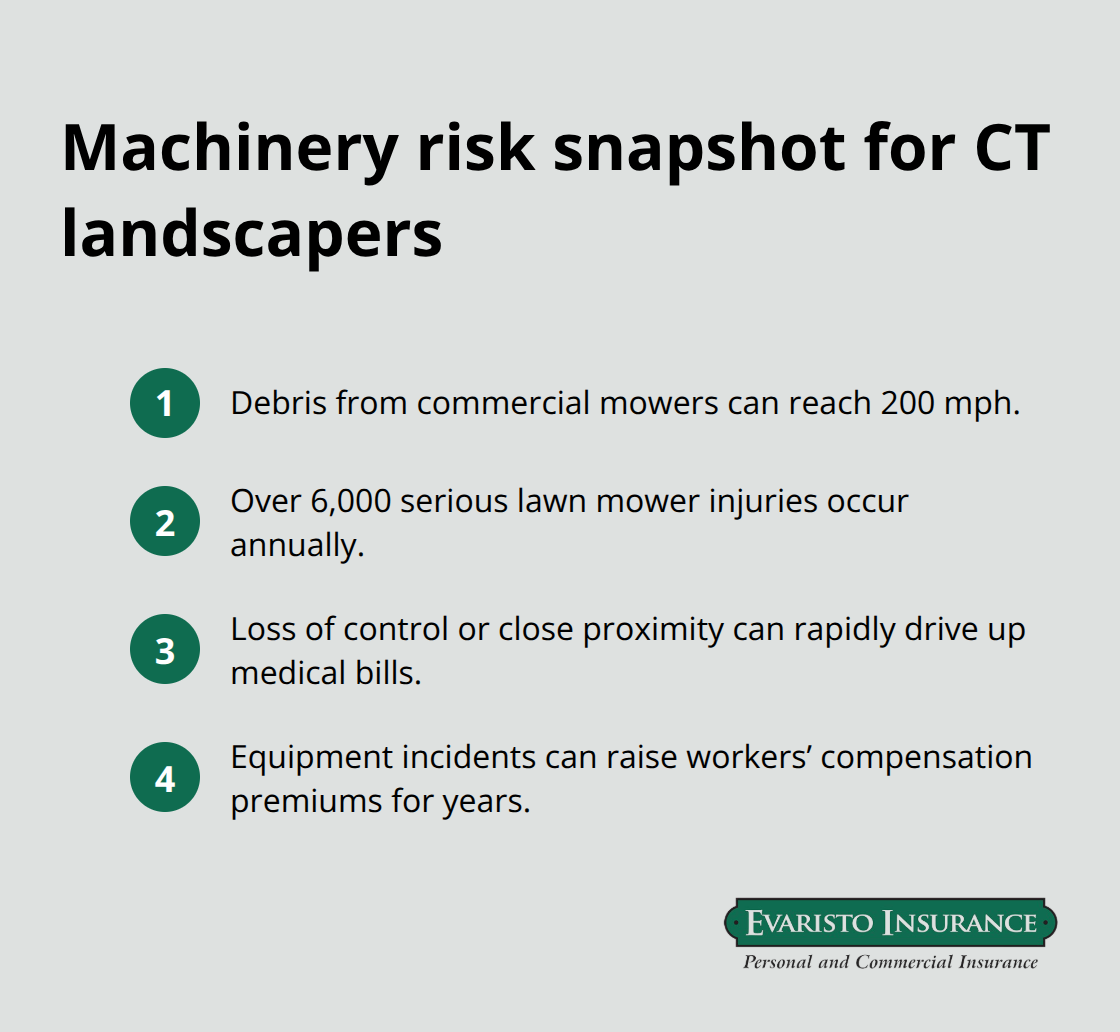
Equipment-related incidents also trigger workers’ compensation claims that spike your premiums for years.
Equipment failures create additional catastrophe. A chainsaw malfunction during tree removal, a trimmer striking a hidden object, or a crew member caught between machinery results in permanent disability. These incidents happen on Connecticut job sites regularly, and one accident eliminates years of profit.
Property Damage Exposure on Every Job
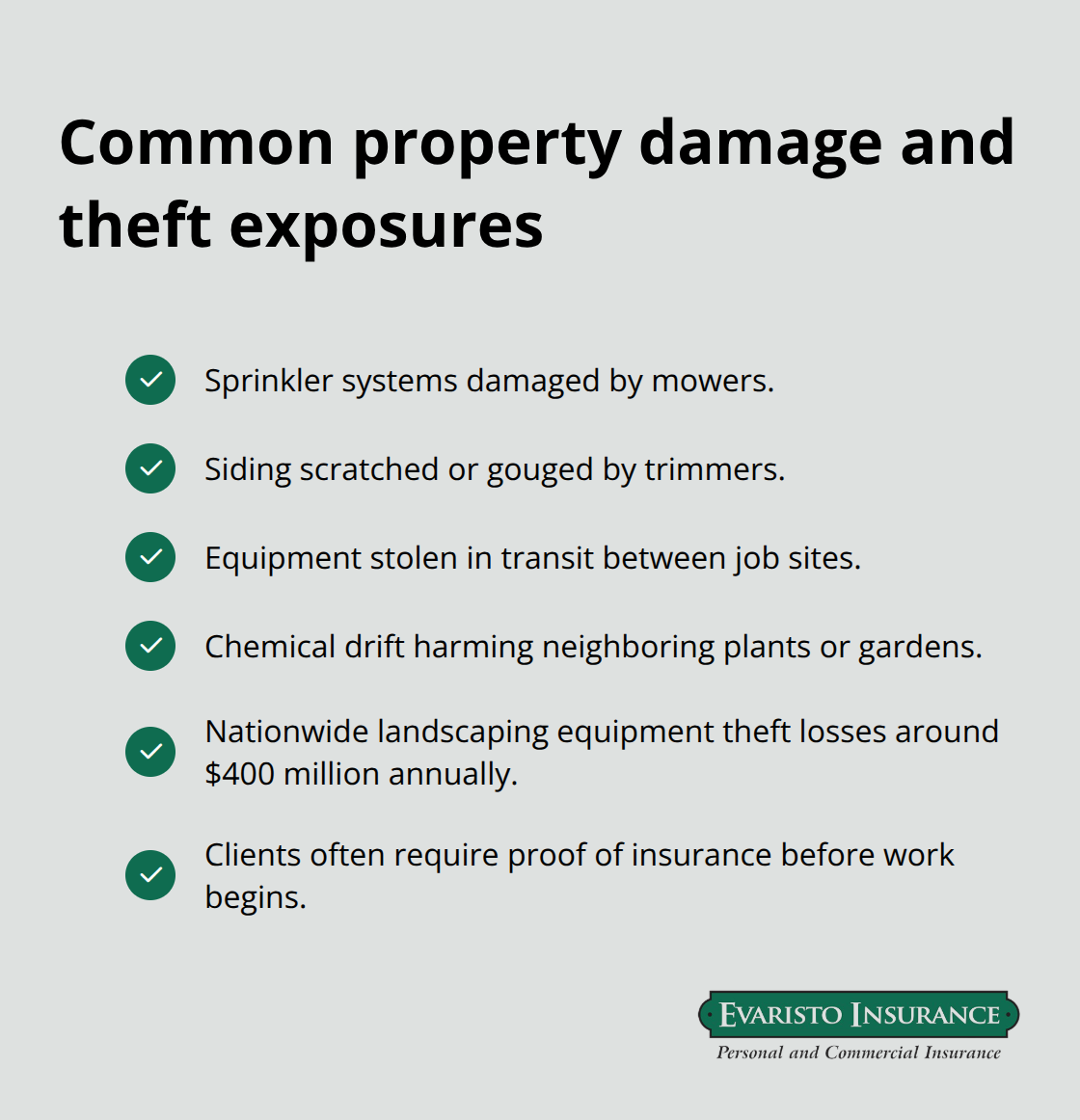
Property damage claims hit landscapers hard. Landscapers damage client properties constantly during normal operations-a mower strikes a sprinkler system, a trimmer damages siding, equipment transported between sites gets stolen, or chemical application drifts onto a neighbor’s garden. The National Insurance Crime Bureau reported that the national average annual loss from landscaping equipment theft reached approximately 400 million dollars. Clients increasingly require proof of insurance before allowing work to begin, and damaged property without coverage means you pay out of pocket.
Third-Party Liability and Compliance Risks
Third-party bodily injury claims add another layer of exposure. A crew member causes an injury to someone not on your payroll-a pedestrian hit by debris, a client injured on their own property due to your work, or a neighbor affected by chemical drift-and liability follows you. Industry data cited by The Hartford shows that four in ten small businesses experience a property or general liability claim within ten years.
Connecticut’s requirement for workers’ compensation when you have employees means non-compliance brings fines and legal action. The combination of equipment hazards, property exposure, and liability from third parties creates a high-risk environment where unprotected operations cannot survive the first major incident. Understanding these specific exposures helps you recognize why the right coverage types matter for your landscaping business.
What Coverage Connecticut Landscapers Actually Need
General Liability Insurance Protects Against On-Site Damage
General liability insurance protects your business from claims of bodily injury, property damage, and personal injury from your work. A crew member strikes a client’s fence with a trimmer, debris from a mower damages a parked car, or chemical drift affects a neighbor’s garden-this coverage handles the legal costs and settlements. Connecticut clients increasingly demand proof of insurance before allowing work to start, and without this coverage, you absorb the full financial hit yourself. Policy limits typically range from $300,000 to $2 million depending on your operation size and services. The Hartford’s industry data shows four in ten small businesses face a property or general liability claim within ten years, making this the foundation of your protection strategy.
Workers’ Compensation Shields You and Your Crew
Workers’ compensation is mandatory in Connecticut the moment you hire your first employee. This coverage pays medical bills and wage replacement when a crew member gets injured on the job, and it shields you from direct lawsuits by employees. A serious chainsaw or mower injury can cost $50,000 to $200,000 in medical care and lost wages alone. Connecticut penalties for operating without workers’ compensation include substantial fines and potential legal action that can shut down your business. Your premium depends on your payroll, the types of work you perform, and your claims history. Landscapers who implement safety training programs often qualify for premium discounts that offset the cost of compliance.
Commercial Auto Insurance Covers Fleet and Equipment Transport
Commercial auto insurance covers your trucks, trailers, and equipment vehicles used for business purposes. This protects you when a crew member causes an accident during transport to a job site or while hauling equipment. Standard personal auto policies exclude business use, leaving you completely uninsured and personally liable for damages. Coverage should include liability for injuries and property damage, physical damage protection for your vehicles, and uninsured motorist protection. If you operate in Connecticut’s variable weather and terrain, add roadside assistance and rental reimbursement to minimize downtime when a vehicle breaks down during peak season.
Bundle Coverage for Simplified Administration
A Business Owner’s Policy bundles general liability, commercial property, and business income coverage, which simplifies administration and often reduces your total premium compared to purchasing policies separately. This approach consolidates your protection into one coordinated program rather than managing multiple separate policies. The bundled structure also makes it easier to track coverage limits and renewal dates across your entire operation. When you compare multiple carriers side by side, you identify which insurers offer the best combination of coverage, pricing, and service for landscaping operations. Finding the right match between your specific services, equipment value, and operation size determines whether your protection actually covers the incidents most likely to hit your business.
How to Stop Equipment Failures and Injuries Before They Happen
Build a Safety Culture Through Hands-On Training
Safety training transforms landscaping crews from accident-prone operations into disciplined teams that recognize hazards before incidents occur. OSHA’s Injury and Illness Prevention Program framework provides safety and health program management guidelines for use by employers to prevent occupational injuries and illnesses. Your crew needs hands-on training on equipment operation, scenario-based chemical handling, emergency drills, and weather protocols rather than generic online modules. Implement daily equipment inspections before any crew member touches a mower, chainsaw, or trimmer. Enforce comprehensive PPE including hard hats, eye protection, hearing protection, gloves, and sturdy boots with documented training on proper usage.
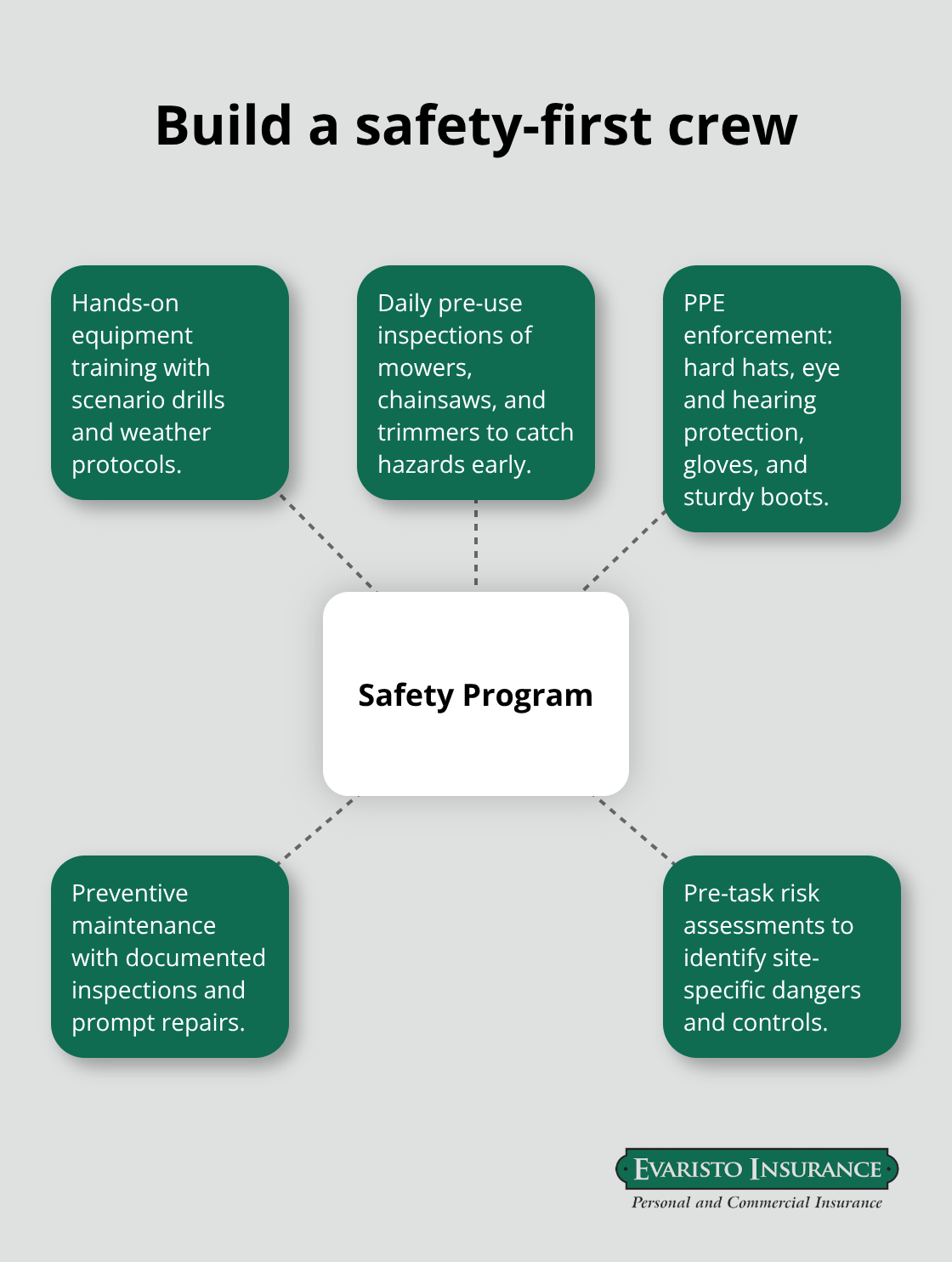
ANSI Z133.1 Safety Requirements for Arboricultural Operations standardizes pruning, tree removal, and rigging practices to prevent tree-care injuries-follow these standards even if your work doesn’t involve arboriculture because the risk controls apply across landscaping tasks. A preventive maintenance program for all equipment with documented inspections and prompt repairs per manufacturer guidelines prevents failures that cause injuries. Establish a pre-task risk assessment requirement where crews conduct a quick hazard check before starting each job, identifying specific dangers and controls for that day’s conditions.
Protect Workers from Heat and Environmental Hazards
Heat illness prevention during Connecticut’s humid summers demands scheduled rest breaks, shaded areas, hydration stations, and worker training on heat exhaustion signs. Create weekly tailgate meetings where crews discuss near-misses and actual incidents from the previous week, building a safety-first culture where workers report hazards without fear of punishment. These meetings surface real problems that training alone cannot address and allow crews to learn from each other’s experiences.
Document Everything to Defend Your Business
Documentation of jobs and incidents becomes your evidence when claims arise or regulators ask questions. Maintain OSHA 300 logs if applicable, track all training completions with dates and crew member names, photograph job sites before work starts and after completion to establish baseline conditions, and create incident reports within 24 hours that include photos, witness statements, and equipment details. Keep detailed chemical application records noting dates, products used, weather conditions, and restricted entry intervals-this protects workers and proves compliance if environmental claims emerge.
Document equipment maintenance with dates, parts replaced, repairs completed, and technician information. Connecticut landscapers operating without this documentation cannot defend themselves when disputes arise because they lack proof of proper procedures and conditions. Store records digitally with backups and maintain paper copies on site during projects so information remains immediately available if an injury or damage claim occurs. When clients require proof of insurance, issue a Certificate of Insurance instantly online rather than delaying project starts.
Final Thoughts
Connecticut landscaper liability exposure demands action before incidents strike your business. Equipment hazards, property damage claims, and third-party injuries create financial threats that destroy unprepared operations. The coverage types we’ve outlined-general liability, workers’ compensation, and commercial auto insurance-form the foundation of protection that actually works on Connecticut job sites, while safety training, equipment maintenance, and detailed documentation reduce your risk before claims arise.
We at Evaristo Insurance understand the specific challenges landscaping operations face across Connecticut. Our team compares multiple top carriers to find coverage that matches your equipment, crew size, services, and location. We handle the complexity of bundling policies, identifying discount opportunities, and ensuring your limits align with your real exposure (and we advocate for you with adjusters when claims happen rather than leaving you to navigate the process alone).
Contact Evaristo Insurance to schedule a risk assessment conversation with our team. We’ll review your current coverage, identify gaps in your protection, and provide quotes from carriers that specialize in landscaping operations. With local offices in Ellington and West Hartford, we’re accessible when you need guidance on Connecticut landscaper liability and protection strategies.
Disclaimer: This blog post is for general informational purposes only and does not represent actual coverage, policy terms, or legal requirements. Insurance details vary by individual and jurisdiction. Please consult a licensed insurance professional for advice specific to your situation.

