

Cyber Liability For Businesses: What Your Policy Must Include
A data breach can cost your Connecticut business an average of $4.45 million in damages, according to IBM’s 2024 Data Breach Report. Yet most business owners don’t know what their cyber liability for businesses policies actually cover-or what critical gaps exist.
We at Evaristo Insurance see this problem constantly. The difference between adequate protection and financial disaster often comes down to understanding exactly what your policy includes.
What Cyber Liability Actually Protects
First-Party and Third-Party Coverage Explained
Cyber liability insurance covers the financial fallout when your business faces a data breach, ransomware attack, or other digital incident. The policy pays for forensic investigations, notification costs to affected customers, credit monitoring services, legal fees, regulatory fines, and recovery expenses. If a hacker steals customer payment information from your systems, your cyber policy covers the cost of notifying those customers, which can run $50 to $200 per person depending on the breach size.
The coverage splits into two critical pieces: first-party protection helps your own operations recover quickly through forensics and data restoration, while third-party protection covers legal defense and settlements when customers or partners sue you over the breach.
Business Income Loss During Recovery
The policy also covers business income loss while you recover systems and data, which is where most Connecticut businesses get blindsided. A manufacturing company that loses access to its production systems for three days doesn’t just pay for IT repairs-it loses revenue during that downtime. Cyber liability addresses that gap directly.
Ransomware, Extortion, and Network Liability
Many business owners assume cyber insurance is just about data breach notification, but that misconception leaves them exposed. A ransomware attack where criminals demand payment is covered under most cyber policies, including the extortion payment itself up to your policy limit. Network security liability covers situations where malware spreads from your systems to a customer’s network, making you liable for their losses.
Why Connecticut Businesses Can’t Afford to Wait
The reality is that cyber incidents are no longer rare events-they’re operational risks that your business must budget for. Connecticut businesses storing customer payment data, health information, or social security numbers face the highest exposure and absolutely need this coverage in place before an incident occurs. Understanding what your policy actually covers (and what it doesn’t) determines whether your business survives a major attack or faces closure.
What Your Policy Must Actually Cover
Forensic Investigation and Breach Assessment Costs
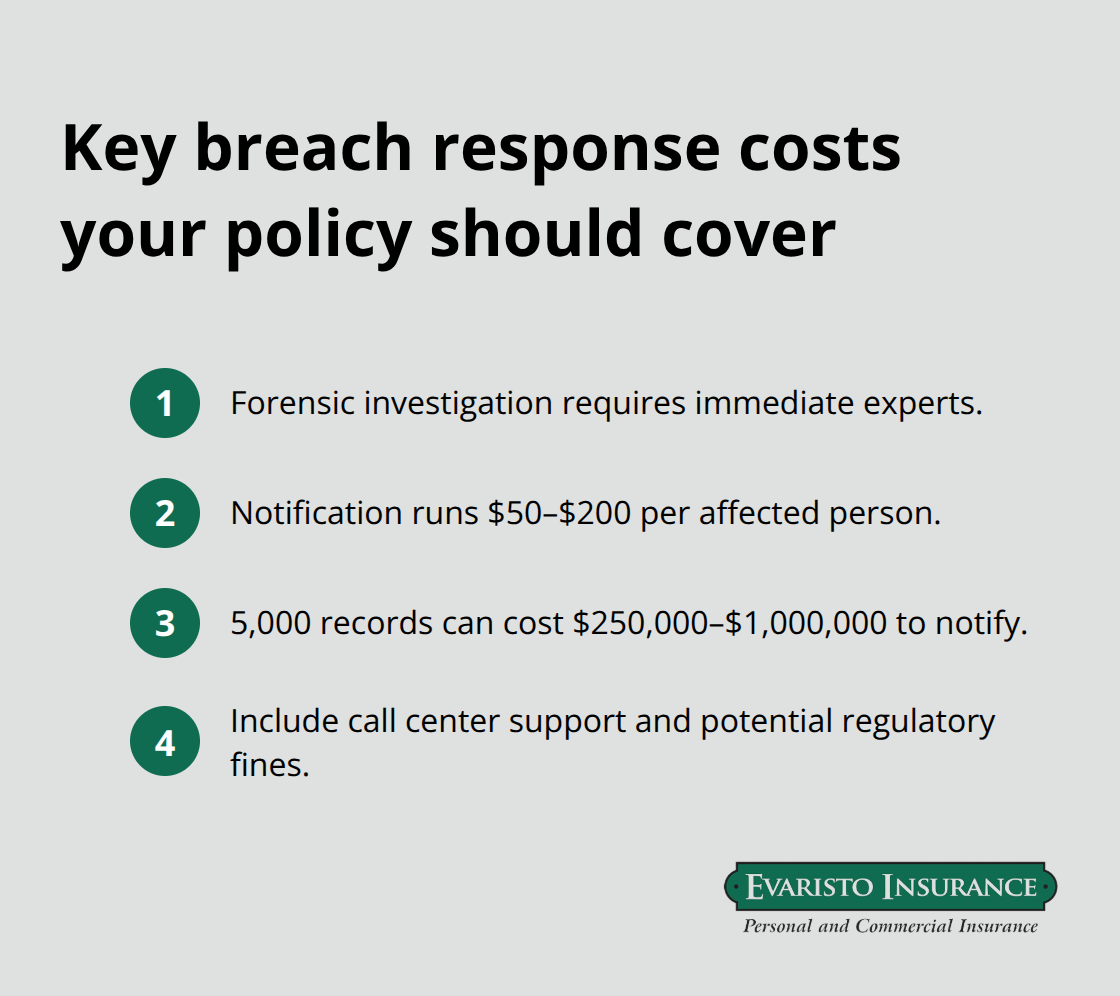
The gap between what Connecticut business owners think they’re buying and what they actually own in cyber coverage is staggering. Most policies include notification costs when customer data is exposed, but the real expense sits elsewhere. When a breach happens, your business faces forensic investigation costs that require immediate expert attention. Your policy must explicitly cover these forensic expenses because you cannot notify customers or file regulatory reports without understanding exactly what was compromised. Beyond investigation, notification itself costs $50 to $200 per affected individual, which means a breach touching 5,000 customer records runs $250,000 to $1,000,000 just for notification letters and credit monitoring services. The policy should also cover call center costs if you need to field customer questions after the breach goes public, plus any regulatory fines you face.
Connecticut businesses handling health information face HIPAA violations that carry fines up to $1.5 million per violation category, making regulatory coverage non-optional for healthcare providers and their vendors.
Business Interruption and Revenue Protection
Business interruption coverage separates adequate policies from inadequate ones. When ransomware locks your systems or a breach forces you offline, your revenue doesn’t stop-your expenses don’t either. A Connecticut accounting firm that loses access to client files for five days still pays staff salaries, rent, and software subscriptions while generating zero income. Your cyber policy should cover lost business income during recovery periods, typically calculated based on your average daily revenue.
Ransomware, Extortion, and Third-Party Claims
Ransomware attacks demand separate attention because many business owners don’t realize the extortion payment itself is often covered under cyber policies up to your limit, alongside recovery costs. Network liability coverage protects you when malware from your systems infects a customer’s network or when you accidentally spread malware to a partner’s business-these third-party claims can cost more than your own recovery expenses. Legal defense costs and settlements belong in your policy as well, because when customers sue over a breach, your legal bills alone can reach $100,000 before any settlement is paid. Verify your policy explicitly covers ransomware response and negotiation, because some carriers exclude ransom payments or limit coverage to investigation costs.
The specific risks your company faces demand specific protection rather than generic policy templates. Connecticut business owners need coverage pieces that align with actual operations, which is why working with an independent agent who understands your industry matters more than simply purchasing the cheapest available option.
Red Flags: What to Avoid in Cyber Liability Policies
Exclusions That Leave You Exposed
Most Connecticut business owners discover policy gaps only after a breach happens, which is far too late. The problem isn’t always what your policy says it covers-it’s what the fine print explicitly excludes or limits. Insurance carriers use exclusions strategically, and cyber policies are notorious for burying critical limitations in subsections that most people never read. Your policy might cover data breach notification but exclude ransomware payments, or cover your own forensic costs but not third-party liability when your systems infect a customer’s network.
One dangerous exclusion appears in policies that limit coverage for breaches caused by employee negligence or third-party vendors. Cyber insurance covers incidents such as ransomware attacks, third-party vendor liability, and regulatory fines. If a staff member falls for a phishing email that opens your network to attackers, some carriers deny the claim entirely, arguing the breach resulted from human error rather than a technical attack. Connecticut businesses relying on outside IT contractors face similar exposure-if that vendor’s negligence creates the vulnerability, your policy might not respond.
Another critical gap involves indirect losses like brand damage or lost customer trust, which most policies exclude entirely or cap at extremely low limits. A manufacturing company that loses major contracts after a public data breach finds that cyber insurance won’t cover the lost revenue from those relationships, only the direct incident response costs.
Coverage Limits That Fall Short
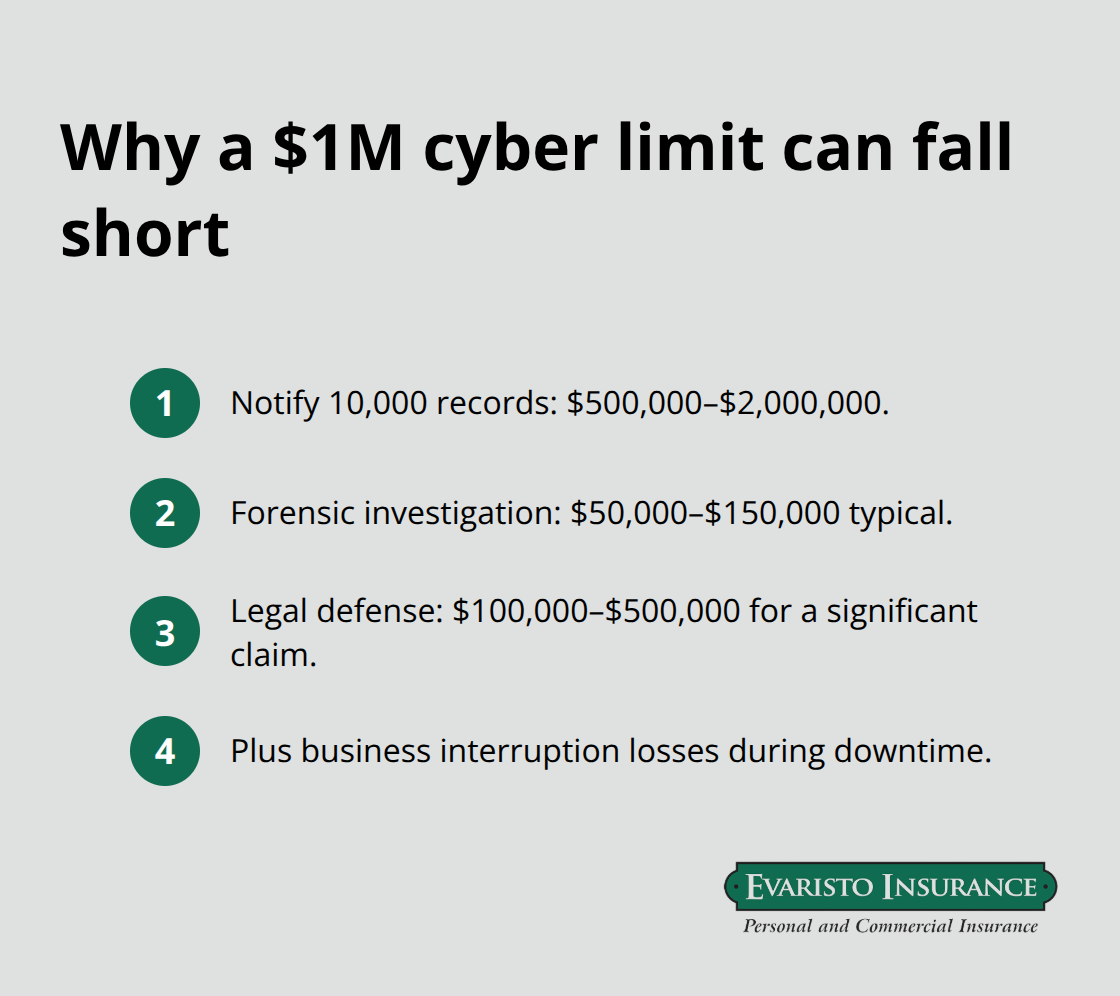
Coverage limits present a separate problem that catches many Connecticut small businesses off guard. You might purchase a policy with $1 million limits thinking that covers everything, but a single breach notification campaign for 10,000 customer records costs $500,000 to $2,000,000 depending on notification methods and credit monitoring duration. Add forensic investigation ($50,000 to $150,000), legal defense ($100,000 to $500,000 for a significant claim), and business interruption losses, and that $1 million limit evaporates instantly.
Regulatory fines for healthcare breaches or data protection violations can reach millions alone, making undersized limits financially catastrophic. Connecticut business owners should verify their limits match realistic loss scenarios, not just budget constraints. The most damaging gap occurs when policies cover first-party costs (your own recovery) but severely limit or exclude third-party liability (what customers or partners can sue you for).
The Gap Between Coverage and Reality
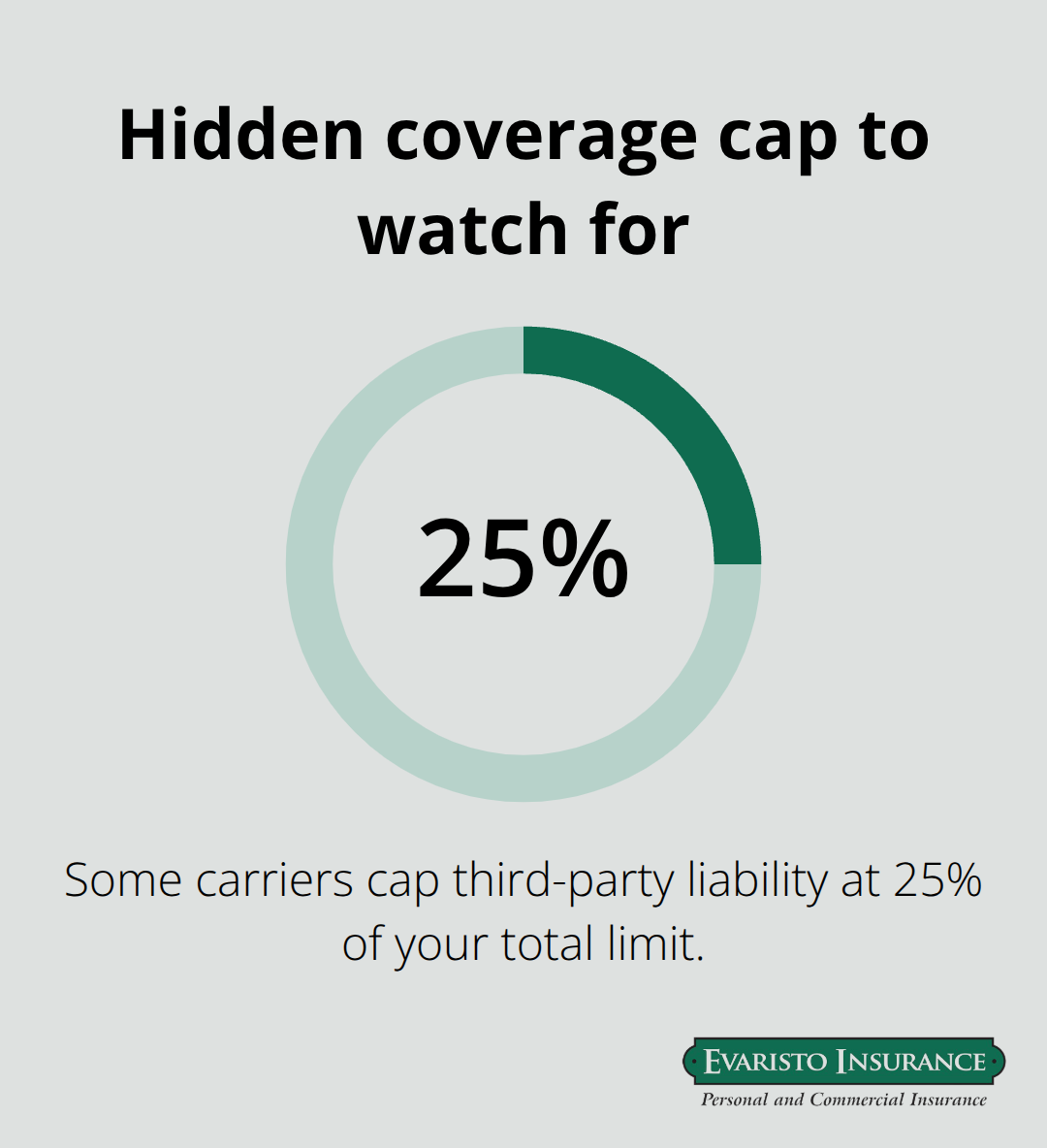
A breach affecting customer payment data creates exposure on both sides-you pay for notification and recovery, but customers also sue for identity theft monitoring and fraud losses. Some carriers cap third-party liability at 25 percent of your total limit, leaving you personally liable for the remainder. This mismatch between what you think you own and what you actually own often costs more than the breach itself.
Before purchasing any cyber policy, request a detailed comparison of what’s covered, what’s excluded, and what’s limited. An independent agent who understands Connecticut’s specific regulatory environment and your industry’s actual risk profile can help you identify these gaps before they become expensive problems.
Final Thoughts
Your cyber liability for businesses policy only protects you if it actually responds when an incident strikes. Pull out your current policy today and verify it covers forensic investigations, notification costs, business interruption losses, ransomware payments, and third-party liability claims. Check your coverage limits against realistic breach scenarios for your business size and data sensitivity, because undersized limits leave you personally liable for the difference.
Start by listing exactly what data your business stores and processes-customer payment information, health records, and social security numbers demand higher coverage limits than purchase history or email addresses. Calculate what a three-day system outage would cost your business in lost revenue plus ongoing expenses, and let that number inform your business interruption coverage limit. Request written clarification from your current carrier about what’s covered, what’s excluded, and what’s limited, since most carriers provide this documentation without charge.
We at Evaristo Insurance have served Connecticut businesses since 1989, comparing multiple carriers to find cyber liability coverage that matches your actual risk profile rather than forcing you into generic templates. Our local offices in Ellington and West Hartford can review your current policy, identify gaps, and help you build protection that survives a real attack. Contact us today to discuss what your cyber liability for businesses policy should actually include.
Disclaimer: This blog post is for general informational purposes only and does not represent actual coverage, policy terms, or legal requirements. Insurance details vary by individual and jurisdiction. Please consult a licensed insurance professional for advice specific to your situation.
