

Teen Driver Auto Insurance: Safe Start Behind The Wheel
Getting your teen behind the wheel is a major milestone. It’s also a significant financial responsibility, and teen driver auto insurance is one of the most important decisions you’ll make as a parent.
At Evaristo Insurance, we help Connecticut families navigate the complexities of insuring young drivers. This guide walks you through why specialized coverage matters, how to cut costs without cutting corners, and how to pick the right policy for your family.
Why Your Teen Needs Different Insurance
The Real Cost of Teen Drivers in Connecticut
Teen drivers in Connecticut face the highest insurance costs in the nation, and the numbers tell the story. A 16-year-old pays approximately $9,330 per year for auto insurance in Connecticut, compared to $1,544 annually for the average driver in the state. This pricing reflects actual risk. Teen drivers aged 16–19 are three times more likely to crash than drivers aged 20 and older.
In Connecticut, that risk translates directly to your wallet.
Legal Liability: Your Assets Are on the Line
Connecticut law mandates liability coverage for all drivers, and this requirement becomes especially critical when a teen is behind the wheel. The state’s minimum auto insurance coverage exists specifically because teen drivers cause substantial damage when accidents happen. If your teen causes an accident and you lack adequate liability coverage, your personal assets face exposure. Parents are legally responsible for accidents their teens cause, which means your home and savings could be at risk if coverage limits are too low. This legal exposure is why standard policies don’t work for teen drivers-you need limits that reflect the actual financial damage a teen accident could cause.
Connecticut’s Graduated Licensing Rules and Insurance Implications
Connecticut’s graduated licensing system adds another layer of complexity to your insurance needs. Until age 18, your teen cannot drive between 11 p.m. and 5 a.m., cannot use cell phones while driving, and faces strict passenger restrictions during the first six months of licensure. These rules exist because teen crashes peak during nighttime hours and when distractions increase. Your insurance must account for these restrictions and the supervision requirements they impose on your family.
The Critical Step: Disclosure to Your Insurer
If your teen violates these restrictions and causes an accident, insurers may deny claims if you haven’t disclosed the full driving situation to them. Informing your insurer about your teen’s learner’s permit or new license isn’t optional-it’s essential. Many parents skip this step thinking it saves money, but failing to disclose a teen driver can result in claim denial, policy cancellation, or renewal refusal. The cost difference between adding a teen to your existing policy and buying separate coverage is typically $500–$1,000 annually, making disclosure far cheaper than the alternative of having a claim rejected when you need it most.
Understanding these insurance fundamentals sets the stage for the next critical decision: identifying which cost-saving strategies actually work for your family’s budget.
How to Cut Teen Insurance Costs Without Sacrificing Protection
Good Student Discounts: Your Teen’s Grades Pay Off
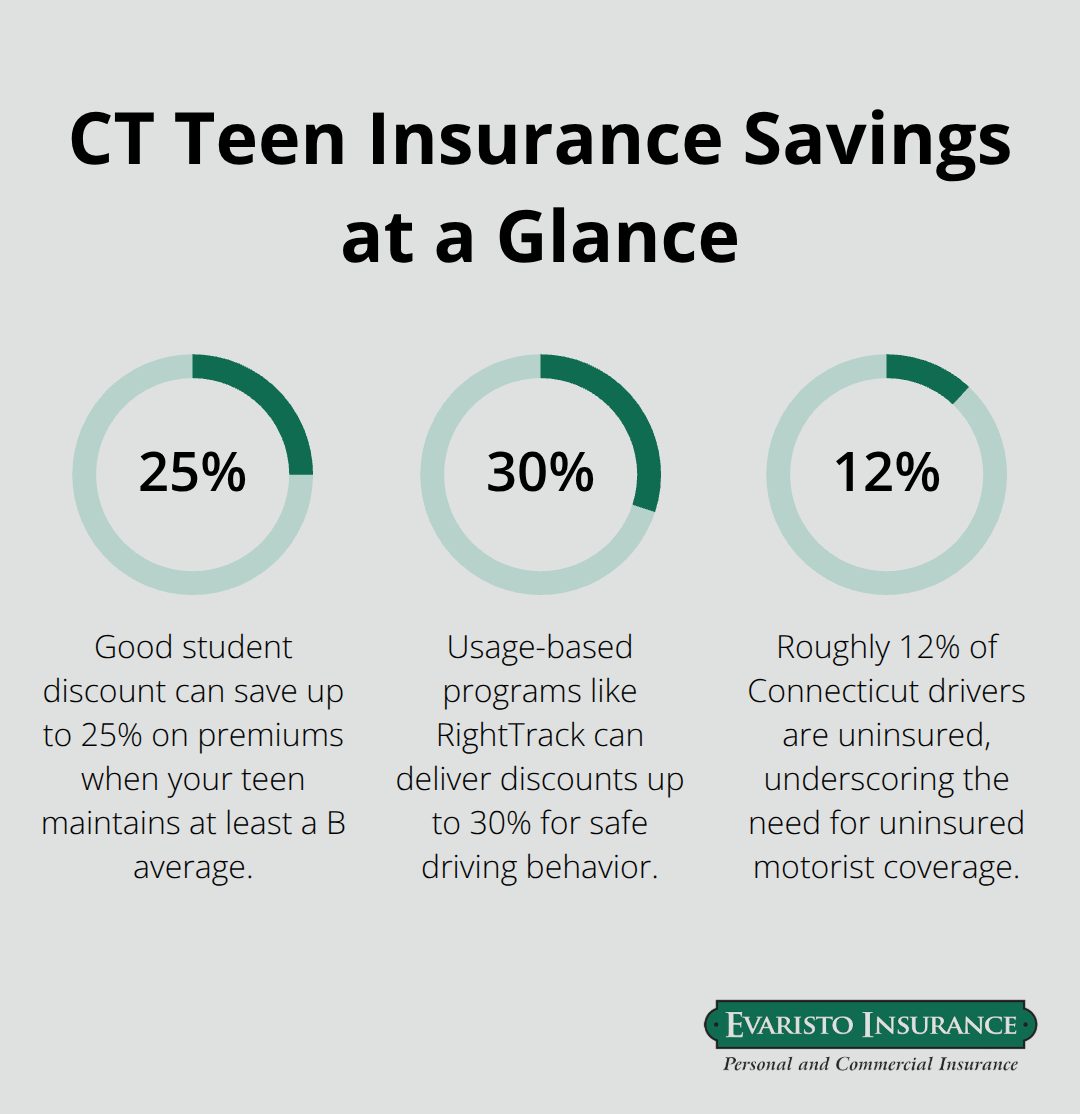
Connecticut parents face brutal insurance bills when adding a teen driver, but three proven strategies can meaningfully reduce costs. The most accessible option is the good student discount, available from most Connecticut insurers when your teen maintains at least a B average. This discount can save up to 25% on premiums, with savings potentially lasting until your teen turns 25. Your teen qualifies immediately once you provide proof of grades, and many insurers honor the discount for multiple years if your teen maintains eligibility. Liberty Mutual, for example, explicitly offers this discount to students under 25 with strong academic records, making it one of the fastest ways to lower your costs.
Defensive Driving Courses: Training That Pays for Itself
Defensive driving courses deliver another substantial reduction. Completing a state-approved defensive driving program typically earns a 5–10% discount on your policy, and some insurers stack this discount with the good student discount. Connecticut recognizes these courses as legitimate risk reducers because they measurably improve teen decision-making behind the wheel. The courses cost between $50–$150 and take 4–8 hours to complete, meaning you recover the course cost within months of the discount kicking in. More importantly, teens who complete these programs show reduced accident rates, which directly supports your family’s safety goals alongside the financial benefit.
Usage-Based Insurance: Monitoring Drives Savings
Usage-based insurance programs like Liberty Mutual’s RightTrack offer the most dramatic savings potential. This telematics monitoring tracks your teen’s actual driving habits-acceleration patterns, braking, speed, time of day, and distance-and rewards safe behavior with discounts up to 30%. The program provides real-time feedback to your teen through a smartphone app, creating accountability and immediate awareness of risky driving choices. Connecticut parents using RightTrack see average savings of 15–20% compared to standard policies, though the final discount depends on your teen’s actual driving performance. The score applies for the life of the policy, making this investment in monitoring a long-term cost control tool.
Stacking Discounts for Maximum Savings
These three strategies work best in combination. A Connecticut parent with a teen maintaining a B average, completing a defensive driving course, and enrolling in usage-based insurance can reduce premiums by 25–35% compared to baseline teen driver rates, potentially saving $2,000–$3,000 annually. Once you’ve locked in these savings, the next step involves selecting the right coverage limits and deductibles that protect your family without overextending your budget.
How to Choose the Right Teen Driver Policy
Coverage Limits That Protect Your Assets
Connecticut parents often make one of two mistakes when selecting teen driver coverage: they copy their own policy limits without adjusting for teen risk, or they strip coverage to the state minimum to save money. Neither approach works. Your teen faces teen driver crash risk that is fifty percent higher than experienced drivers, which means the coverage limits that protect you may leave your family exposed when your teen causes an accident.
Connecticut’s state minimum liability coverage sits at $20,000 per person and $40,000 per accident, but this threshold provides almost no protection. If your 16-year-old causes a serious multi-car collision, medical bills and property damage easily exceed $100,000. At that point, your personal assets become vulnerable. Try liability limits of $100,000 per person and $300,000 per accident for any household with a teen driver. This coverage costs roughly $70–$100 more annually than state minimums but protects your home and savings from catastrophic claims.
Deductibles and the Math Behind Your Choice
For collision and comprehensive coverage, your deductible choice matters enormously. A $500 deductible costs approximately $671 more per year than liability-only coverage in Connecticut, but a $1,000 deductible reduces that gap to roughly $550 annually. Since teen drivers average one accident every 4–5 years of driving, a $1,000 deductible often makes financial sense-you save money over time unless your teen causes multiple accidents.
However, if your teen drives an expensive vehicle or you cannot absorb a $1,000 out-of-pocket expense after a claim, stick with the $500 deductible. The math changes based on your specific situation, which is why shopping multiple quotes reveals the true cost-benefit of each option for your family.
Comparing Quotes Across Multiple Insurers
Comparing actual quotes from multiple insurers exposes the dramatic price variations Connecticut insurers charge for identical teen coverage. USAA offers the lowest rates in Connecticut at approximately $652 annually for average drivers, but only active military members and their families qualify. Liberty Mutual, State Farm, and Geico typically fall in the $1,200–$1,800 range for teen drivers, depending on age and driving record. The difference between the highest and lowest quote for the same 17-year-old can exceed $800 annually.

Start by obtaining quotes online from at least three major carriers-entering your ZIP code takes five minutes and generates a baseline price. Then contact a local independent agent who represents multiple carriers, as they often access rates and discounts unavailable online. When comparing quotes, verify that each one includes identical coverage limits, deductibles, and discounts to ensure you’re comparing apples to apples.
Optional Add-Ons Worth Your Money
Optional add-ons like roadside assistance cost $50–$100 annually and provide genuine value for teen drivers who may need help with a flat tire or dead battery. Rental car reimbursement covers daily rental costs after a collision, typically adding $20–$40 per year, and protects your family if your teen’s car sits in the shop for repairs. Uninsured motorist coverage protects your teen if hit by an uninsured driver, and this coverage costs $30–$60 more annually but is essential given that roughly 12% of Connecticut drivers lack insurance.
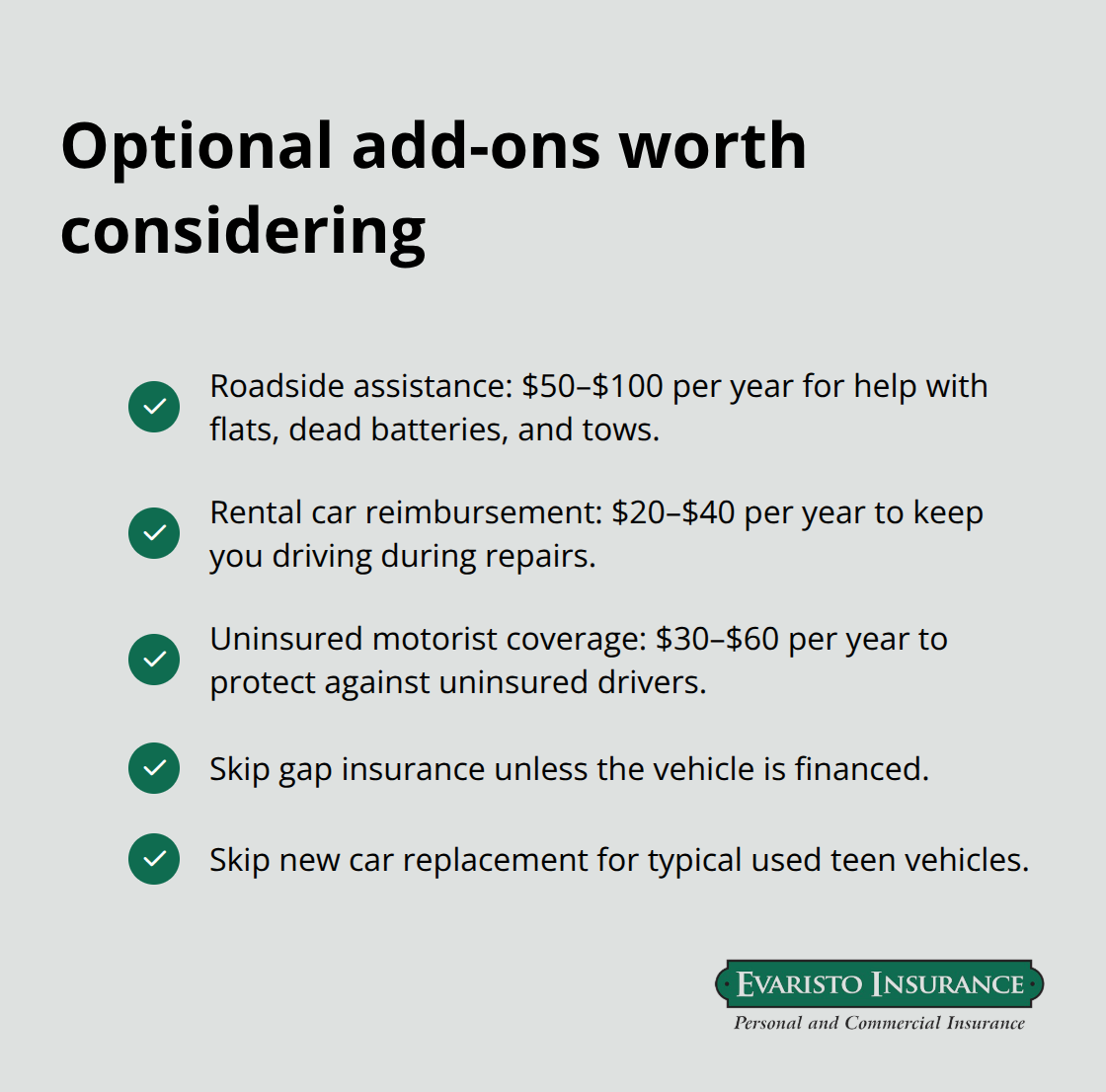
Skip the optional coverages that don’t fit your situation-gap insurance only matters if your teen financed a car, and new car replacement coverage adds unnecessary cost for teen drivers who typically drive used vehicles.
Final Thoughts
Insuring a teen driver in Connecticut requires you to balance protection with cost management, and the decisions you make now shape both your family’s safety and your budget for years to come. Teen driver auto insurance protects your assets, your teen’s future, and your peace of mind when your child sits behind the wheel. Start by contacting your current insurer or an independent agent to add your teen to your policy and explore good student discounts, defensive driving course reductions, and usage-based insurance programs that can reduce your costs by 25–35% without sacrificing the coverage limits your family needs.
Obtain quotes from at least three carriers to expose the price variations that exist across Connecticut’s insurance market, since the difference between the highest and lowest quote often exceeds $800 annually. Set coverage limits at $100,000 per person and $300,000 per accident for liability, and choose a deductible that matches your financial situation rather than simply selecting the lowest premium. Connecticut’s graduated licensing rules work because passenger restrictions and nighttime driving limits reduce teen crash risk substantially, and usage-based insurance programs reinforce these safety principles through real-time feedback about your teen’s driving choices.
We at Evaristo Insurance have guided Connecticut families through teen driver coverage decisions since 1989, and our independent agency compares multiple top carriers to find the coverage and pricing that fits your specific situation. Contact us at our Ellington or West Hartford offices to discuss your teen driver auto insurance needs and discover how much you could save while protecting what matters most.
Disclaimer: This blog post is for general informational purposes only and does not represent actual coverage, policy terms, or legal requirements. Insurance details vary by individual and jurisdiction. Please consult a licensed insurance professional for advice specific to your situation.

