
Small Business Policy CT: Crafting a Strong BOP for Growth
Connecticut small business owners face a critical choice: standard policies that leave gaps, or a Business Owners Policy built for real growth. We at Evaristo Insurance know that generic coverage doesn’t match the specific risks your business faces.
A small business policy in CT should protect your assets, your liability exposure, and your ability to recover from disruption. The right BOP does all three-without forcing you to buy protection you don’t need.
What Connecticut Small Businesses Actually Need From Coverage
Standard Policies Leave Real Gaps
Standard business policies expose Connecticut owners to risks they never anticipated. A general liability policy covers bodily injury and property damage claims, but nothing beyond that. Property coverage protects your building and equipment, yet leaves your income vulnerable if a fire forces you to shut down for three months. Workers compensation covers employee injuries, but fails to address the liability gap when a client slips on your premises. These gaps aren’t accidents-they reflect policies built for broad markets, not your specific operation.
Different Industries Face Different Exposures
Connecticut manufacturers face different risks than service businesses, which face different risks than retail shops. A one-size approach guarantees you either overpay for unnecessary coverage or underpay and face catastrophic exposure. A plumbing contractor in Hartford needs different liability limits than an accounting firm in Stamford. A manufacturing operation needs equipment breakdown coverage that a professional services firm doesn’t. Standard policies ignore these distinctions entirely.
How BOPs Bundle Protection Together
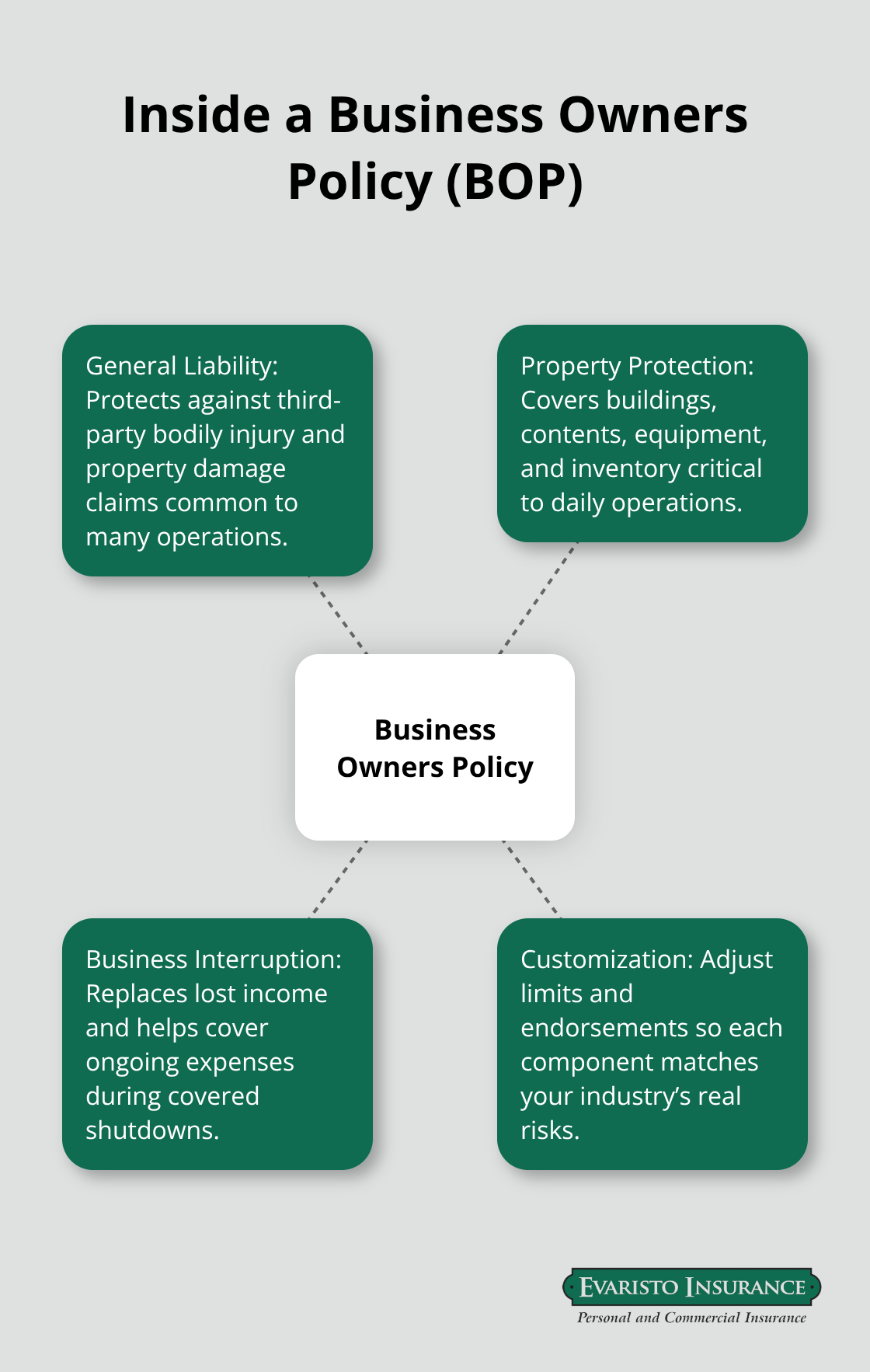
A Business Owners Policy combines general liability, property protection, and business interruption coverage into a single package designed for small operations. Instead of managing three separate policies and three renewal dates, you coordinate protection where coverage layers work together. A BOP lets you customize each component to match your actual needs. The Connecticut Department of Consumer Protection doesn’t mandate specific BOP structures, which means insurers have flexibility to build packages that fit real businesses.
Cost Savings Through Bundled Coverage
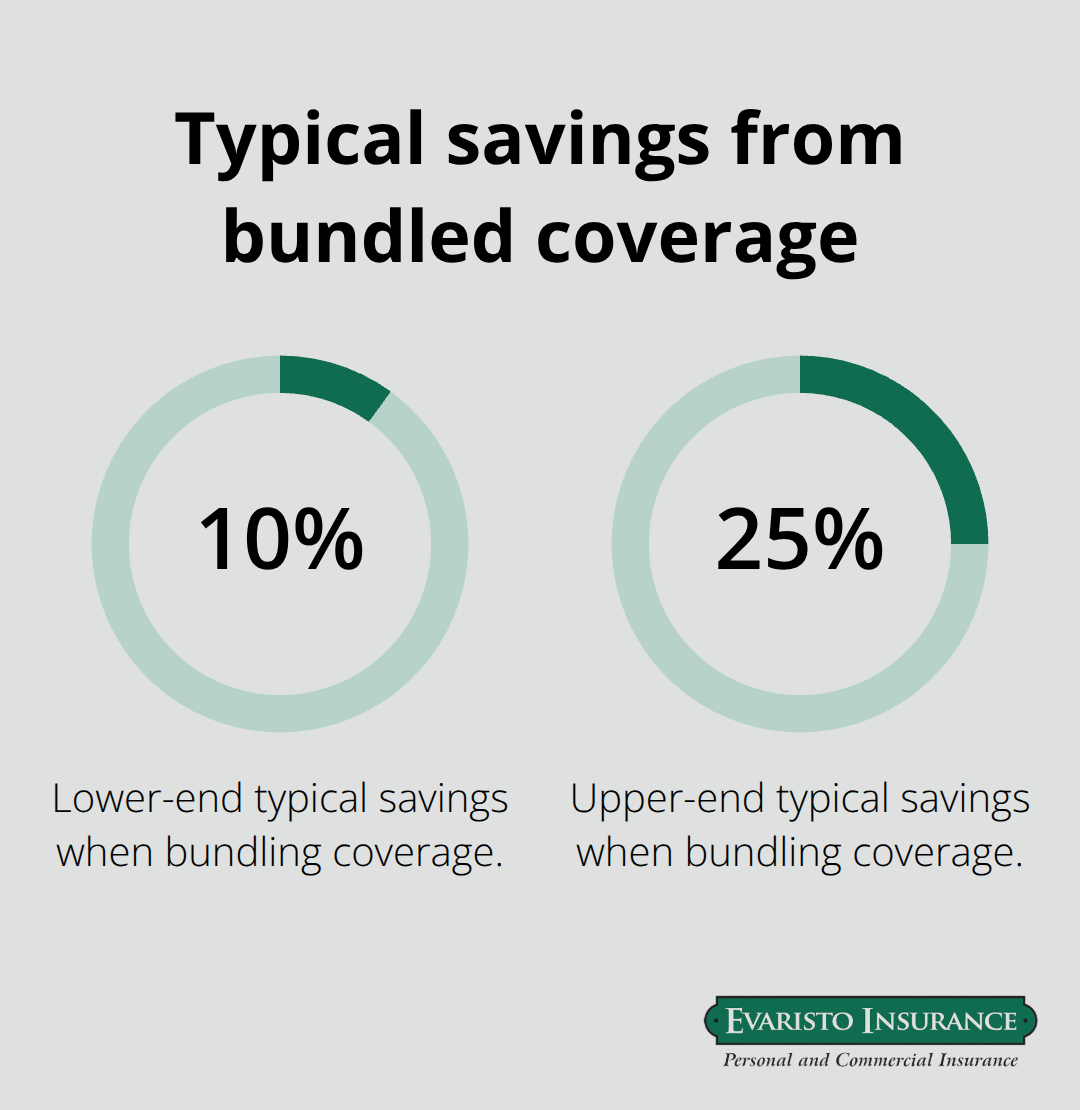
Bundled coverage typically costs 10 to 25 percent less than buying the same protections separately, according to insurance industry data. You gain better protection at a lower total cost while eliminating the coverage gaps that standard policies leave behind. Different carriers structure their BOPs differently-some bundle more efficiently than others, and some offer better pricing on the specific components your business needs.
Finding the Right BOP Structure for Your Operation
The real advantage of a BOP isn’t just convenience (though that matters). It’s that coordinated protection addresses the specific exposures your Connecticut business actually faces. This foundation positions you to evaluate which carrier and which specific coverage components will support your growth plans most effectively.
Building a BOP That Protects Your Connecticut Business Growth
Liability Coverage That Matches Your Industry Risks
Liability coverage is where most Connecticut small business owners get the math wrong. General liability policies typically start at $1 million per occurrence, but that number means nothing if it doesn’t match what your industry actually needs. A contractor installing roofing systems faces exposure levels completely different from a marketing consultant working from a home office. Connecticut’s construction industry accounts for roughly 6 percent of the state’s employment, and those businesses need liability limits that reflect fall hazards, equipment accidents, and client property damage risks that service businesses never encounter.
A roofing contractor should carry at least $2 million in general liability coverage, while a consulting firm operating from an office might adequately protect itself with $1 million. The gap between what you buy and what you actually need creates either wasted premium dollars or dangerous exposure. Your actual operational risks-not peer comparisons-should determine your liability limits. A contractor working at heights faces different claims than a salon owner, which faces different claims than a restaurant operator.
Property Protection for Your Physical Assets and Equipment
Property protection demands the same precision as liability coverage. Your building might be worth $400,000, but your equipment, inventory, and tools could represent another $150,000 in assets that standard building coverage completely ignores. Connecticut manufacturing facilities especially need to account for specialized equipment that costs far more to replace than standard commercial property coverage allows.
Standard policies cover your structure and basic contents, yet they miss the specific assets that generate your revenue. A dental practice needs to protect high-value diagnostic equipment. A woodworking shop needs to protect specialized machinery. A retail operation needs to protect inventory that turns over monthly. Each business requires property protection tailored to what actually sits on your premises and what that equipment costs to replace.
Business Interruption Coverage When Unexpected Events Strike
Business interruption coverage is where Connecticut owners consistently miss protection entirely. If a water pipe bursts and forces you to close for two weeks, your liability and property policies pay for repairs-but nothing covers your lost revenue, payroll obligations, or fixed costs that keep running. Studies from the Small Business Administration show that roughly 40 percent of small businesses never reopen after a significant disruption lasting more than a few days.
Interruption coverage compensates for lost income during the shutdown period, typically covering 30, 60, or 90 days depending on your policy structure. A small manufacturer with $40,000 in monthly revenue needs interruption coverage that reflects how long recovery actually takes in your industry, not an arbitrary number chosen for budget reasons. The BOP approach forces you to think through each component intentionally rather than accepting whatever a standard policy offers.
Your next step involves finding the right carrier and agent who understand how these three components work together for Connecticut businesses specifically.
Selecting the Right BOP Provider in Connecticut
Comparing Carriers That Understand Local Business Challenges
Connecticut carriers handle BOP structures differently, and that difference directly impacts what you pay and what you’re actually protected against. Some insurers bundle coverage tightly and pass savings to customers; others bundle loosely and leave gaps that force you to buy additional policies. When you compare carriers, ignore the marketing language and focus on what each one actually includes in their BOP package.
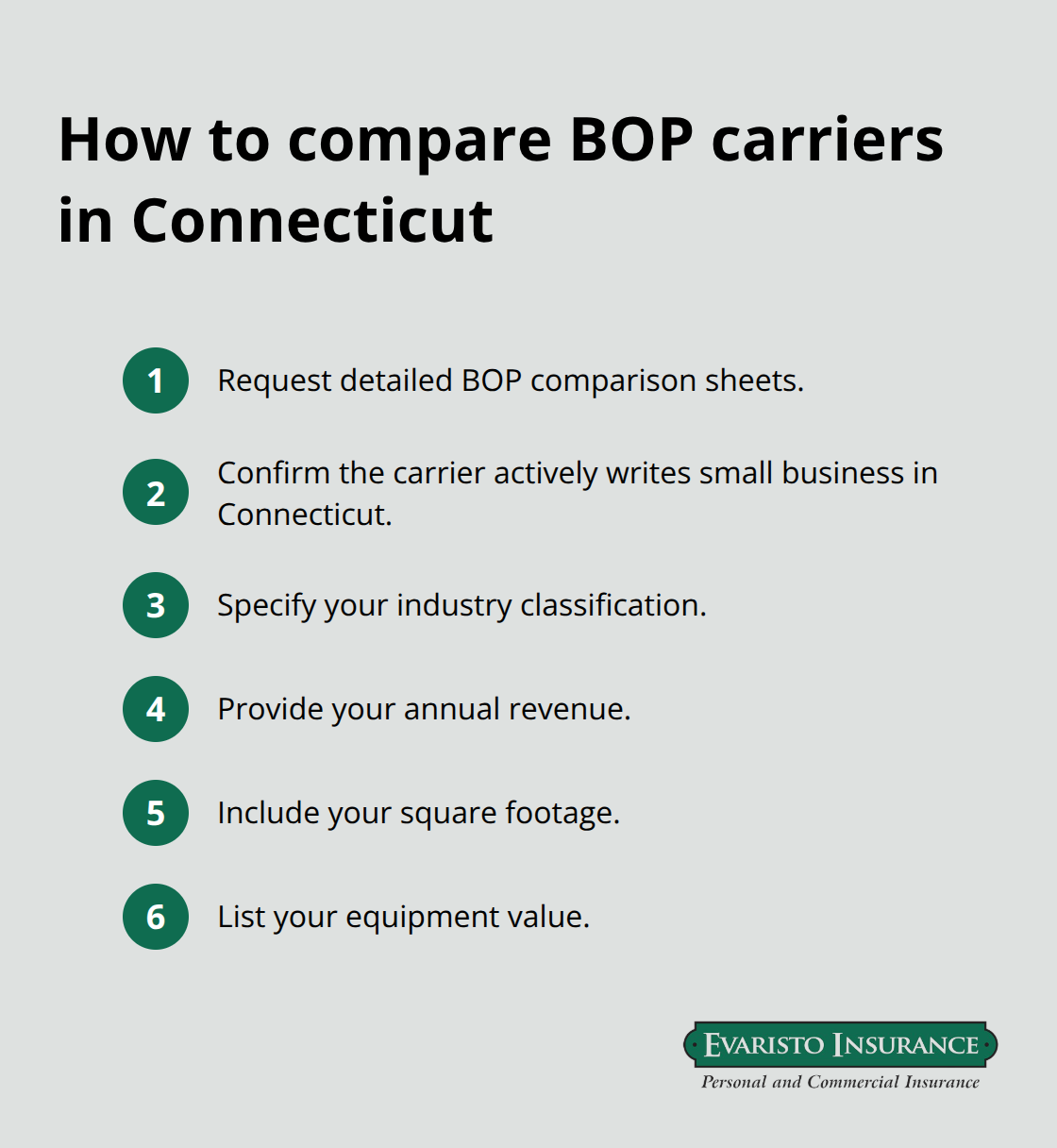
A carrier offering general liability, property, and business interruption for $1,200 annually looks attractive until you realize their liability limits are lower than a competitor charging $1,400 with higher limits and better equipment breakdown coverage. Request detailed BOP comparison sheets from at least three carriers that actively write business in Connecticut. Specify your industry, your revenue, your square footage, and your equipment value.
Ask each carrier how their BOP would handle a specific scenario relevant to your operation. If your building lost power for five days, what would the BOP actually cover? If your primary equipment failed, would replacement costs be covered? If a customer sued for $500,000, would your liability limits handle it? The answers separate carriers that understand Connecticut small business from those simply selling a generic product.
Working With Agents Who Know Connecticut’s Regulatory Environment
An agent who knows Connecticut’s regulatory environment and your specific industry is worth significantly more than the premium difference you might save shopping online. Connecticut’s Department of Consumer Protection maintains specific filing requirements and coverage standards that vary by industry classification, and most small business owners don’t know these rules exist.
When you evaluate agents, ask whether they’ve handled claims for businesses like yours and what they learned from those claims. Ask whether they monitor your coverage annually as your business grows or if you only hear from them at renewal. Ask whether they’ll negotiate with carriers on your behalf if your claims history improves or if you’ve reduced your operational risks.
A quality agent tracks industry changes, Connecticut regulatory updates, and carrier pricing shifts throughout the year rather than waiting for your renewal notice. As an independent agency serving Connecticut since 1989, Evaristo Insurance compares multiple top carriers to deliver tailored protection and competitive pricing for Connecticut businesses across construction, manufacturing, professional services, and retail.
Getting Competitive Pricing Without Sacrificing Coverage Quality
The right agent relationship costs nothing more than working with an agent who doesn’t provide attention to detail, yet it saves you thousands in unnecessary coverage and thousands more by identifying exposures you’d otherwise miss entirely. An agent who understands your specific operation (not just your industry category) can identify which coverage components matter most and which ones you can safely minimize.
Request quotes structured identically across carriers so you can compare apples to apples. Don’t accept a quote that bundles different coverage limits or different deductibles than the others-that comparison tells you nothing about actual pricing differences. The lowest price means nothing if it comes with lower liability limits or shorter business interruption periods than competitors offer.
Final Thoughts
A small business policy CT that protects your operation requires three deliberate choices: selecting coverage components that match your specific industry risks, bundling those components into a coordinated structure, and working with a carrier and agent who understand Connecticut’s business environment. The BOP approach forces you to think through liability limits, property protection, and business interruption coverage intentionally rather than accepting whatever a standard policy offers. A roofing contractor needs different protection than a consulting firm, and a manufacturer needs different equipment coverage than a retail operation.
Bundled coverage typically costs 10 to 25 percent less than buying the same protections separately, yet most Connecticut owners never compare the two approaches. That savings compounds over years and frees capital for actual business investment rather than wasted premium dollars on unnecessary coverage.
Your growth plans depend on protection that reflects what your business actually does, not what an insurance company assumes all small businesses need.
Gather your current policies and identify what gaps exist between your actual exposures and what you’re currently protected against. Request detailed BOP quotes from multiple carriers structured with identical coverage limits and deductibles so you can compare pricing fairly. We at Evaristo Insurance have served Connecticut businesses since 1989, and our local offices in Ellington and West Hartford work with your specific operation to build a BOP that supports your growth plans rather than constraining them.
Disclaimer: This blog post is for general informational purposes only and does not represent actual coverage, policy terms, or legal requirements. Insurance details vary by individual and jurisdiction. Please consult a licensed insurance professional for advice specific to your situation.

