
Best Auto Insurance CT: Finding Value Without Compromise
Connecticut drivers face real pressure when shopping for auto insurance. You’re balancing state requirements, protecting your assets, and keeping costs reasonable-all while sorting through confusing quotes and coverage options.
At Evaristo Insurance, we’ve helped hundreds of Connecticut residents find the best auto insurance CT without overpaying or leaving gaps in protection. This guide walks you through what actually matters when comparing policies, the mistakes most shoppers make, and how to get coverage that fits your life and budget.
What Connecticut’s Auto Insurance Rules Actually Cost You
Connecticut law requires a minimum of Connecticut’s minimum liability limits of $25,000 bodily injury per person, $50,000 per accident, and $25,000 property damage. This sounds reasonable until a single serious accident exceeds these limits. A person hospitalized for a week accumulates $50,000 to $100,000 in medical bills alone, before accounting for lost wages or long-term care. If you cause that accident, Connecticut’s minimum coverage leaves you personally responsible for the gap. You should carry at least 100/300/100 limits, which costs roughly 15 to 25 percent more per year but protects your actual assets. Most Connecticut drivers underestimate how quickly medical and repair costs spiral beyond state minimums, especially in urban areas where accident severity tends to be higher.
Underinsured Motorist Coverage Fills a Real Gap
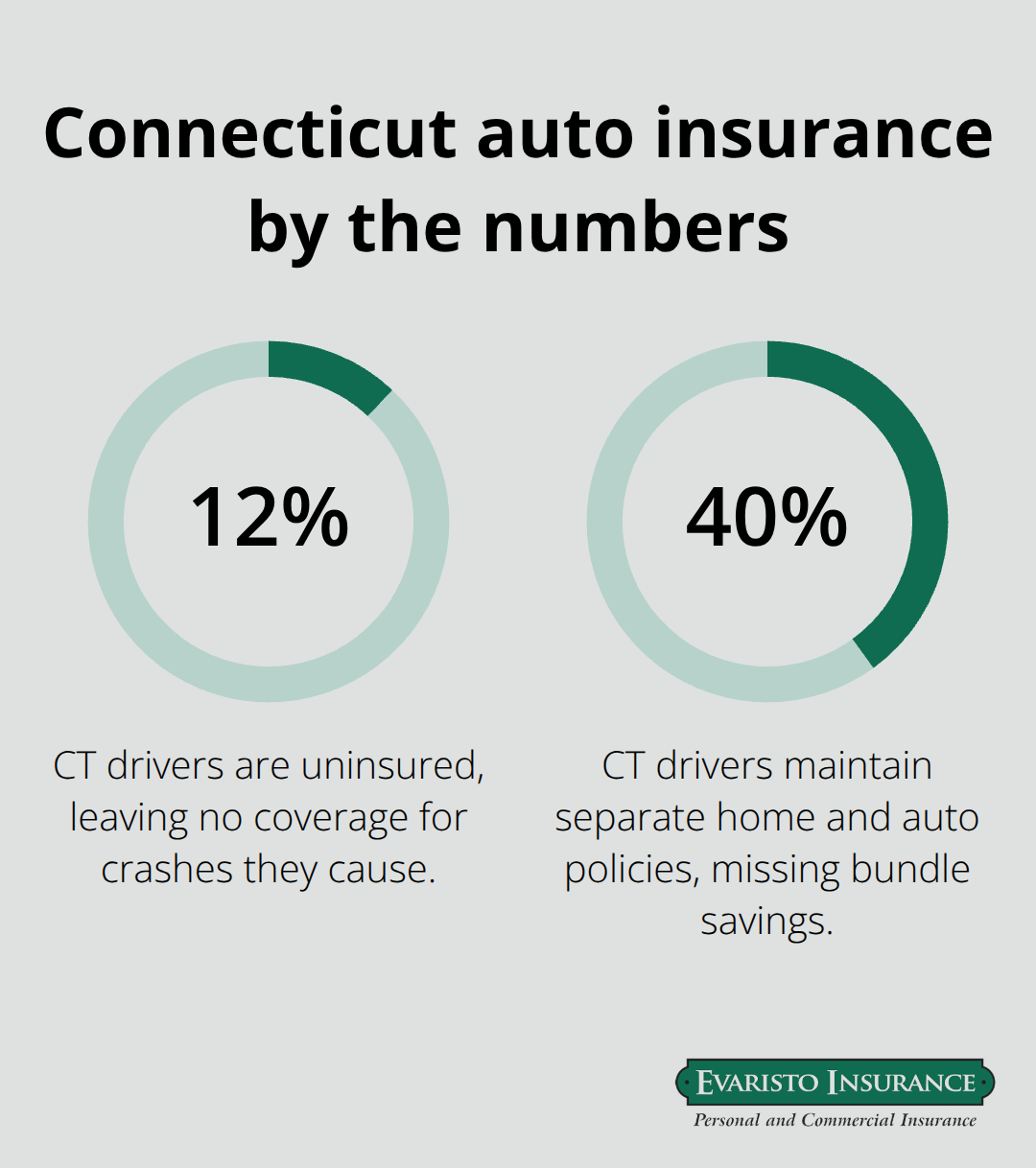
Connecticut requires underinsured motorist coverage as part of your policy, and this is one requirement you should actually appreciate. Roughly 12 percent of Connecticut drivers carry no insurance at all according to state data, and many others carry minimum limits that won’t cover serious injuries. If an uninsured or underinsured driver hits you, your underinsured motorist coverage steps in to pay for your medical expenses, lost wages, and pain and suffering up to your policy limit.
Without it, you’d chase down a driver with no money or pursue a lengthy lawsuit. The coverage typically costs $15 to $40 per year for solid limits, making it one of the cheapest protections available. You should increase your limits to match or exceed your liability limits for maximum protection, rather than accepting the mandatory minimum.
Actual Cash Value Versus Replacement Cost Matters More Than You Think
Your collision and comprehensive coverage comes down to one choice: actual cash value or replacement cost. Actual cash value pays what your car is worth today, minus depreciation, if it’s totaled or damaged. Replacement cost pays what it would cost to replace or repair your vehicle with a new one of similar kind and quality. A five-year-old Honda Civic worth $15,000 under actual cash value might cost $22,000 to replace new. The premium difference usually runs 10 to 15 percent annually, but replacement cost coverage protects you from taking a depreciation hit when you need your car most. Connecticut drivers with financed or leased vehicles should always choose replacement cost, since lenders typically require it anyway. Even if you own your car outright, replacement cost makes sense if you depend on reliable transportation for work or family obligations.
How Your Personal Situation Shapes Coverage Needs
Your age, driving history, and vehicle type all influence which coverage options actually protect you. A 25-year-old driver in Hartford faces different risks than a 55-year-old in a rural area, and your policy should reflect that reality. Your commute length, annual mileage, and whether you carry passengers regularly all matter when deciding between actual cash value and replacement cost. These factors also determine whether you need gap insurance (which covers the difference between what you owe and what your car is worth if totaled) or whether standard coverage suffices. Understanding how insurers calculate your specific rate helps you spot overpriced quotes and identify where you can safely reduce coverage without creating gaps.
Comparing Quotes Without Getting Trapped by Misleading Numbers
What Actually Drives Your Auto Insurance Rate
Connecticut insurers calculate your rate based on factors that vary significantly from carrier to carrier. Your age, driving record, credit score, annual mileage, commute distance, and vehicle safety features all influence what you pay. Hartford drivers pay roughly 30 to 40 percent more than drivers in rural areas due to higher accident frequency and theft rates.
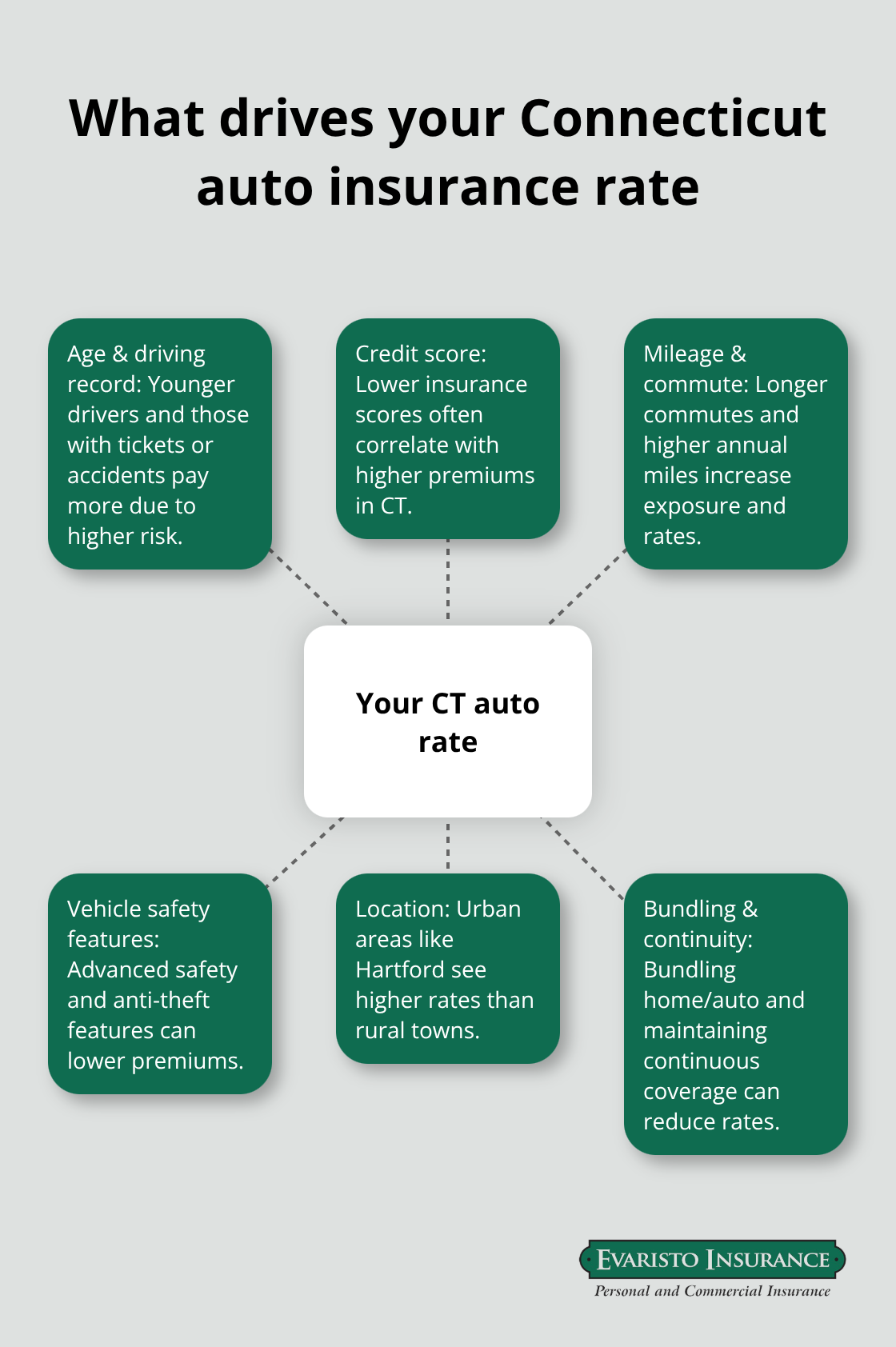
Marital status, whether you bundle home and auto coverage, and how long you’ve maintained continuous insurance all shape your final quote. Two identical drivers requesting the same coverage can see quotes that differ by $400 or more annually simply because insurers weight these factors differently.
Spot the Traps in Side-by-Side Comparisons
A cheaper quote often hides coverage gaps that create real problems when you file a claim. One carrier might exclude uninsured motorist coverage you need, use actual cash value instead of replacement cost, or apply discounts you don’t actually qualify for. Request quotes with identical coverage across all carriers-100/300/100 liability, $500 collision deductible, replacement cost coverage, and uninsured motorist limits matching your liability.
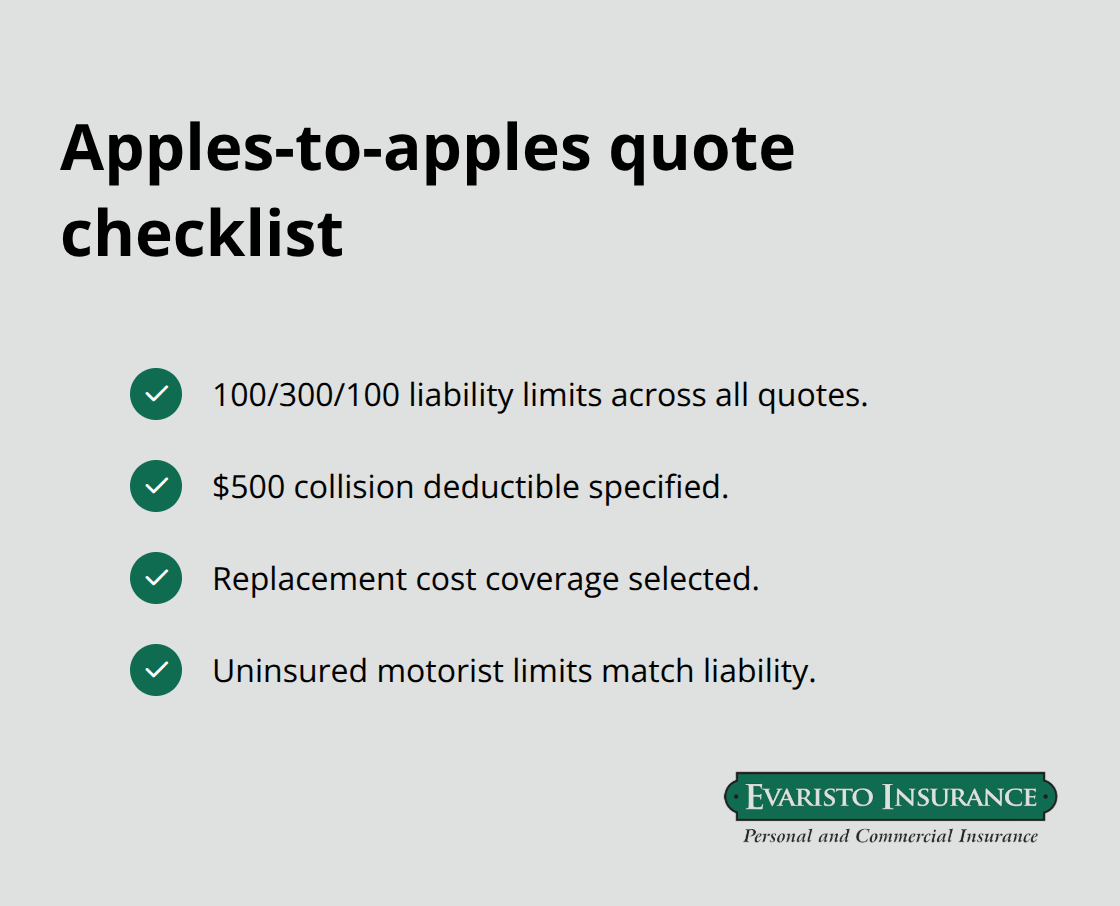
This approach forces apples-to-apples comparisons and reveals which carriers truly offer the best value for your situation.
Red Flags That Signal Trouble Ahead
Unrealistically low quotes warrant skepticism, especially when the agent cannot explain exactly which discounts triggered the final price. Some carriers quote aggressively to win your business, then raise rates dramatically at renewal once you’re locked in. Connecticut’s Insurance Department publishes complaint ratios for each carrier, and you should check yours before committing-insurers with high complaint-to-premium ratios often cut corners on claims handling. Request your actual Connecticut insurance score from carriers, since many use this metric but won’t volunteer the number unless asked directly.
Tools and Local Expertise Make the Difference
The National Association of Insurance Commissioners tool allows you to compare rates across carriers with consistent parameters, though you’ll still need individual quotes for your exact situation. An independent agent compares multiple carriers simultaneously without requiring separate applications, plus provides someone who understands Connecticut-specific risks and spots overpriced or underprotective quotes immediately. Local expertise matters significantly-a 30-year-old with a clean record in West Hartford gets quoted differently than the same person in Bridgeport, and agents familiar with your area know which carriers offer the best rates for your specific profile.
Moving Forward With Confidence
Once you’ve identified the quotes that offer genuine value and appropriate coverage, you’ll want to understand the mistakes most Connecticut shoppers make when finalizing their decisions. These errors often occur after you’ve done the hard work of comparing quotes, which is why recognizing them now prevents costly oversights later.
Common Mistakes Connecticut Auto Insurance Shoppers Make
State Minimums Leave You Financially Exposed
Connecticut’s minimum liability limits exist for legal reasons, not financial protection. The state requires 25/50/25, but this coverage evaporates instantly in serious accidents. A rear-end collision on I-95 near New Haven involving three vehicles and one hospitalized driver easily generates $150,000 in medical expenses plus vehicle damage exceeding $75,000. Connecticut’s minimum coverage leaves you personally liable for significant uninsured losses, and creditors can garnish your wages for years to recover that debt.
Connecticut drivers who choose state minimums are betting that accidents won’t happen to them. Statistically, roughly 1 in 3 Connecticut drivers will file a collision claim within a 10-year period according to insurance industry data. Increasing limits to 100/300/100 costs approximately $180 to $300 more annually depending on your profile, but protects your home, savings, and future earnings if you cause serious injury. This isn’t theoretical risk-it’s the difference between a manageable insurance claim and financial devastation.
Overlooking Discounts Costs Hundreds Annually
Ignoring available discounts is the second major mistake Connecticut shoppers make, often costing them $500 to $1,200 annually in preventable premiums. Bundling auto and home coverage typically saves 15 to 25 percent on your auto policy alone, yet roughly 40 percent of Connecticut drivers maintain separate policies with different carriers.
Low-mileage discounts apply if you drive under 7,500 miles annually, which saves 10 to 15 percent for remote workers or retirees. Safe driver discounts, accident-free discounts, and completion of defensive driving courses each reduce your rate by 5 to 10 percent. Many drivers fail to ask about these discounts during the quote process, and carriers rarely volunteer them without prompting. An independent agent compares multiple carriers and identifies every discount you qualify for, rather than leaving money on the table.
Annual Reviews Prevent Coverage Mismatches
The third critical mistake is skipping annual policy reviews. Your life changes-you change jobs, move closer to work, pay off a car loan, or add a teenage driver-and your insurance needs shift accordingly. Connecticut drivers who review policies only when renewing often overpay because their coverage no longer matches their actual situation.
A 45-year-old who paid off their vehicle three years ago might still carry collision coverage on a car worth $8,000, unnecessarily spending $400 annually on protection against a loss they can absorb. Conversely, someone who added a second job requiring a 40-mile commute might not have adjusted their uninsured motorist limits upward to reflect increased accident exposure. Annual reviews with an independent agent who understands Connecticut’s specific risks catch these mismatches before they cost you money.
Final Thoughts
Finding the best auto insurance CT requires three core decisions: carrying adequate liability limits that protect your assets, comparing quotes with identical coverage across multiple carriers, and reviewing your policy annually as your life changes. Connecticut’s minimum requirements provide legal compliance, not financial security, and increasing to 100/300/100 liability limits costs roughly 15 to 25 percent more annually but prevents catastrophic losses that could follow you for years. A single serious accident on I-95 or a Hartford intersection generates medical bills and repair costs that far exceed what minimum coverage provides.
The mistakes most Connecticut drivers make are preventable, and accepting state minimums, ignoring available discounts, and skipping annual reviews waste hundreds of dollars annually while leaving coverage gaps that matter when accidents happen. Your policy should reflect your actual financial exposure, not just legal requirements, and working with a local Connecticut agent transforms this process from frustrating to straightforward. An independent agent compares multiple top carriers simultaneously, identifies every discount you qualify for, and spots coverage mismatches that online quote tools miss.
We at Evaristo Insurance have served Connecticut families and businesses since 1989, comparing multiple carriers to deliver tailored protection at competitive prices. Our local offices in Ellington and West Hartford provide hands-on advocacy when you need it most, and contact Evaristo Insurance to review your current coverage, compare quotes with identical protection across carriers, and identify discounts you’re currently missing.
Disclaimer: This blog post is for general informational purposes only and does not represent actual coverage, policy terms, or legal requirements. Insurance details vary by individual and jurisdiction. Please consult a licensed insurance professional for advice specific to your situation.

