Boat RV Insurance CT: Comprehensive Coverage for Your Marine and Mobile Assets
Boats and RVs represent significant investments that deserve protection beyond what standard auto policies provide. Connecticut’s waterways and seasonal recreation patterns create unique insurance needs that many boat and RV owners overlook.
At Evaristo Insurance, we’ve helped countless Connecticut residents find the right boat RV insurance CT coverage for their specific situations. This guide walks you through the coverage options, regional requirements, and practical steps to protect your assets year-round.
Why Boat and RV Insurance Isn’t Like Car Insurance
Standard Auto Policies Leave You Exposed
Your standard auto policy won’t protect your boat or RV, and Connecticut regulators make this distinction very clear. Boats and recreational vehicles operate under completely different liability frameworks than vehicles on public roads. A boat liability claim can involve drowning, property damage on water, or injuries to passengers in ways that auto policies simply don’t address. RVs create their own complications because they function simultaneously as vehicles and temporary residences-your homeowners policy won’t cover them either. Connecticut doesn’t require boat insurance by state law, but if you finance your vessel, your lender will demand it. The same applies to RVs: most lenders require comprehensive and collision coverage before they’ll approve your loan.
Standard auto policies cap liability at whatever limit you choose for your car, but watercraft exposure can be substantially higher because a single incident involving multiple boats or swimmers can generate massive claims. Boat owners often discover massive gaps when they file a claim, only to learn their auto policy provided no basic protection. RV owners face similar surprises because their policies don’t account for the unique risks of living in the vehicle while traveling across state lines.
Connecticut’s Waterways Create Specific Requirements
Connecticut’s waterways create specific insurance requirements that differ from inland states. The state has over 3,000 miles of coastline and countless lakes and rivers, meaning water-based accidents happen regularly. If you operate a boat in Connecticut, you need coverage that addresses saltwater corrosion, storm damage during hurricane season, and liability for incidents involving swimmers or other vessels. RV owners in Connecticut face seasonal challenges because many store their vehicles during winter months, which actually changes what coverage you need and can lower your premiums significantly.
Critical Coverage Gaps Most People Miss
Most people miss critical coverage gaps because they assume basic liability protection is enough-it absolutely isn’t. Uninsured boater coverage protects you if another boat operator causes damage and lacks insurance, yet many Connecticut residents skip this add-on entirely. Emergency towing for RVs becomes essential when you’re stranded on I-91 or remote roads, but standard RV policies often exclude this or charge extra. Fuel spill liability specifically protects you if your boat or RV leaks fuel into waterways, which Connecticut environmental regulations take seriously.
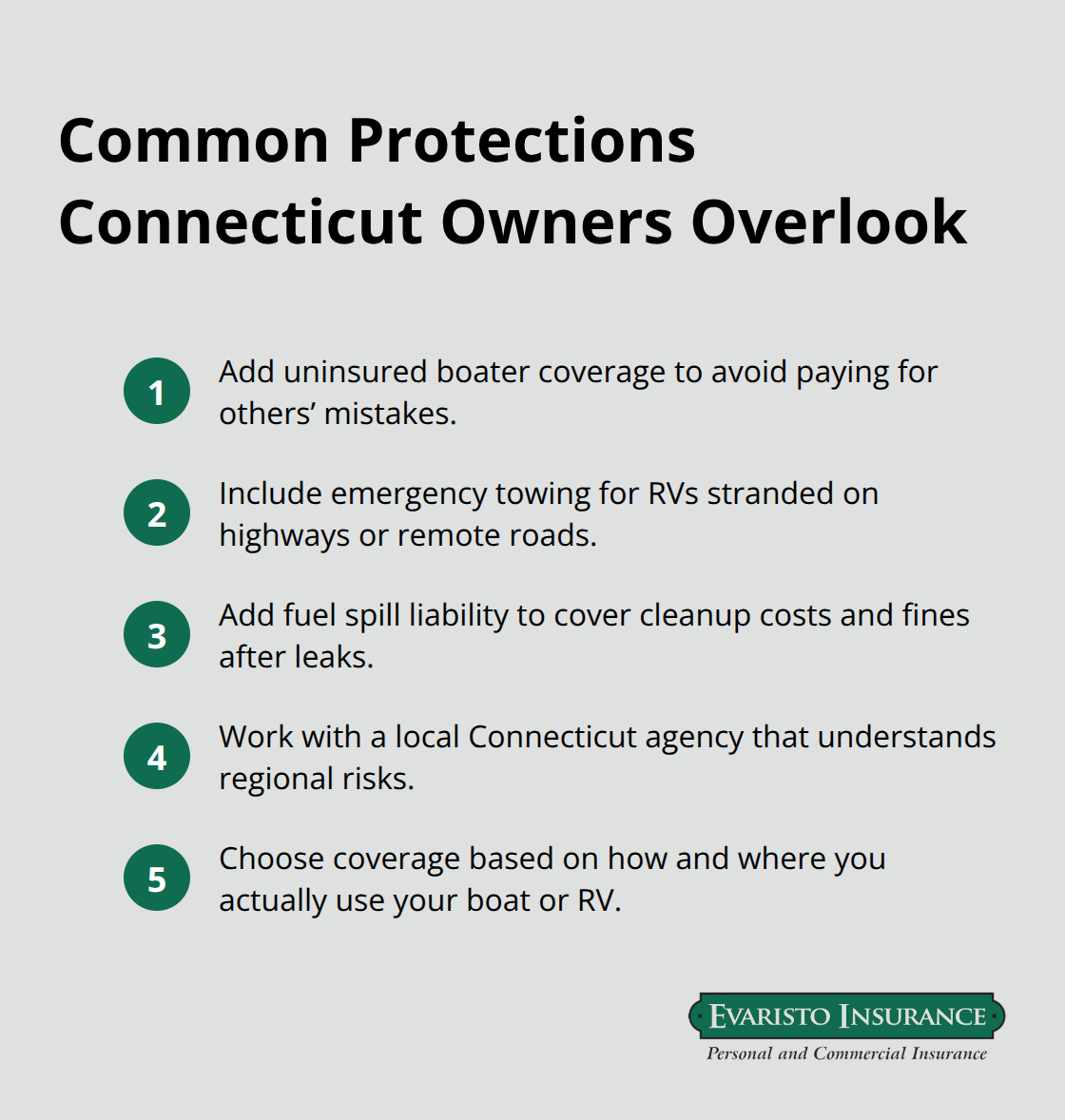
Understanding these gaps matters because your coverage decisions today determine whether you face financial disaster tomorrow. The specific protections you need depend on how you actually use your boat or RV, which is why working with a local insurance agency that understands Connecticut’s unique requirements becomes essential.
What Coverage Actually Protects Your Boat or RV
Liability Coverage Forms Your Foundation
Liability coverage forms the foundation of any boat or RV policy, and Connecticut waters demand higher limits than most boat owners carry. If your boat causes injury to another person or damage to property, liability pays for their medical bills, legal defense, and settlements. A single collision involving multiple vessels or swimmers can generate claims exceeding $500,000 quickly, which most Connecticut residents underestimate. Try liability limits of $300,000 for boats and $500,000 for RVs used for overnight travel, though your actual needs depend on your assets and how frequently you entertain passengers. Underinsured boaters in Connecticut often discover their $100,000 limit vanishes after one serious incident, leaving them personally responsible for the difference.
Collision and Comprehensive Coverage Work Differently for Boats and RVs
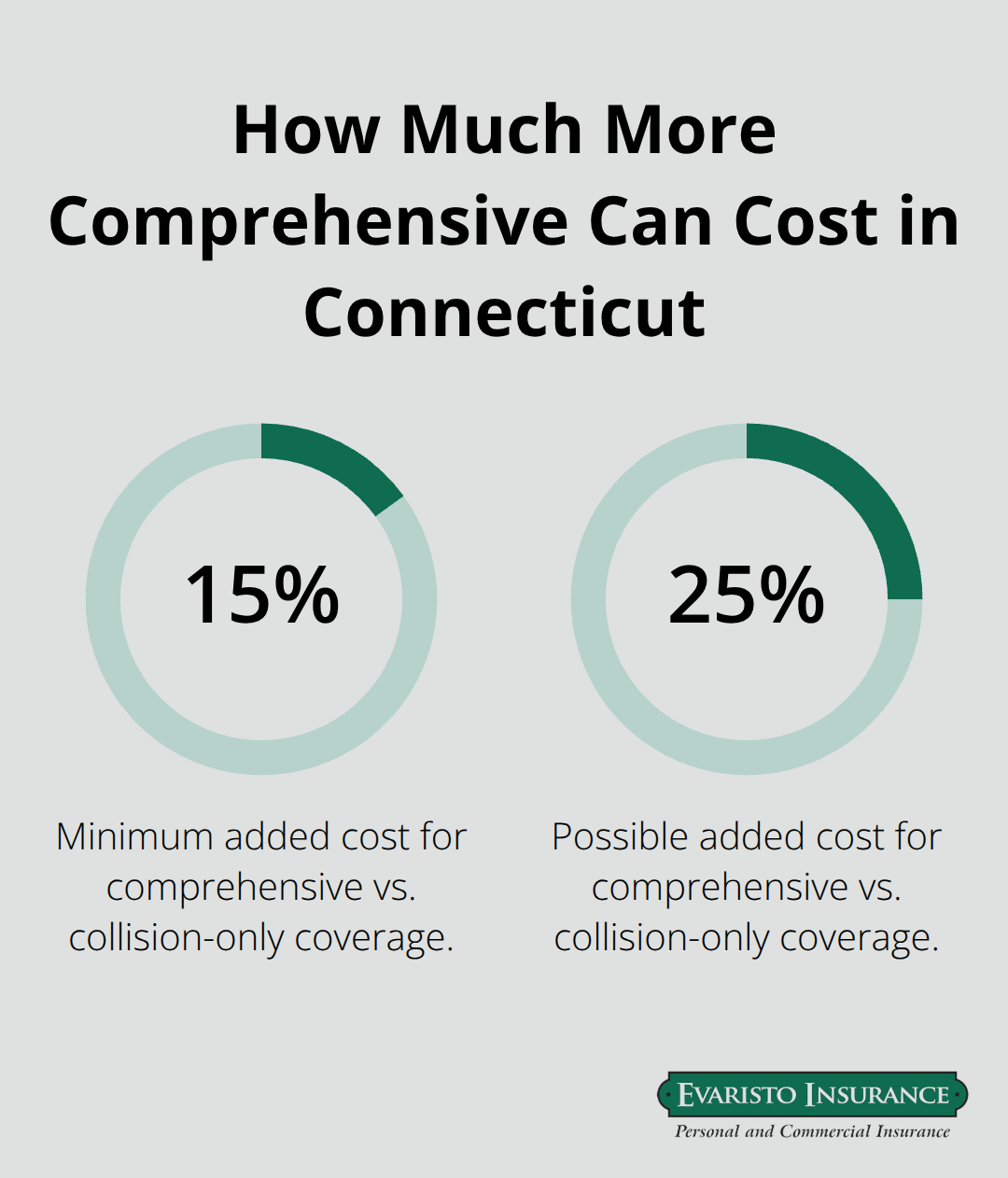
Collision and comprehensive coverage work differently for boats and RVs than they do for cars, and this distinction matters significantly. Collision coverage pays to repair or replace your vessel after impact with another boat, dock, or object, while comprehensive covers non-collision damage like theft, vandalism, weather, and fire. Connecticut’s hurricane season and coastal storms make comprehensive coverage essential. Comprehensive typically costs 15-25% more than collision alone, but skipping it in Connecticut amounts to gambling with your investment.
For RVs, comprehensive becomes especially valuable because theft and break-ins target recreational vehicles at campgrounds and storage facilities regularly.
Uninsured and Underinsured Motorist Protection Addresses Real Connecticut Risks
Uninsured and underinsured motorist protection covers you when another boat or RV operator causes damage but lacks sufficient insurance, which addresses a genuine Connecticut problem. Many recreational boaters operate without proper coverage, leaving you vulnerable if they cause an accident. This add-on typically costs $50-100 annually but prevents you from absorbing thousands in damages from uninsured operators. The protection applies whether you’re on the water or the road, making it valuable for both boat and RV owners who share Connecticut’s recreational spaces with underinsured operators.
Specialized Add-Ons Transform Breakdowns Into Manageable Situations
Emergency towing and roadside assistance transform a stressful breakdown into a manageable situation. RV owners stranded on I-91 during winter face genuine hazards that standard coverage ignores, making emergency towing coverage worth its $100-150 annual cost. Fuel spill liability protects you if your boat leaks fuel into Connecticut waterways, where environmental cleanup costs can exceed $10,000 and trigger regulatory fines. This coverage matters because fuel contamination occurs during routine maintenance or storms, and Connecticut environmental regulations take these incidents seriously. Many boat owners skip this protection, only to face substantial liability when spills happen.
Your specific coverage needs depend on how you actually use your boat or RV and what assets you’re protecting. The right combination of these protections prevents financial disaster when accidents occur, which is why understanding each option matters before you purchase a policy.
Protecting Your Boat and RV Through the Off-Season
Store Seasonally to Cut Costs and Risks
Connecticut’s seasonal climate demands serious attention to how you store and maintain your boat or RV during months you’re not using it. Winter storage fundamentally changes your insurance needs and can reduce your premiums substantially. When you store your boat in a secure facility from November through March, you eliminate weather exposure and theft risk, which insurers recognize by lowering your rates compared to year-round coverage. The same principle applies to RVs: seasonal storage during winter months qualifies you for reduced premiums because your vehicle faces fewer operational hazards.
Connecticut’s harsh winters create real threats including ice damage, freeze-thaw cycles that crack hulls and plumbing, and mold that develops in unventilated spaces. Proper winterization prevents these problems entirely, but you need to understand what your policy actually covers during storage periods. Many boat owners assume comprehensive coverage protects stored vessels, but some policies exclude theft or weather damage if the boat sits unused for extended periods.
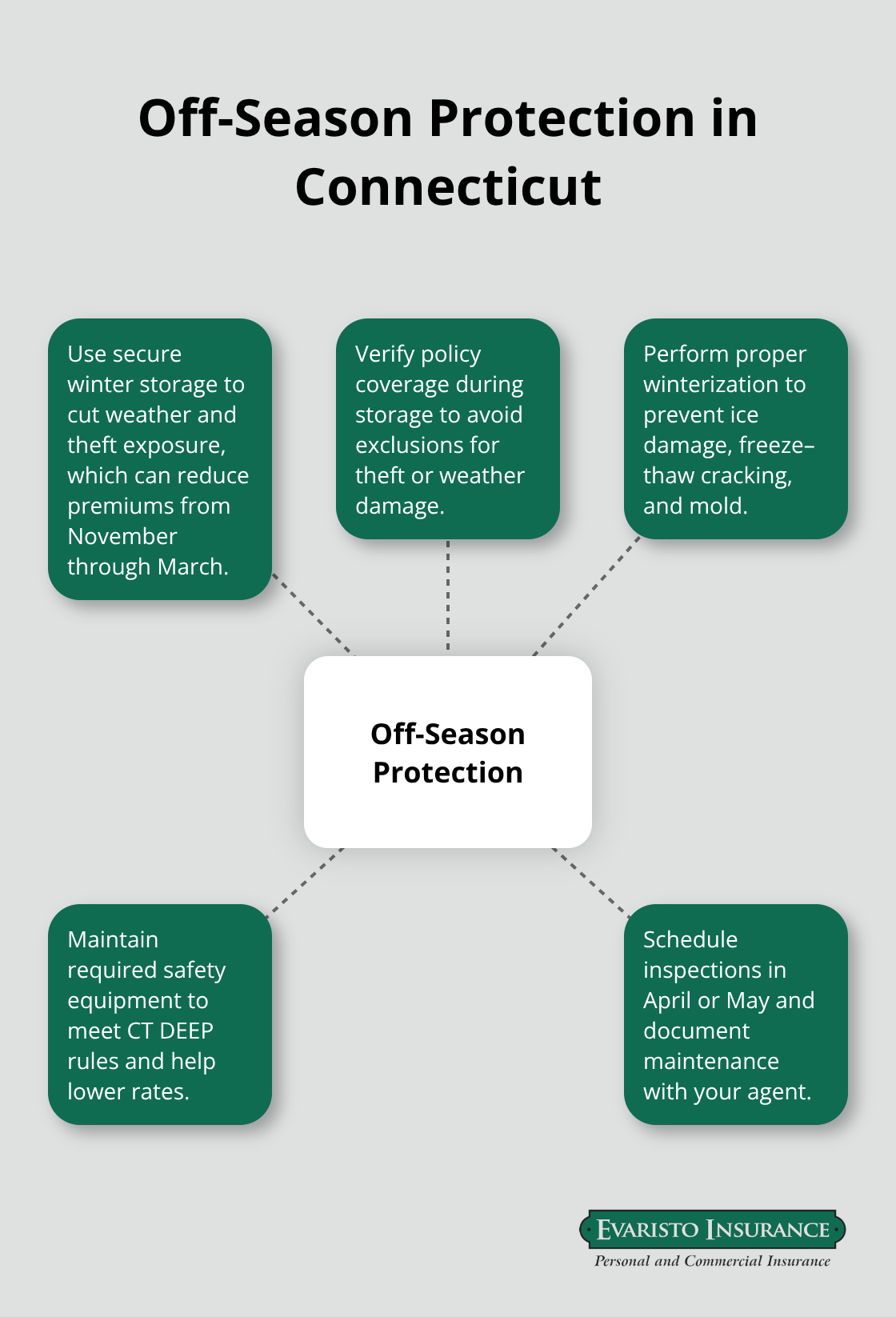
Verify with your insurance agent whether your coverage remains active during off-season storage and at what reduced rate. RV owners who store their vehicles need similar clarity-some policies impose storage-specific exclusions that leave you unprotected if theft or weather damage occurs while parked.
Maintenance Investments Lower Your Premiums
Maintenance and safety investments directly lower your insurance costs because insurers view well-maintained vessels and RVs as lower-risk propositions. Connecticut insurers typically offer premium discounts for boats with recent safety inspections, valid fire extinguishers, and up-to-date navigation equipment. RV owners who maintain their vehicles according to manufacturer specifications and document that maintenance qualify for similar discounts.
The Connecticut Department of Energy and Environmental Protection requires certain safety equipment on recreational boats, including Coast Guard-approved personal flotation devices for each passenger and functioning navigation lights. Compliance with these requirements protects you legally and reduces your insurance rates. Regular inspections catch problems before they become insurance claims: hull deterioration, engine issues, electrical problems, and structural damage all become more expensive when discovered after an accident rather than during preventive maintenance.
Schedule Inspections and Document Everything
Schedule annual inspections before your boating season begins, ideally in April or May, and document everything with your insurance agent. RV owners should follow their manufacturer’s maintenance schedule religiously, including tire inspections every 3,000 miles since RV tire failures cause serious accidents. Documenting maintenance in a logbook or digital record demonstrates to insurers that you’re a responsible owner, which translates directly into lower premiums and smoother claim experiences if incidents occur.
Final Thoughts
Connecticut’s boat and RV insurance landscape demands more than generic coverage from national carriers who don’t understand our state’s specific risks. Local expertise matters because independent agents recognize the difference between storing your boat on Long Island Sound versus inland lakes, understand Connecticut’s hurricane exposure, and know which carriers offer the best rates for seasonal storage. Regional knowledge translates directly into better protection for your marine and mobile assets.
Comparing quotes from multiple carriers reveals significant price differences that most boat and RV owners never discover-a policy that costs $1,200 annually with one carrier might run $850 with another. Working with an independent agency that represents multiple top carriers gives you access to these options without shopping around yourself. We compare boat RV insurance CT coverage options across different insurers, so you avoid overpaying for protection or missing critical gaps.
Your lifestyle determines what coverage actually makes sense for your situation, and Evaristo Insurance delivers personalized recommendations based on how you actually use your boat or RV. Our local offices in Ellington and West Hartford provide hands-on advocacy that national carriers simply cannot match. Contact us today to explore your options and protect your investment.
Disclaimer: This blog post is for general informational purposes only and does not represent actual coverage, policy terms, or legal requirements. Insurance details vary by individual and jurisdiction. Please consult a licensed insurance professional for advice specific to your situation.

