

Commercial Investment Property Insurance: Protecting Investment Real Estate
Investment properties generate income, but they also expose you to significant financial risks. At Evaristo Insurance, we help Connecticut property owners understand what commercial investment property insurance actually covers and why it matters for your bottom line.
The right coverage protects your building, your rental income, and your liability exposure when something goes wrong.
What Coverage Actually Protects Your Investment Property
Building and Structure Protection
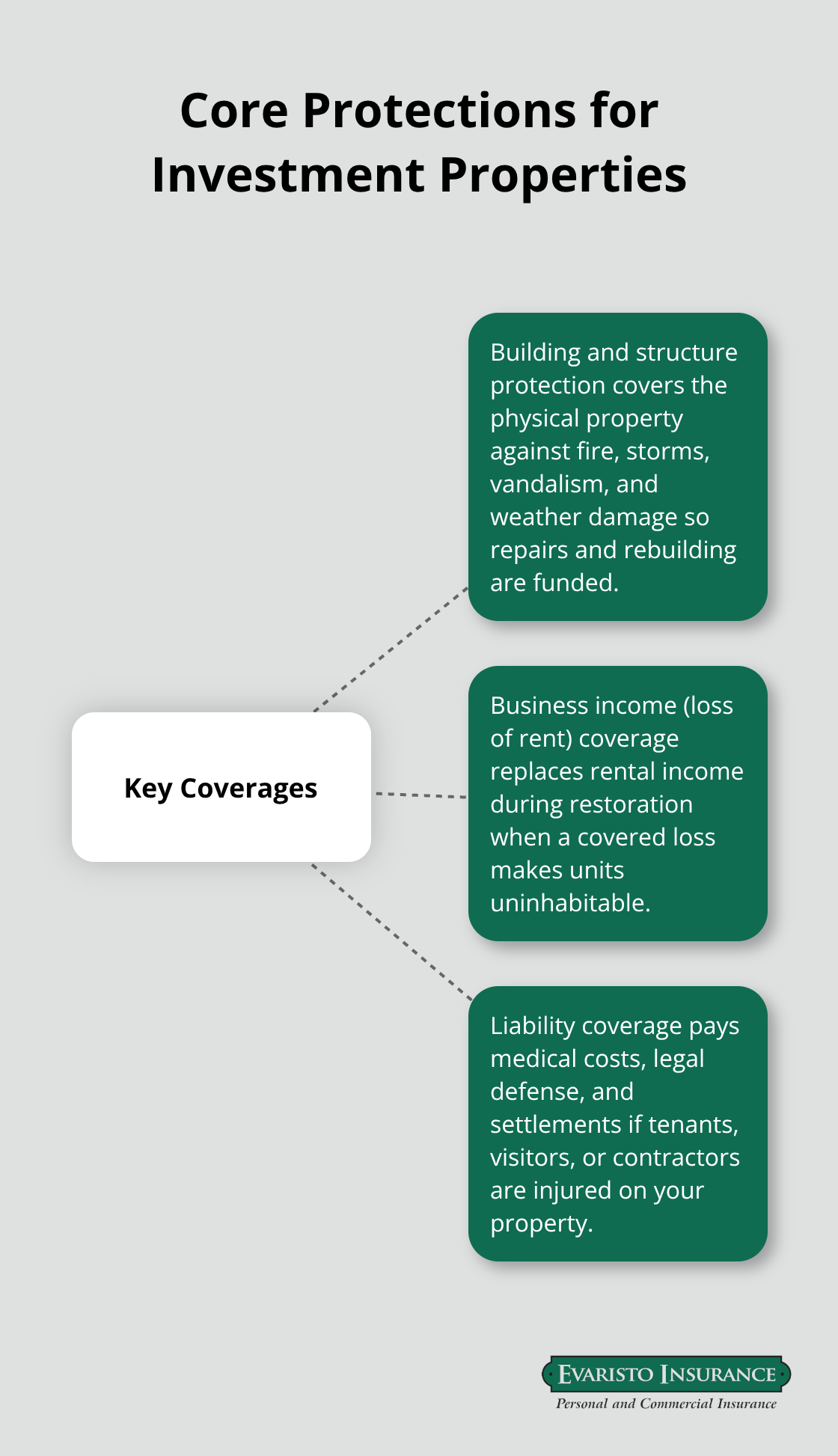
Your building is your asset, and damage to it directly threatens your investment returns. Building and structure protection covers the physical property itself against fire, storms, vandalism, and weather damage. In Connecticut, where coastal properties face hurricane winds and nor’easters, this protection becomes non-negotiable. The Hartford estimates the average annual cost for commercial property insurance at about $1,605, but that figure varies significantly based on how you value your coverage.
You have two main valuation approaches: actual cash value pays depreciated amounts after a loss, while replacement cost value covers full reconstruction expenses. Replacement cost stands as the stronger choice for Connecticut investment properties because it reflects current labor rates and material costs in our state, not what the building was worth years ago. Without replacement cost coverage, you absorb the gap between what insurance pays and what rebuilding actually costs.
Coastal buildings and older structures with historic significance face additional pressure to upgrade to modern electrical, plumbing, and fire suppression codes after damage. Standard replacement cost may not fully cover these mandated upgrades. Adding ordinance or law coverage-typically 10 to 25 percent of your building limit-protects you from code-upgrade costs that Connecticut municipalities require.
Loss of Rental Income During Restoration
When a covered loss makes your property uninhabitable, tenants leave and rent stops arriving, but your mortgage, taxes, and maintenance expenses continue. Business income coverage compensates for that lost rent during restoration. Connecticut property owners should extend this protection 30 to 180 days beyond when tenants can re-occupy, because reconstruction often outlasts the period when you can legally rent the space.
Liability Protection Against Tenant and Visitor Injuries
Liability protection matters just as much as property protection because tenant injuries, visitor accidents, or maintenance-related incidents can generate lawsuits that cost far more than the property damage itself. A tenant who slips on an icy walkway, a guest injured by a maintenance defect, or a contractor hurt on your property can all trigger liability claims. Your liability coverage pays for medical expenses, legal defense fees, and settlements up to your policy limits.
Installing safety features like fire alarms, sprinklers, and security systems not only reduces risk but often earns you premium discounts from insurers. Bundling property and liability coverage into a Business Owner’s Policy delivers both protections more affordably than buying them separately and simplifies your compliance when leases require proof of insurance.
Understanding how these three coverage types work together sets the foundation for evaluating whether your current limits match your actual property value and income exposure-a critical step before assessing your specific risks.
Valuing Your Property Correctly
Start with a Detailed Property Assessment
Property valuation forms the bedrock of adequate insurance protection, and Connecticut property owners routinely underestimate what their investment properties actually cost to rebuild. The Hartford reports an average commercial property insurance cost of $1,605 annually, but that figure masks a critical reality: premiums mean nothing if your coverage limits fall short of replacement expenses. You need to start with a detailed property assessment that documents the building’s age, construction materials, square footage, current occupancy, and protection systems like fire alarms or sprinklers. Older Connecticut properties built before 1980 often contain materials like aluminum wiring or outdated plumbing that increase reconstruction costs when code upgrades become mandatory after a loss.
Use Professional Valuation Tools
Valuation tools like Marshall & Swift help you estimate true replacement cost in today’s Connecticut labor market, not depreciated value. You can also hire a professional appraiser to verify these estimates. Connecticut coastal properties face particular pressure because hurricane and nor’easter damage frequently triggers code mandates for upgraded electrical systems, flood-resistant construction, or improved drainage that standard replacement cost estimates miss entirely. You should add ordinance or law coverage at 10 to 25 percent of your building limit to bridge that gap, because municipalities enforce these upgrades regardless of your insurance claim amount.
Choose Replacement Cost Over Actual Cash Value
Actual cash value coverage sounds cheaper at quote time but creates dangerous exposure for property owners who expect full reconstruction. Actual cash value pays you the depreciated amount after a loss-a ten-year-old roof gets paid at a fraction of replacement cost, leaving you to fund the difference from personal capital. Replacement cost value covers what you actually spend to rebuild or repair, which matters far more when your property generates rental income that depends on quick restoration.
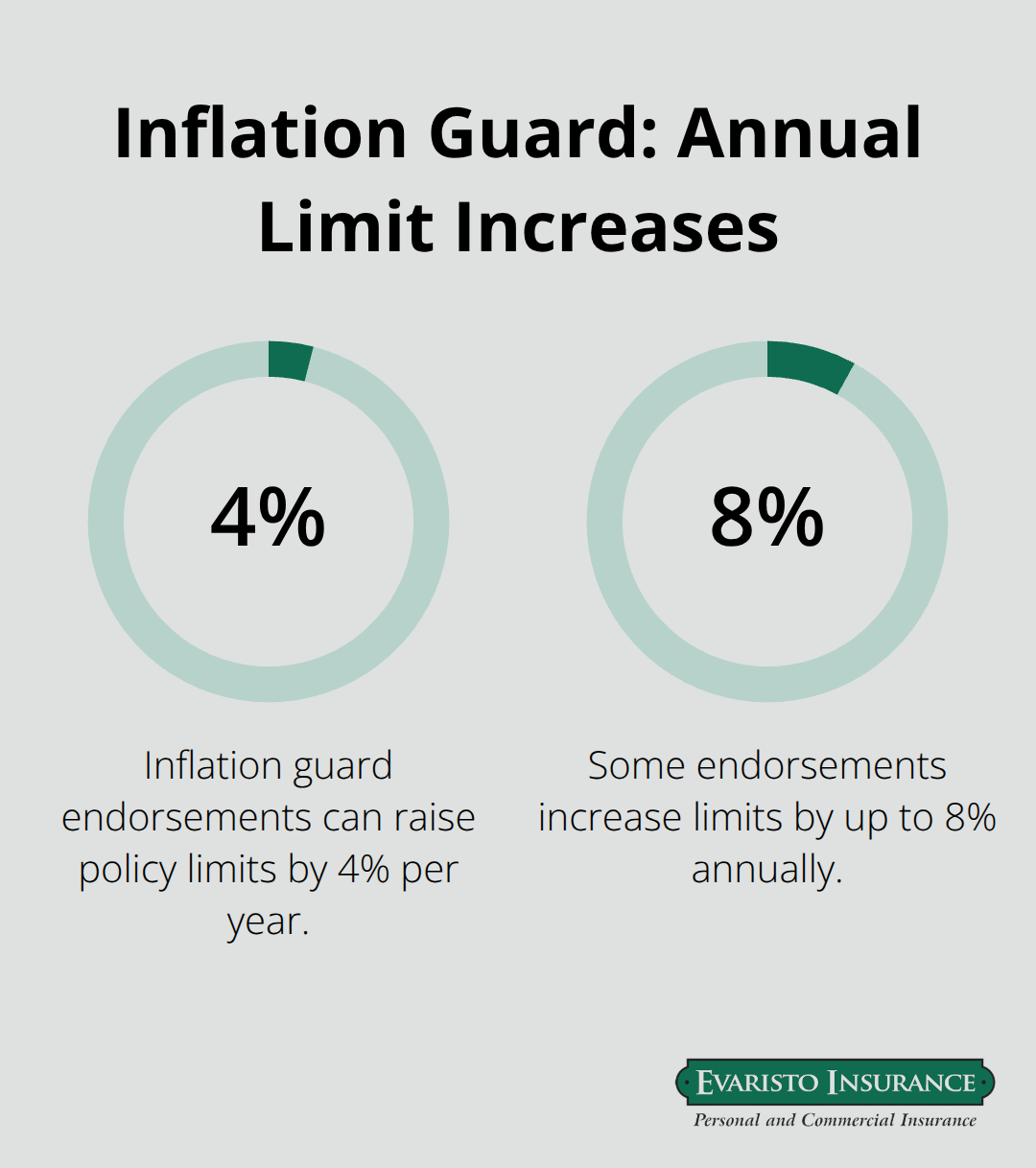
Connecticut property owners should lock in replacement cost coverage with an agreed value endorsement that eliminates coinsurance penalties and protects you if property values rise between policy reviews. Inflation guard endorsements that increase your limits 4 to 8 percent annually help offset rising labor and material costs in Connecticut’s competitive construction market.
Protect Your Rental Income During Restoration
For rental properties, you need to build in business income coverage that extends 30 to 180 days beyond when tenants can legally re-occupy, because code compliance work often stretches longer than structural repairs. Seasonal properties or those with fluctuating occupancy require coverage limits that accommodate your peak rental periods, not average months. You should review your coverage limits every two to three years, especially after property improvements or major market shifts, because underinsurance penalties can reduce claim payouts by 20 percent or more if your limit falls below 80 percent of actual replacement cost.
Assess Your Specific Risk Exposure
The valuation process you complete now directly determines whether your property protection actually covers what you need to rebuild and whether your liability limits match the exposure your tenants and visitors create. Once you understand your property’s true replacement cost and the income it generates, you can evaluate the specific risks that Connecticut’s location, climate, and tenant base present to your investment.
What Drives Your Investment Property Insurance Costs
Connecticut’s Geographic and Climate Exposure
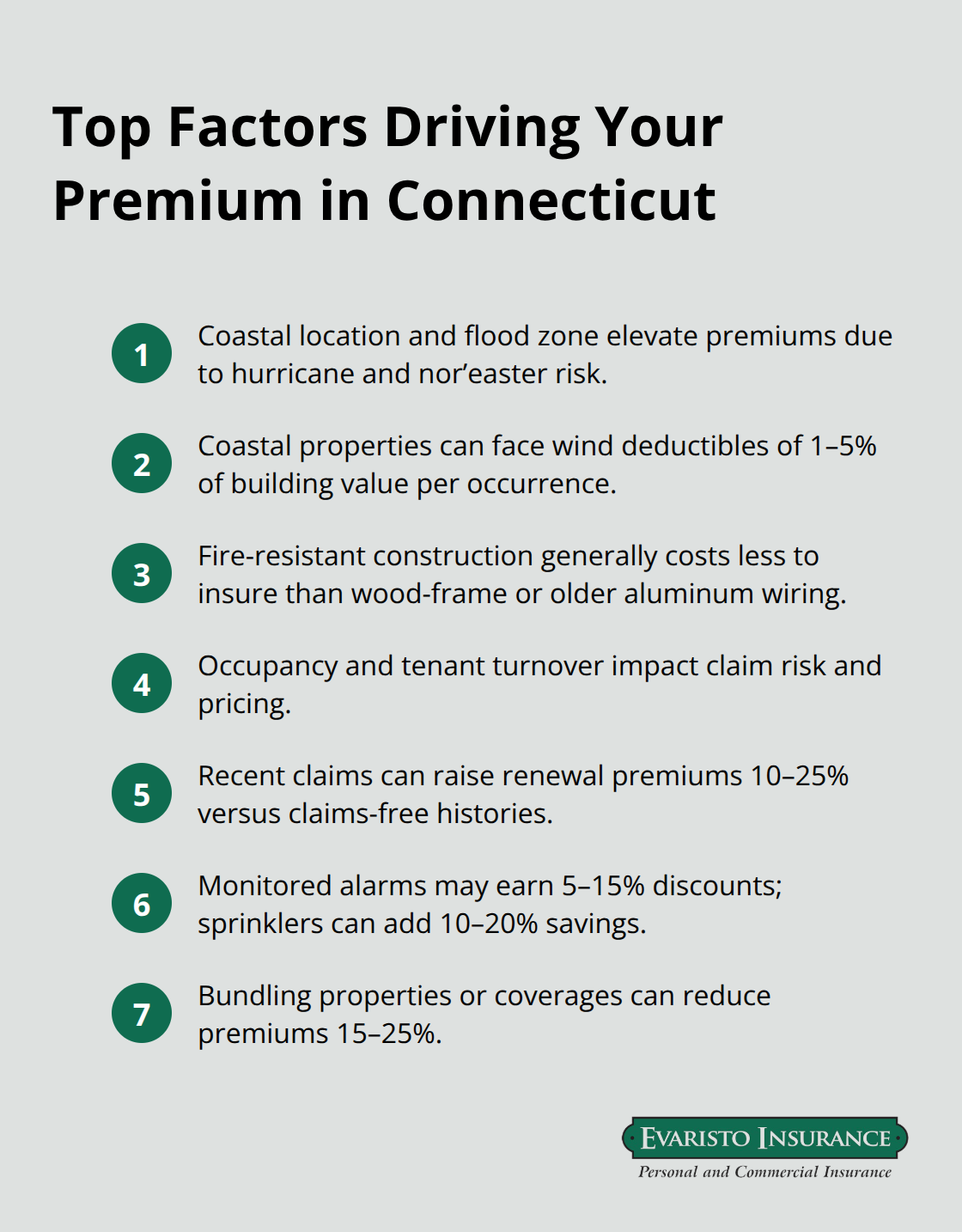
Connecticut’s coastal geography, aging building stock, and competitive construction market create premium pressures that property owners in inland states never face. Your location matters more than you might think because insurers price coastal properties at hurricane and nor’easter risk, which means waterfront or near-coastal investment properties pay substantially higher premiums than inland equivalents. A property in Stamford or Darien faces wind deductibles of 1 to 5 percent of building value per occurrence, separate from your standard deductible, because that’s what Connecticut’s exposure demands. Inland properties in Waterbury or Torrington avoid that wind load entirely, which translates to meaningful savings on the base premium. Homes located in coastal flood zones like AE and VE typically carry the highest premiums because these areas have a greater likelihood of severe weather impact.
Building Construction and Materials
Your property’s construction materials compound geographic factors significantly. Buildings with fire-resistant materials cost less to insure than those with wood-frame construction or aluminum wiring from the 1970s, because insurers know reconstruction costs and claim frequency differ dramatically. A 1960s brick commercial building with updated electrical systems and sprinklers attracts better rates than a 1990s wood-frame structure with original plumbing, even if both sit in the same town.
Property Use and Occupancy Classification
Property use classification determines your premium as much as the building itself. A single-family rental generates lower premiums than a multi-unit apartment building or a commercial space with retail tenants, because occupancy type and tenant turnover affect claim risk. A property where you operate a salon or office from your own building costs more to insure than an identical structure rented to a long-term residential tenant, because business operations introduce equipment, customer liability, and higher foot traffic.
Claims History and Risk Management Impact
Your claims history shapes what insurers charge going forward-one water-damage claim cuts deeper into your rates than most property owners realize because it signals future risk to underwriters. If you’ve filed claims in the past three to five years, your renewal premium climbs 10 to 25 percent above what a claims-free property would pay. This is where risk management practices create real financial benefit. Installing and maintaining fire sprinklers, burglar alarms, and water-detection systems doesn’t just reduce loss likelihood-it generates documented premium discounts that stack meaningfully. Some carriers offer 5 to 15 percent reductions for properties with monitored alarm systems and 10 to 20 percent discounts for sprinkler systems, depending on the equipment age and maintenance records you can prove. Hiring a professional property manager also lowers premiums because insurers recognize that third-party management reduces tenant-related claims and maintenance delays. Requiring tenants to carry renters insurance shifts personal property liability away from your policy and signals responsible ownership to underwriters.
Bundling and Multi-Property Discounts
When you bundle multiple properties with one insurer or combine property coverage with liability and business income into a single policy, you receive additional discounts that can reduce your overall premium by 15 to 25 percent compared to shopping each coverage separately.
Final Thoughts
Commercial investment property insurance protects far more than your building-it safeguards your rental income, your liability exposure, and your ability to recover quickly when damage strikes. The coverage decisions you make today determine whether a loss becomes a manageable claim or a financial catastrophe that derails your investment strategy. Connecticut’s coastal exposure, aging building stock, and competitive construction market create insurance challenges that generic national carriers often miss.
You need accurate property valuation using professional tools that reflect Connecticut’s current labor costs and code requirements, not depreciated values from years past. Choose replacement cost coverage with ordinance protection and business income extensions that match your actual restoration timeline. Implement risk management practices like alarm systems and sprinkler maintenance that generate documented premium discounts while reducing claim likelihood.
We at Evaristo Insurance have served Connecticut property owners since 1989, comparing multiple top carriers to deliver tailored protection that matches your specific investment profile. Our local offices in Ellington and West Hartford give you access to specialists who understand Connecticut’s unique risks and the coverage strategies that protect your bottom line. Contact Evaristo Insurance to review your current limits, identify coverage gaps, and lock in competitive pricing that reflects your actual property value and income exposure.
Disclaimer: This blog post is for general informational purposes only and does not represent actual coverage, policy terms, or legal requirements. Insurance details vary by individual and jurisdiction. Please consult a licensed insurance professional for advice specific to your situation.

