

Rent Default Protection: Safeguarding Landlords From Tenant Slipups
Unpaid rent is one of the biggest financial threats Connecticut landlords face. A single tenant who stops paying can drain your cash flow and create months of legal headaches.
At Evaristo Insurance, we know that rent default protection is essential for protecting your investment property. This guide walks you through how to prevent tenant payment failures and what coverage options actually work.
Why Tenants Fall Behind and What It Costs You
Tenant payment failures happen for reasons that often have nothing to do with willingness to pay. Job loss, medical emergencies, and sudden income drops are the leading causes. Nearly 1 in 4 Americans have no emergency savings at all, leaving renters vulnerable to missed payments. This reality means Connecticut landlords cannot rely on tenant character alone to prevent defaults. Even tenants with solid employment can face unexpected hardship.
When Rent Stops, Your Costs Mount Fast
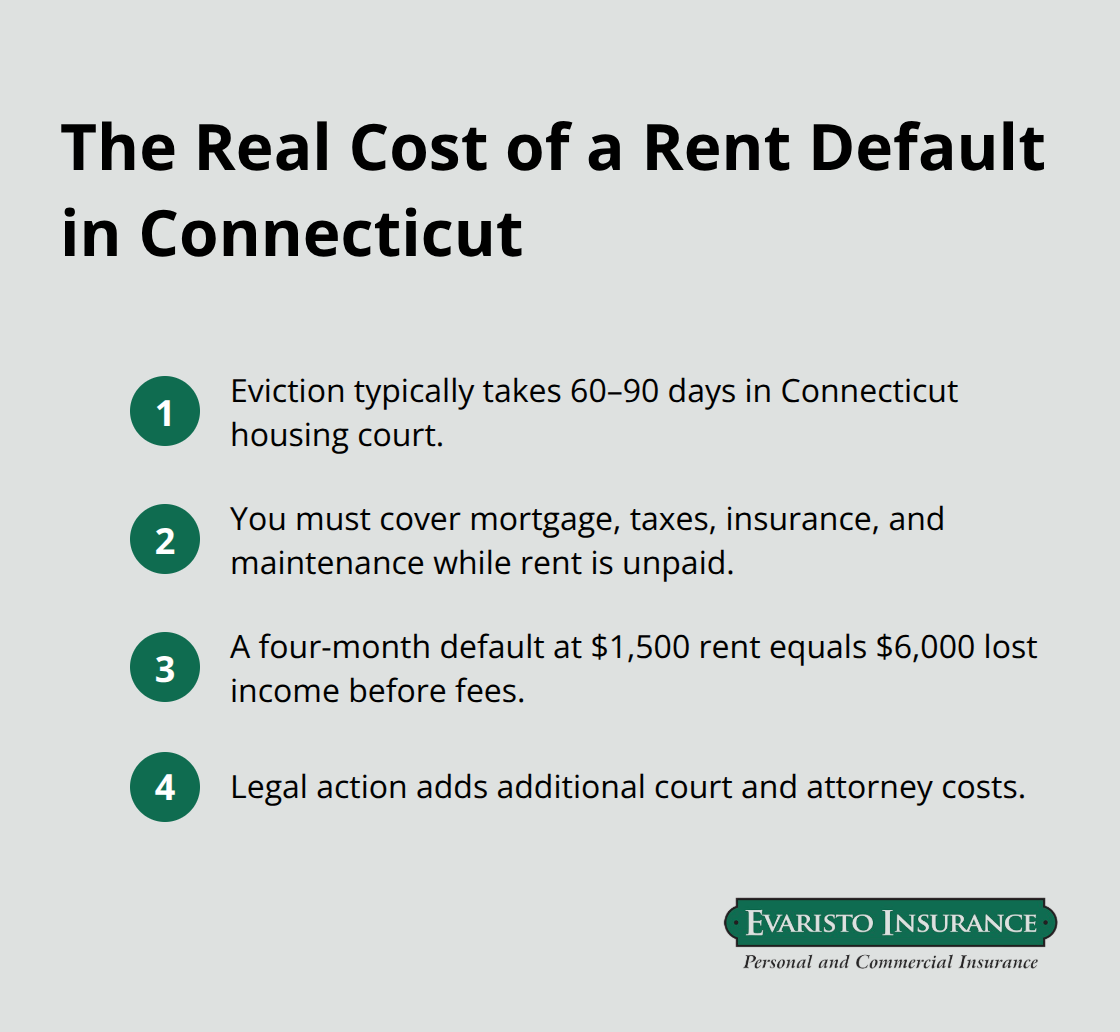
When rent stops flowing, the damage spreads fast. A single month of unpaid rent on a $1,500 unit means $1,500 lost immediately, plus the cost of legal action to pursue eviction. Connecticut’s eviction process typically takes 60 to 90 days from the filing of a notice to quit through judgment, depending on court docket delays and whether the tenant contests the case. During those months, you lose rent while covering mortgage payments, property taxes, insurance, and maintenance. A four-month vacancy or default scenario on a $1,500 monthly rent costs $6,000 in lost income alone, before legal fees and court costs pile on. Many landlords underestimate how quickly cash flow problems spiral.
Connecticut’s Eviction Process Takes Months
Connecticut law requires landlords to follow strict procedural steps before regaining possession. After a tenant fails to pay, you must serve a three-day notice to pay or quit. If the tenant does not comply, you file a complaint in housing court. The court then schedules a hearing, which can take weeks depending on the court’s calendar. If you win, the court issues a judgment, but the tenant has additional time to appeal or request a stay. Only after all appeals are exhausted can you request a constable to execute the eviction.
This entire timeline means you do not receive rent for at least two to three months in a straightforward case, longer if complications arise. Legal costs add another $500 to $2,000 depending on whether you hire an attorney or handle filings yourself. Some landlords attempt to negotiate with defaulting tenants, hoping payment will resume. This approach often delays the eviction process further and extends your loss. The faster you act through proper legal channels, the sooner you can re-lease the unit, but speed does not eliminate the financial hit.
Why Waiting Out Eviction Drains Your Reserves
Eviction is not a quick fix-it is a months-long drain on cash reserves. Understanding these timelines forces landlords to confront an uncomfortable truth: a single default can cost thousands before you place a new tenant. This financial reality explains why many Connecticut landlords turn to rent default protection. Coverage that reimburses lost rent and covers legal expenses transforms a catastrophic loss into a manageable claim. The next section explains how this protection actually works and what it covers.
Rent Default Protection: How Coverage Works
Rent default insurance reimburses you for lost rent when a tenant stops paying, regardless of whether the default stems from job loss, eviction, or abandonment. The policy triggers on the date rent becomes in arrears, and once you meet the terms, the insurer pays you month-to-month until the coverage limit is exhausted or the tenant is replaced. Most policies cover up to six months of lost rent for abandonment or eviction cases, though coverage drops to three months if a court order, military deployment, or death of the sole tenant caused the default. You also receive up to $1,000 in legal expenses-attorney fees and court costs-to pursue eviction, which directly offsets the costs Connecticut landlords face during the lengthy housing court process. The annual premium averages around $300 per unit, or roughly $25 per month, and many landlords pass this cost to tenants or claim it as a tax deduction.
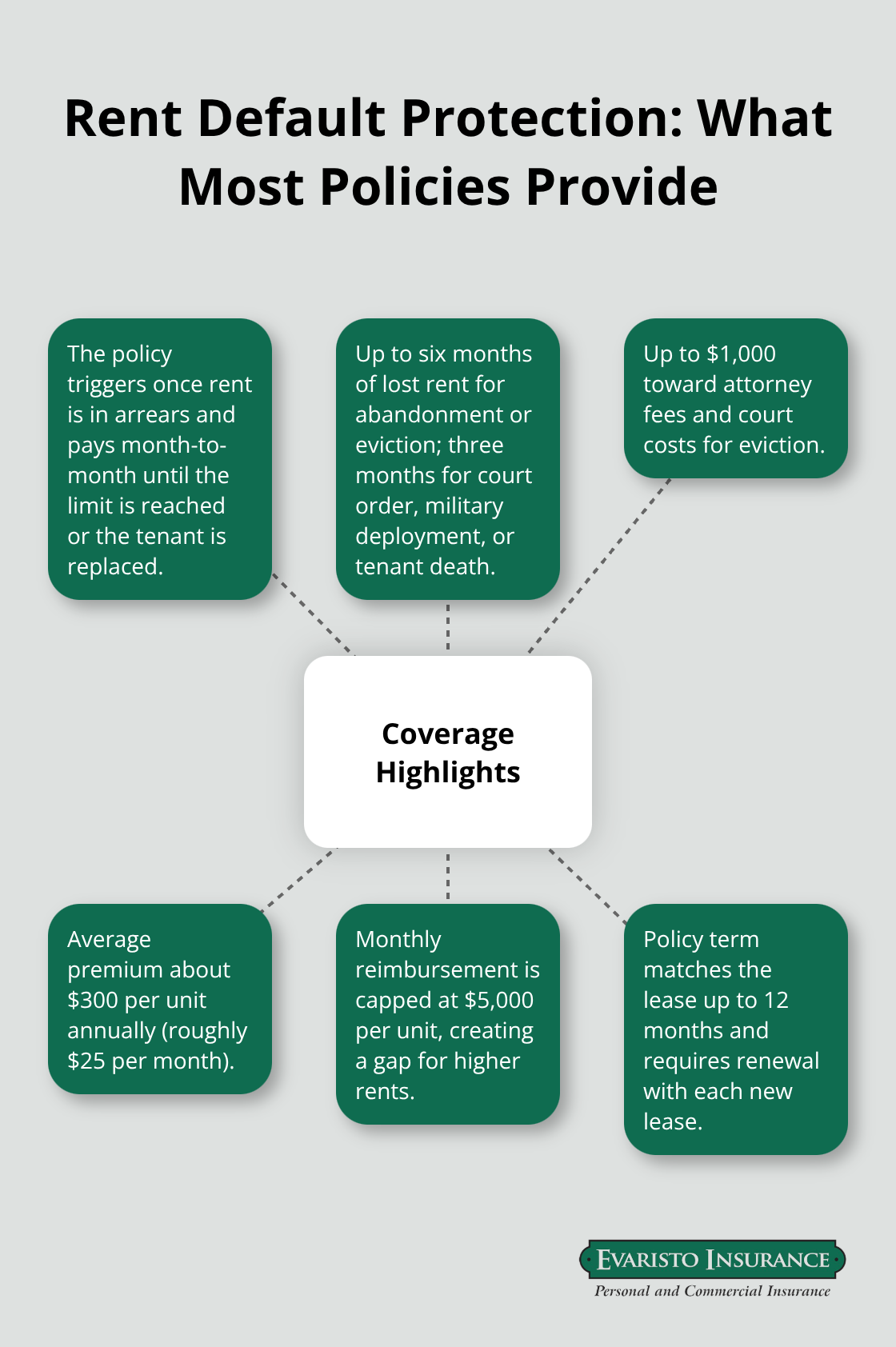
One critical detail: the maximum monthly reimbursement per unit is capped at $5,000 unless an exception is granted, so if your unit rents for $6,000 per month, this coverage leaves a $1,000 gap. The policy term matches your lease term with the tenant but cannot exceed 12 months, meaning you must renew coverage with each new lease. All eligible units at a property location must be insured under the same policy, and if you own rental units in multiple states, you need separate policies for each state.
What the Deductible Means for Your Cash Flow
The deductible equals one month’s rent, which you pay out of pocket before the insurer reimburses you. On a $1,500 monthly rent, that means you absorb the first $1,500 in losses yourself. This structure incentivizes you to act quickly on collections rather than waiting passively for the insurance to cover everything. The deductible forces landlords to treat rent collection as a priority and not rely entirely on insurance to solve payment problems.
Underwriting Requirements and Tenant Screening
Qualifying for coverage requires meeting underwriting criteria: no bankruptcies or evictions in the past five years, no rent arrears exceeding 30 consecutive days in the last 12 months, and the tenant must be able to satisfy lease terms. Connecticut landlords often assume any tenant can be insured, but insurers screen applicants rigorously to minimize claims. This means you cannot simply add every tenant to a policy-insurers evaluate each applicant’s financial stability and rental payment history before approval. The screening process protects both you and the insurer by identifying higher-risk tenants upfront.
What This Coverage Does Not Include
The policy excludes property damage and liability entirely-standard property or casualty insurance covers those risks. This means rent default insurance fills a specific gap: lost income from non-payment. It does not protect you if a fire renders the unit uninhabitable or if a tenant causes structural damage. Understanding these boundaries helps you build a complete insurance strategy that addresses all major landlord risks.
Filing a Claim and Receiving Payment
You file a claim by contacting your insurer with all required paperwork, and reimbursement typically arrives within 30 days after documentation is submitted and terms are met. The insurer pays you month-to-month rather than in a lump sum, which means you receive ongoing reimbursement as long as the tenant remains in default and the policy remains active. This payment structure aligns with your actual cash flow loss and continues until you replace the tenant or exhaust the coverage limit. With rent default protection in place, you now need to understand what other strategies reduce the likelihood of defaults occurring in the first place.
How to Screen Tenants and Build Payment Safeguards
Verify Income and Employment Before Signing a Lease
Professional tenant screening is not optional if you want to avoid defaults. Connecticut landlords who skip thorough vetting end up paying for it through missed rent, legal battles, and vacancy costs. The screening process insurers require before approving rent default coverage mirrors what you should be doing anyway: verifying income, checking employment, reviewing credit history, and contacting previous landlords.
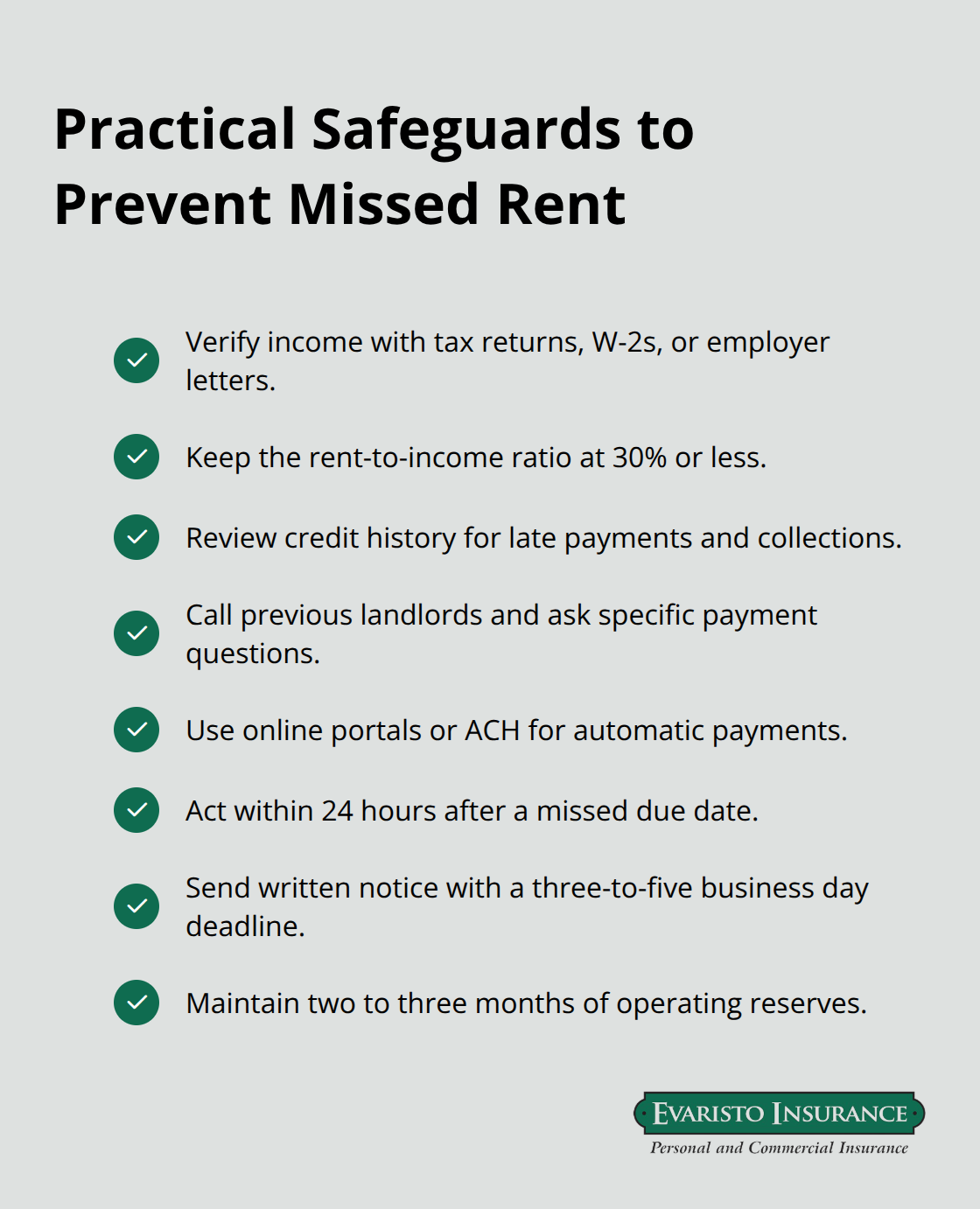
A good rent to income ratio is 30% or less, meaning a tenant earning $6,000 per month should keep rent at $1,800 or less. Do not accept verbal assurances or recent pay stubs alone. Request tax returns, W-2s, or official employment verification letters from the employer. If a tenant refuses to provide this documentation, that refusal itself is a red flag.
Review Credit History and Previous Rental Patterns
Credit reports reveal patterns of missed payments, collections, and defaults across all accounts. A tenant with a history of late payments on credit cards or previous rent arrears is statistically more likely to default again. Court judgments and collections on a credit report signal serious financial distress.
Previous landlord references matter more than most Connecticut landlords realize. Contact the prior landlord directly and ask specific questions: Did the tenant pay on time? Were there ever late payments? Did they maintain the property? How much notice did they give before moving? A landlord who is reluctant to provide a reference or mentions ongoing payment issues is telling you something important. Professional referencing services deliver reports formatted to meet insurer requirements, which reduces the risk of claim rejection later if a default occurs.
Establish Clear Payment Terms From Day One
Once you have qualified tenants, establish clear payment terms and collection procedures from day one. The lease must specify the exact rent amount, the due date, and the method of payment. Ambiguity about payment expectations leads to disputes and delays in addressing arrears. Set the due date early in the month, not at the end, so you have time to follow up if payment does not arrive by the deadline.
Implement automated payment systems such as online rent portals or ACH transfers, which reduce excuses about lost checks or forgotten payment dates. When a tenant misses a payment, act within 24 hours of the missed deadline. Send a written notice requesting payment by a specific date, usually within three to five business days. Document every communication in writing, whether email or formal letter.
Many Connecticut landlords hesitate to enforce payment terms early because they worry about tenant relations, but this hesitation costs thousands. The longer you wait to address a missed payment, the more likely the tenant is to fall further behind or abandon the property. A tenant who pays late once and faces immediate consequences is more likely to prioritize rent in the future.
Build Emergency Reserves to Cover Coverage Gaps
Building emergency reserves protects you during the gaps that inevitably occur even with solid tenants and insurance coverage. Financial advisors recommend landlords maintain two to three months of mortgage payments, property taxes, insurance, and maintenance reserves in a separate account. For a property with a $1,200 monthly mortgage, $400 in taxes and insurance, and $200 in expected maintenance, that is $3,200 to $4,800 set aside.
This reserve covers you during the 30-day waiting period after you submit a rent default claim before reimbursement arrives. It also protects you if a unit sits vacant between tenants or if multiple units default simultaneously. Connecticut landlords with strong reserves weather defaults and vacancies without scrambling to cover operating costs from personal funds.
Final Thoughts
Rent default protection transforms a catastrophic financial scenario into a manageable claim that keeps your cash flow intact while you navigate Connecticut’s housing court process. A single four-month default on a $1,500 unit costs $6,000 in lost rent before legal fees accumulate, but insurance that reimburses lost rent and covers eviction expenses protects your income stream when tenants stop paying. Standard landlord policies protect the building and your liability exposure, yet they leave your monthly rental income completely unguarded-a gap that rent default protection fills.
The underwriting standards insurers apply to tenants mirror the screening rigor you should adopt anyway: no bankruptcies or evictions in the past five years, no rent arrears exceeding 30 consecutive days in the last 12 months, and proof that tenants can satisfy lease terms. Verifying income through tax returns and W-2s, checking credit history, contacting previous landlords, and documenting all communications reduce your default risk before insurance ever enters the picture. These practices identify higher-risk tenants upfront and establish the payment discipline that prevents defaults from occurring.
We at Evaristo Insurance help Connecticut landlords build complete protection strategies tailored to local market conditions and individual property portfolios. Contact us today to review your current coverage and explore how rent default protection can safeguard your investment against tenant payment failures.
Disclaimer: This blog post is for general informational purposes only and does not represent actual coverage, policy terms, or legal requirements. Insurance details vary by individual and jurisdiction. Please consult a licensed insurance professional for advice specific to your situation.

