

Specialty Investment Property Coverage: Tailored Protection For Unique Assets
Your investment property is only as protected as your insurance policy allows. Standard landlord policies often leave gaps that can cost you thousands when something goes wrong.
At Evaristo Insurance, we work with Connecticut investors who own high-value rentals, mixed-use buildings, and unique properties that need specialty investment property coverage. The right policy protects what you’ve built.
What Properties Need Specialty Coverage
Why Standard Policies Fall Short
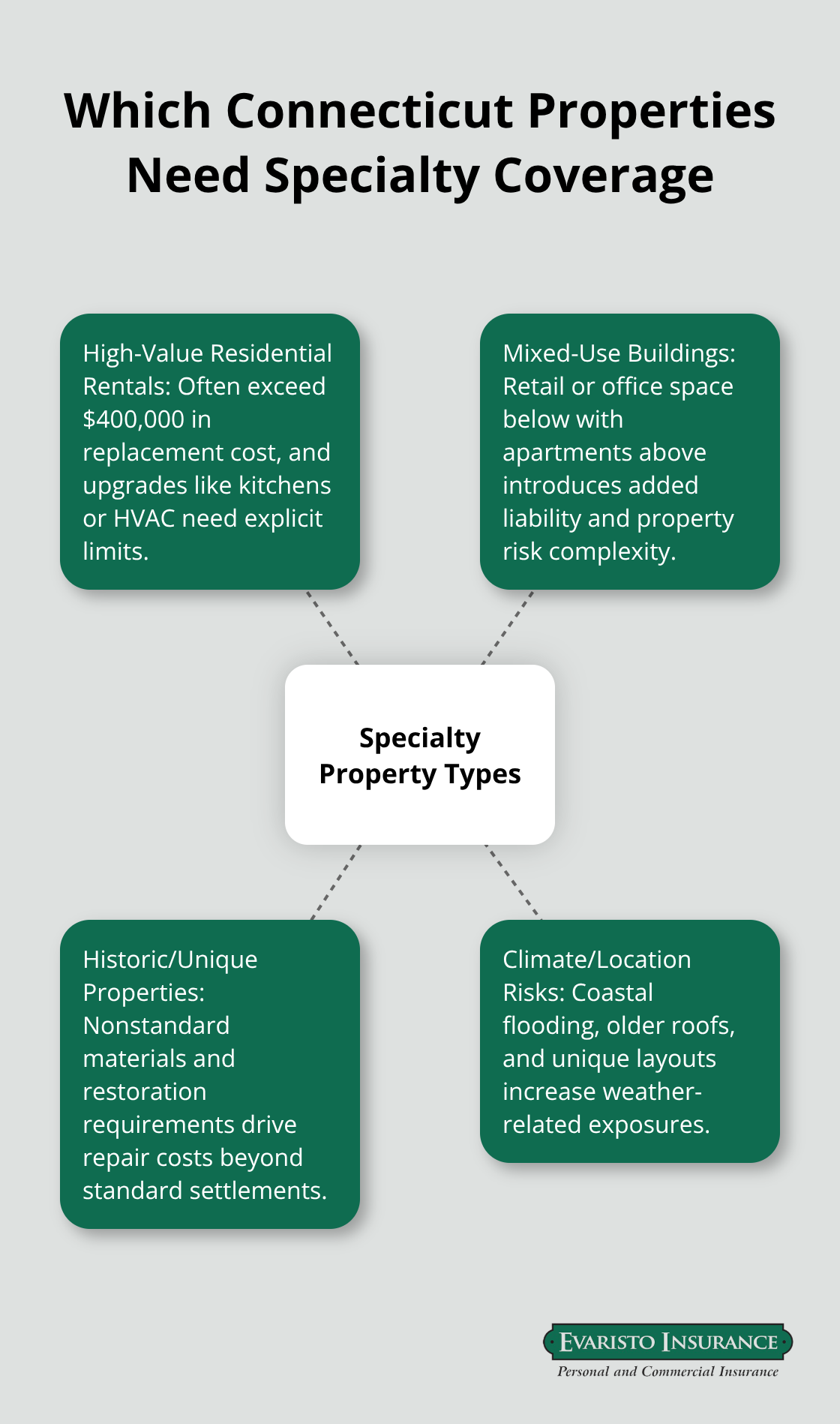
Specialty investment property coverage exists because standard landlord policies were designed for simple rental situations. Connecticut investors with high-value residential rentals, mixed-use buildings, or unique properties face exposures that generic policies simply don’t address. A single-family rental that generates $2,400 monthly income needs different protection than a historic Victorian converted into three apartments or a commercial building with residential units above retail space. The distinction matters because underwriters price and structure specialty policies around specific property types and their associated risks.
High-Value Residential Rentals
High-value residential rentals in Connecticut’s stronger markets, particularly in Fairfield County and around Hartford, often exceed $400,000 in replacement cost. Standard policies cap improvements coverage at low percentages of the dwelling limit, leaving thousands in upgraded kitchens, HVAC systems, or foundation work unprotected. A property with $50,000 in recent renovations needs explicit coverage for those improvements; relying on a basic policy creates a dangerous gap.
Mixed-Use and Commercial Properties
Commercial mixed-use buildings face even more complexity because liability exposure increases dramatically when tenants include retail businesses, offices, or service providers. A mixed-use building with ground-floor retail and residential units above carries different slip-and-fall risks, customer injury exposure, and property damage scenarios than a residential-only building. These properties demand coverage structures that account for multiple business operations under one roof.
Historic and Unique Properties
Unique or historic properties in Connecticut present specialized challenges that most carriers avoid entirely. A restored 1800s farmhouse, a converted mill building, or a property with heritage designation may have construction materials, systems, or configurations that standard underwriting guidelines don’t accommodate. Historic properties often require specialized contractors for repairs, driving costs far above what standard loss settlements provide.
Climate and Location Risks
Connecticut’s climate creates specific exposures for specialty properties. Properties with unique roof designs, older construction, or unconventional layouts face higher weather-related risk that standard policies underestimate. Coastal properties and those in flood zones need flood endorsements that go beyond what basic landlord policies include. Understanding your property’s actual replacement cost, tenant profile, and location-specific risks determines whether you truly need specialty coverage or whether standard policies can handle your situation.
Coverage Gaps in Standard Landlord Policies
Standard landlord policies in Connecticut rest on a single assumption: you own a basic rental property with minimal tenant turnover and straightforward construction. The moment your investment deviates from that template, coverage gaps appear. Connecticut investors repeatedly discover that their policies don’t cover what they assumed they did. The problem isn’t that standard policies are bad-they’re appropriate for simple situations. The problem is that you likely don’t have a simple situation. High-value renovations, significant rental income, and properties with unusual features or locations expose weaknesses in generic landlord coverage that can cost you tens of thousands when claims happen.
Limited Protection for Valuable Improvements
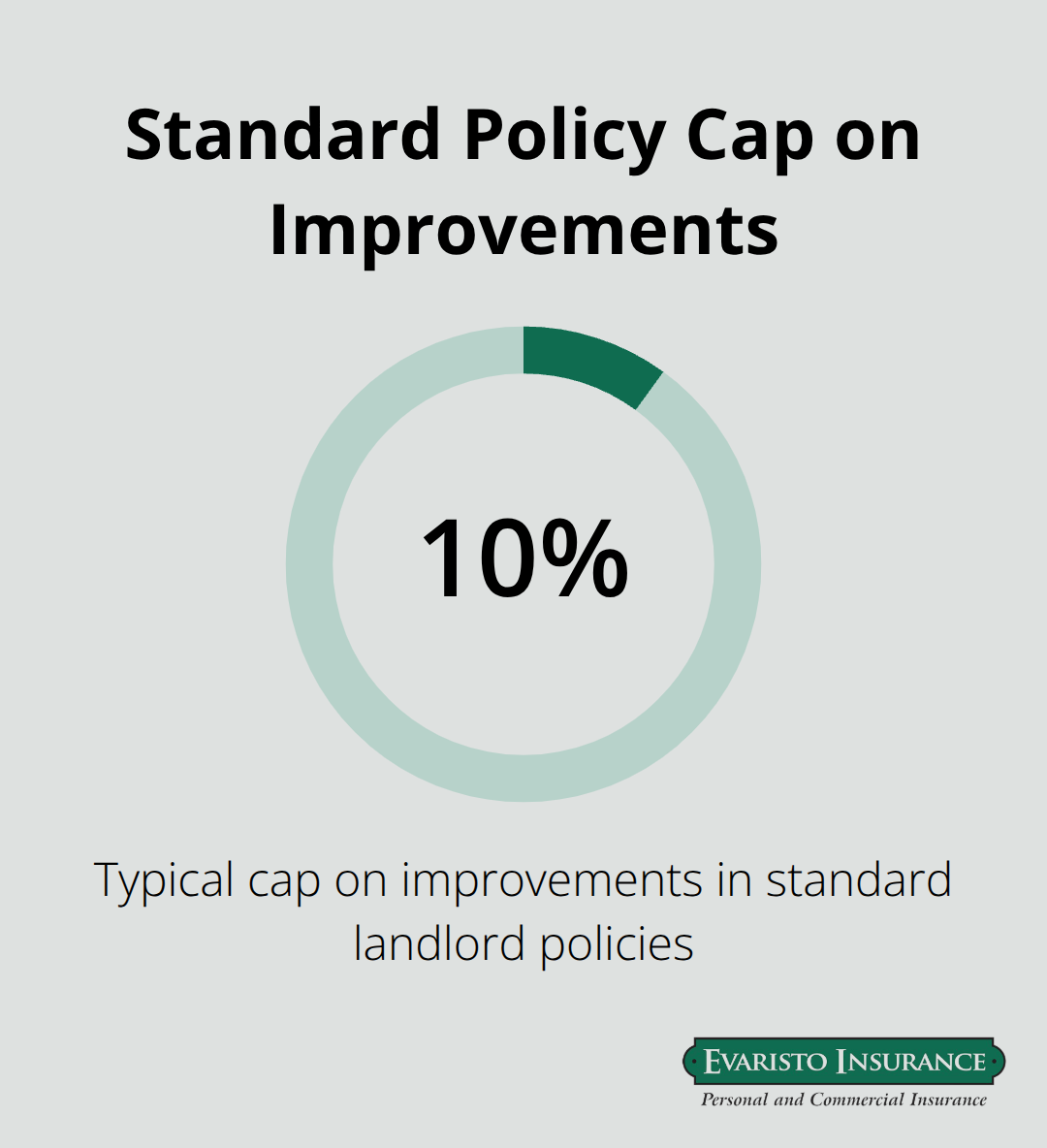
A renovated kitchen with custom cabinetry, granite countertops, and professional-grade appliances might represent $35,000 to $50,000 of your property’s value. Standard landlord policies typically cap improvements coverage at 10 percent of your dwelling limit. If your policy has a $300,000 dwelling limit, that’s only $30,000 for all improvements combined. Connecticut properties with updated electrical systems, new HVAC installations, or foundation work regularly exceed this threshold.
You absorb the cost difference out of pocket. Many standard policies don’t clearly distinguish between improvements and the base dwelling, creating confusion about what’s actually covered when loss occurs. Specialty investment property coverage allows you to specifically schedule high-value improvements and protect them fully, without the percentage limitations that create shortfalls.
Inadequate Loss of Rents Coverage
Loss of rents coverage-also called business interruption or rental income coverage-protects you when a covered loss makes the property uninhabitable and tenants move out. Standard policies include this, but the coverage limits are frequently inadequate. Connecticut investors generating $2,400 monthly from a single-family rental or $5,000 or more from multi-unit properties need loss of rents limits that actually match their income exposure. Standard policies often cap this coverage at 12 months of rent, and that assumes the insurer calculates it correctly based on your actual rental income. Claims frequently reveal that the insured thought they were covered for a year of lost rent only to discover the policy calculated coverage at a much lower amount. Additionally, standard policies typically include a waiting period-often 14 to 30 days-before loss of rents coverage kicks in. For Connecticut investors managing tight cash flows, that gap period creates real financial pressure. Specialty coverage allows you to eliminate or reduce waiting periods and set loss of rents limits that actually reflect your income needs, not some generic formula.
Exclusions for Certain Property Types
Some properties fall outside what standard landlord policies will accept at all. Vacation rentals operating on platforms like Airbnb or Vrbo face exclusions from standard landlord policies because the turnover and transient-guest exposure creates risk that traditional underwriting doesn’t price for. Historic properties with original materials or heritage designations present similar challenges-carriers worry about replacement costs that exceed standard loss-settlement formulas. Mixed-use buildings with ground-floor commercial space and residential units above create liability complexity that generic policies avoid. Even newer construction or properties undergoing renovation can face exclusions or coverage limitations in standard policies. Connecticut’s inventory includes significant numbers of these property types, particularly in towns like Litchfield, Madison, and Hartford. Specialty investment property programs exist specifically to cover what standard carriers reject, giving you options when standard policies simply aren’t available.
The gaps in standard coverage reveal why your next step matters: assessing your property’s actual risk profile and building protection that matches what you own, not what insurance companies assume you own.
How to Build Comprehensive Specialty Investment Coverage
Document Your Property’s True Replacement Cost
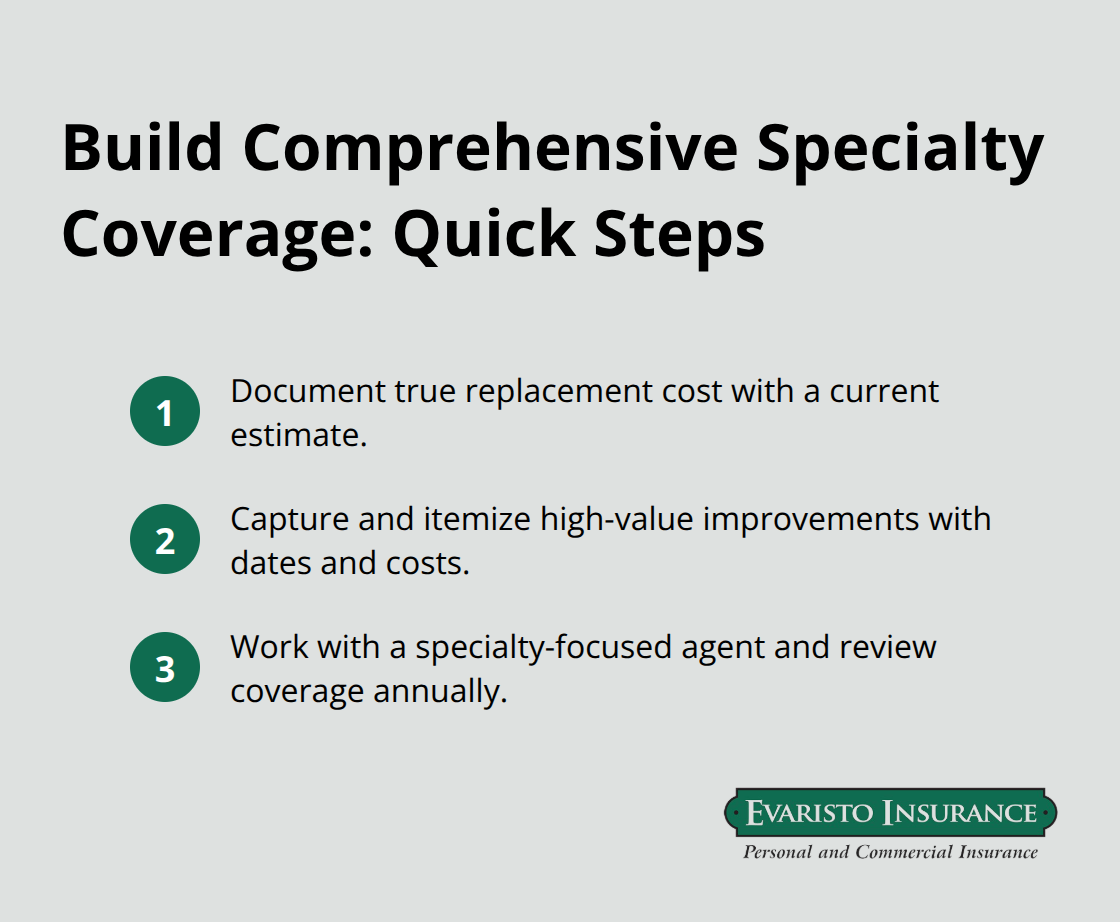
Start by documenting exactly what you own and what it would cost to replace. Connecticut investors often underestimate replacement costs because they anchor to the purchase price rather than what reconstruction would actually demand. A $350,000 rental property might require $425,000 to rebuild if labor and material costs have climbed since purchase. Walk through your property with a contractor or appraiser and obtain a current replacement cost estimate-not a rough guess. This number becomes the foundation for your coverage limits.
High-value improvements need separate documentation. Photograph renovated kitchens, HVAC systems, electrical upgrades, and foundation work. Note the date and cost of each major improvement. When specialty coverage quotes arrive, you’ll reference this documentation to set improvement limits that actually protect what you’ve invested. Connecticut properties with recent renovations should schedule improvements explicitly rather than relying on percentage-based calculations that create gaps.
Select an Agent Who Specializes in Investment Properties
Interview agents who specialize in investment property rather than those who treat it as a side offering. An agent handling investment properties full-time understands Connecticut’s specific exposures-nor’easters that damage older roofs, coastal flooding in Fairfield County towns, and winter storm damage that standard policies underestimate. Ask whether they work with carriers that accept the property types you own. Some carriers won’t touch vacation rentals, historic properties, or mixed-use buildings. An agent working with multiple carriers can place your property with underwriters who actually understand it.
Request that your agent specifically address loss of rents coverage limits-the amount should match your actual monthly rental income, not some formula. If you generate $2,800 monthly from a rental, your loss of rents limit should protect at least that amount for 12 months. Ask about waiting period options; some specialty programs allow you to eliminate the waiting period entirely, which matters when a fire or pipe burst forces tenants out immediately. Finally, understand what your policy excludes. Ask your agent directly what’s not covered. Connecticut investors need to know whether their policy excludes flood, earthquake, or certain property types before a loss reveals the gap.
Schedule Annual Coverage Reviews
Schedule a policy review every 12 months, not every three years when renewal notices arrive. Property values change, rental income increases, and improvements accumulate. A property worth $380,000 when you purchased coverage might justify $420,000 in limits two years later after renovations and market appreciation. Your coverage limits should track with property appreciation.
During annual reviews, discuss whether loss of rents coverage still matches your income. If you’ve added units, increased rents, or extended your lease terms, your coverage needs adjustment. Similarly, if you’ve completed major renovations or added expensive systems, those improvements need explicit scheduling in your policy.
Many Connecticut investors discover coverage gaps only when filing claims, which means the gaps could have been closed during routine reviews. Request written documentation of what your policy covers and what it excludes after each review so you have clarity before loss occurs.
Final Thoughts
Specialty investment property coverage protects what standard policies leave exposed. Connecticut investors with high-value rentals, mixed-use buildings, or unique properties face real financial risk when generic landlord policies create gaps in protection. A fire that displaces tenants, a liability claim from a slip-and-fall accident, or damage to expensive improvements can cost tens of thousands of dollars if your coverage fails to match your actual exposure.
Document your property’s replacement cost, list your improvements, and calculate your actual monthly rental income. These numbers become the foundation for coverage decisions that protect your investment rather than force you into a template that doesn’t fit. Connect with an agent who understands investment properties and Connecticut’s specific climate and liability environment, since specialists understand that your mixed-use building or historic property requires underwriters willing to price risk accurately.
We at Evaristo Insurance work with Connecticut investors to compare multiple top carriers and deliver specialty investment property coverage that actually protects what you own. Our local offices in Ellington and West Hartford serve investors managing single properties and growing portfolios alike. Contact Evaristo Insurance to discuss your property’s specific needs and get the protection your investment deserves.
Disclaimer: This blog post is for general informational purposes only and does not represent actual coverage, policy terms, or legal requirements. Insurance details vary by individual and jurisdiction. Please consult a licensed insurance professional for advice specific to your situation.

