

Landlord Property Insurance: Key Protections Every Landlord Needs
Owning rental property in Connecticut comes with significant financial exposure. Without proper landlord property insurance, a single incident-whether fire, tenant damage, or a guest injury-can wipe out years of profit.
At Evaristo Insurance, we’ve seen landlords lose everything because they skipped coverage or chose inadequate policies. This guide walks you through the protections you actually need and how to build a policy that matches your property and your risk.
What Your Landlord Policy Actually Protects
Building Structure and Permanent Fixtures
Landlord insurance covers three distinct areas that homeowners policies simply do not address, and Connecticut landlords need to understand exactly what protection each one provides. The building structure and permanent fixtures receive coverage against specific perils like fire, severe weather, theft, and vandalism. A kitchen fire that damages walls, cabinets, and flooring triggers your policy’s protection. A nor’easter that tears off roofing activates the same coverage.
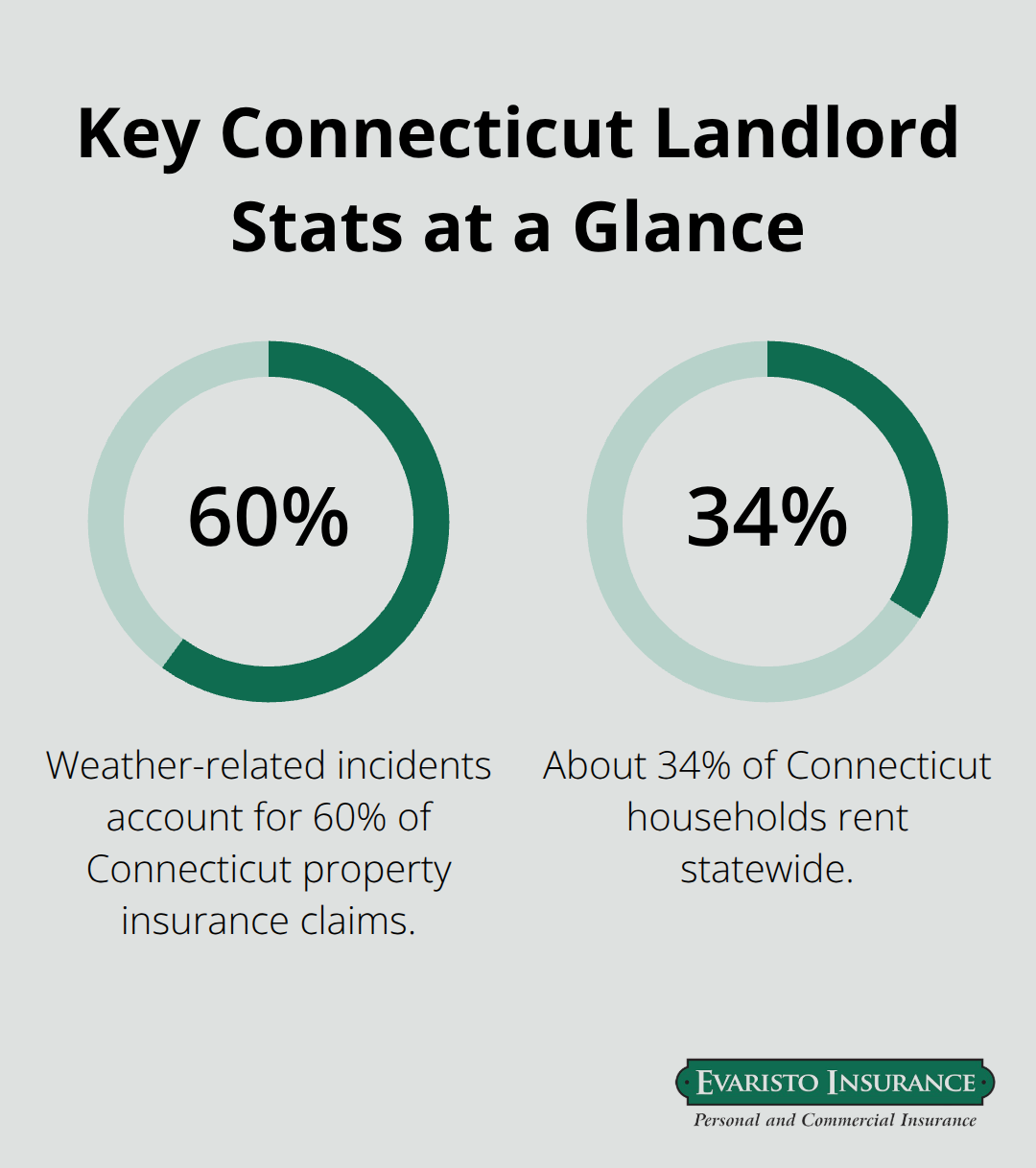
Detached structures on the property-sheds, garages, storage buildings-typically receive inclusion, which matters because detached structures account for a significant portion of regional property damage claims in the Northeast. Connecticut’s weather patterns amplify this risk: nor’easters and winter storms drive the majority of claims, with weather-related incidents accounting for about 60 percent of all property insurance claims statewide. Your policy should also cover maintenance equipment kept on-site, such as lawn mowers and snow blowers, which many landlords overlook when calculating their actual exposure.
Loss of Rental Income Protection
Loss of rental income protection separates landlord insurance from standard homeowners coverage, and this protection deserves your full attention. If a covered event like a kitchen fire or burst pipe makes the unit uninhabitable, this coverage reimburses you for lost rent during the repair period. Without this protection, you face a double loss: paying for repairs while receiving zero income. Connecticut landlords report median premiums around $2,610 annually, and losing even one month of rent on a property generating $2,000 monthly represents a 7.7 percent hit to your annual income.
Liability Coverage for Injuries
Liability coverage protects you when a tenant or guest is injured on the property and holds you responsible. Medical bills, legal fees, and settlement costs fall under this protection, with typical limits ranging from $300,000 to $2 million per occurrence. A slip-and-fall claim that results in a broken hip can quickly exceed $100,000 when medical treatment, legal defense, and potential settlement combine.
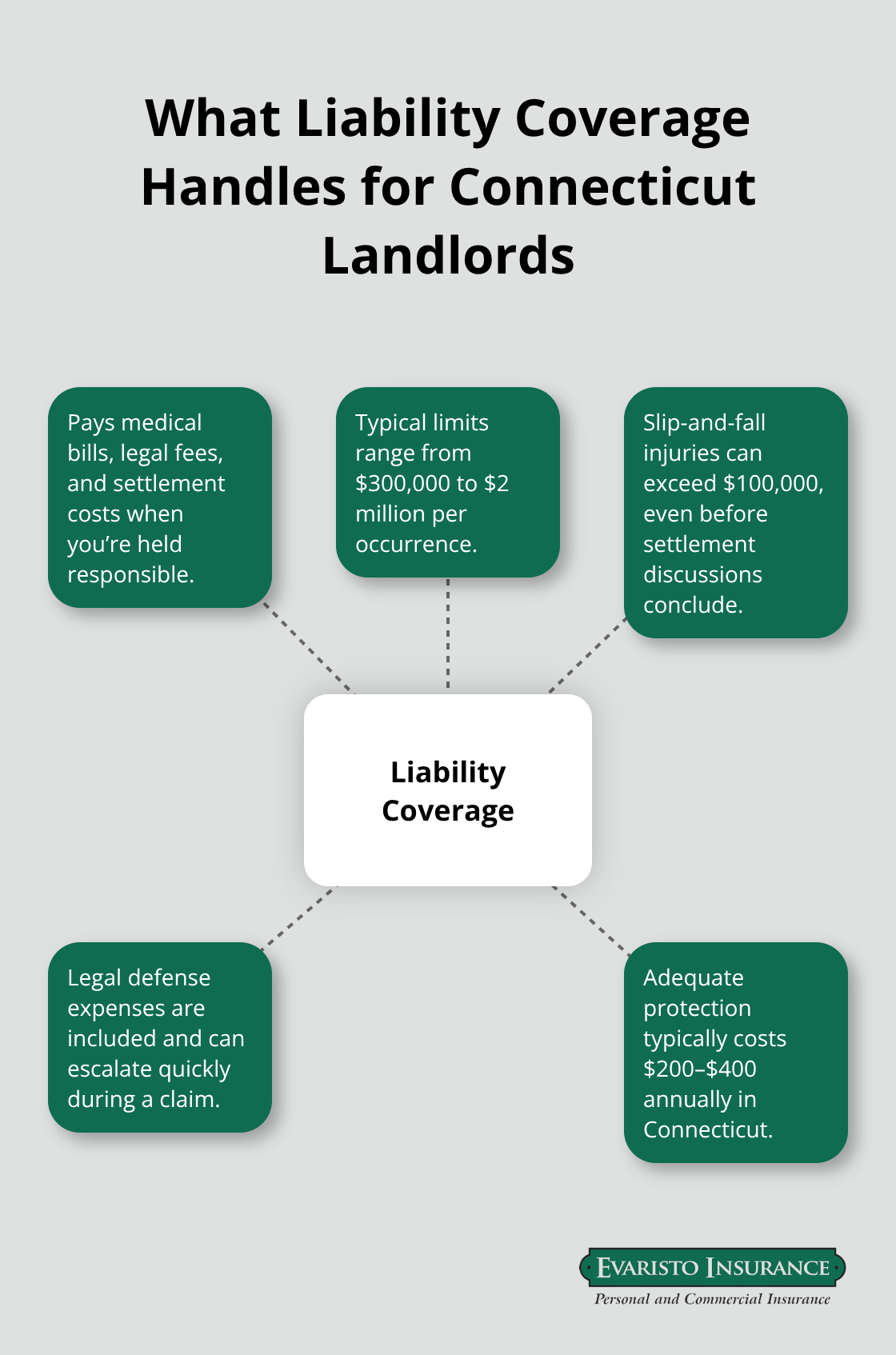
Connecticut landlords should understand that liability coverage typically costs $200 to $400 annually for adequate protection-a modest cost against catastrophic exposure.
Understanding these three protections forms the foundation for selecting a policy that actually matches your property’s risk profile. The next step involves recognizing what happens when landlords skip coverage or choose inadequate limits.
Common Risks Landlords Face Without Proper Coverage
Fire and Structural Damage
Connecticut’s rental market spans roughly 1.4 million housing units, with about 34 percent of households renting statewide. Yet many landlords operate with dangerously thin protection or rely on homeowners policies that explicitly exclude rental income and liability exposure. Fire damage illustrates why this gap matters immediately. A kitchen fire in a Connecticut rental property causes average structural damage exceeding $50,000 when accounting for wall repair, flooring replacement, and smoke remediation. Without landlord property insurance, you pay this from savings. With proper coverage, the insurer covers repairs and reimburses your lost rent during the 4-to-8-week reconstruction period.
Weather and Water Damage Exposure
Connecticut’s weather patterns intensify property risk substantially. Nor’easters and winter storms generate the majority of claims statewide, with weather-related incidents accounting for approximately 60 percent of all property insurance claims. A severe nor’easter can strip roofing, shatter windows, and damage structural components, easily reaching $75,000 in repair costs.
Burst pipes from freezing temperatures represent another Connecticut-specific exposure that many landlords underestimate. Water damage from a single burst pipe can exceed $30,000 when including structural drying, mold remediation, and temporary displacement costs.
Tenant Damage and Income Loss
Tenant-caused damage and vacancy periods create financial exposure that homeowners policies ignore entirely. A tenant who intentionally damages walls, flooring, or fixtures leaves you responsible for repairs while receiving zero rent income. Connecticut landlords with properties generating $2,000 monthly face a devastating double loss: paying $10,000 in repairs while losing $2,000 in monthly income during the 6-to-12-week repair timeline.
Liability Claims from Guest Injuries
Liability exposure from injuries on the premises strikes fear into landlords who understand the numbers. A guest who slips on ice and breaks a hip can generate medical bills exceeding $100,000, plus legal defense costs and potential settlement demands reaching $250,000 or more. Connecticut’s legal environment provides tenants and their guests substantial protections, and courts have awarded significant damages in premises liability cases. Without liability coverage, a single incident can eliminate years of accumulated equity.
Why Standard Homeowners Policies Fall Short
Standard homeowners policies explicitly exclude rental properties, making landlord insurance not optional but mandatory for Connecticut property owners serious about protecting their investment. The gap between what homeowners coverage offers and what rental properties actually need determines whether you face financial ruin or manageable risk. Understanding these specific exposures prepares you to select the right policy limits and coverage options for your situation.
How to Choose the Right Landlord Insurance Policy
Calculate Your True Replacement Cost
Selecting landlord insurance requires far more than browsing online quotes and picking the lowest price. Connecticut’s rental market demands coverage that matches your specific property, location, and financial exposure. Start with your actual replacement cost, not your purchase price. Contact local contractors in your area to obtain realistic rebuild estimates rather than guessing. This number becomes your structural coverage floor.
Next, add your property’s contents value-appliances, flooring, permanent fixtures-and estimate your monthly rental income. A landlord charging $2,100 monthly should carry at least $25,200 in loss-of-income coverage to survive a six-month reconstruction. Connecticut landlords typically see median premiums around $2,610 annually, but this figure varies dramatically by town, property condition, and coverage limits.
Account for Location and Property Condition
Properties in Hartford or New Haven command higher premiums than similar units in smaller towns due to higher replacement costs and concentrated risk. Your property’s age, roof condition, and heating system all influence final pricing. Older properties with original roofing and aging electrical systems face steeper premiums than recently renovated units with modern systems.
Compare Multiple Carriers Systematically
Comparing carriers across Connecticut requires a systematic approach because rate variations between insurers often exceed 40 percent for identical coverage. Obtain quotes from at least three carriers-not just national names but regional specialists who understand Connecticut-specific risks like nor’easters and ice dam damage. One carrier might excel at insuring older multi-family properties while another specializes in single-family rentals.
Ask each insurer whether they offer bundling discounts for combining landlord, auto, and umbrella policies, which can reduce your total cost by 15 to 25 percent. This comparison effort pays immediate dividends in your annual premium.
Partner with a Local Independent Agent
Work with a local independent agent who represents multiple carriers rather than captive agents who sell only one company’s policies. A knowledgeable local agent identifies coverage gaps you might miss alone-such as whether your policy includes riot and civil commotion protection, ice dam damage coverage, or adequate liability limits for your neighborhood’s demographics.
Ask potential agents whether they’ve handled landlord claims in your specific town and what issues emerged. An agent familiar with Hartford rental properties knows the local court environment and typical settlement ranges for premises liability cases, intelligence that shapes appropriate coverage limits. Independent agencies like Evaristo Insurance, serving Connecticut since 1989 with local offices in Ellington and West Hartford, compare multiple top carriers to find competitive rates tailored to your property rather than pushing a single company’s product.
Final Thoughts
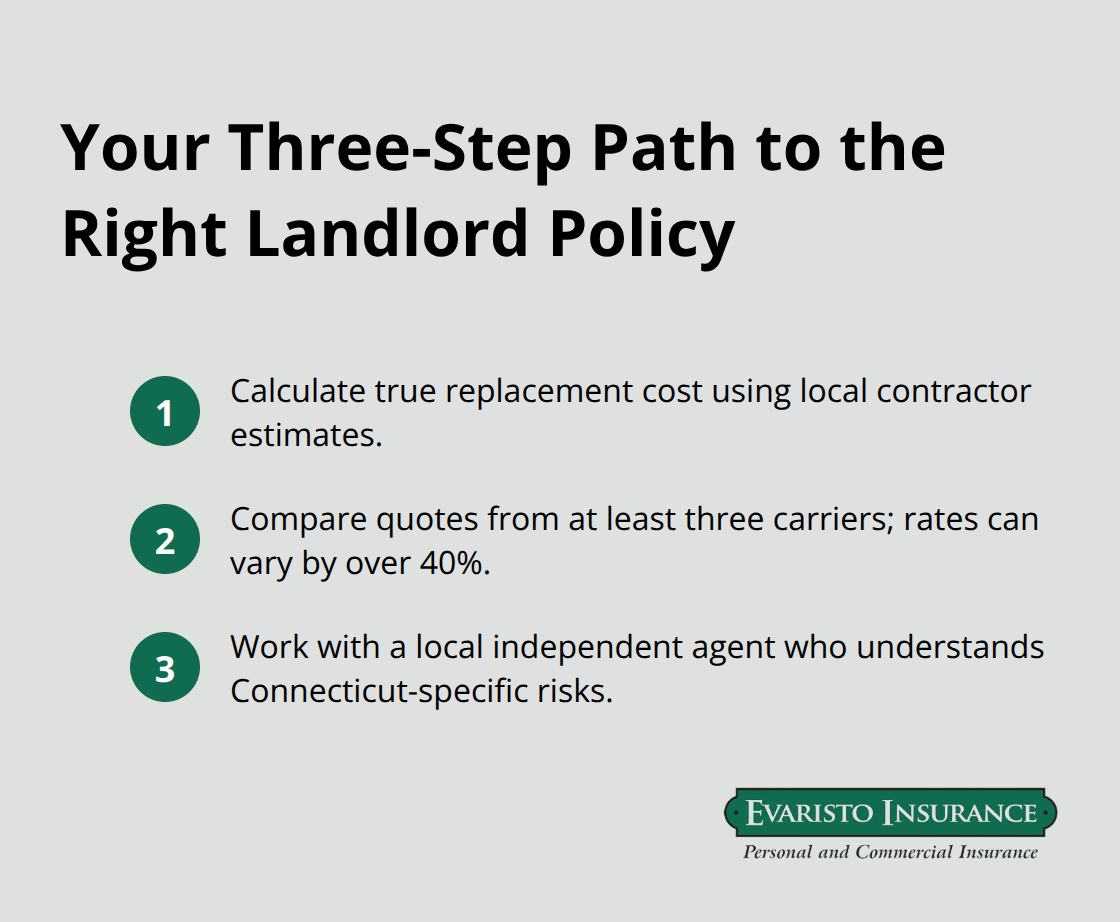
Landlord property insurance protects your Connecticut rental investment from the specific risks that homeowners policies ignore. Fire, weather damage, tenant-caused destruction, and liability claims strike landlords every year across the state, and a single incident eliminates years of accumulated profit while leaving you personally liable for repair costs, legal fees, and medical bills that can reach hundreds of thousands of dollars. The path forward requires three concrete steps: calculate your actual replacement cost through local contractor estimates, compare quotes from multiple carriers since rate variations often exceed 40 percent for identical protection, and work with a local independent agent who understands Connecticut-specific risks like nor’easters and ice dam damage.
We at Evaristo Insurance have guided Connecticut landlords through this process since 1989, comparing multiple top carriers to deliver tailored landlord property insurance and competitive pricing rather than pushing a single company’s product. Our local offices in Ellington and West Hartford connect you with agents who understand Hartford rental properties, New Haven market conditions, and the weather patterns that drive claims across the state. We handle the comparison work so you receive coverage that matches your property’s actual exposure without overpaying for unnecessary protection or underpaying for critical gaps.
Your rental property represents substantial financial exposure, and protecting that investment with the right policy takes effort but costs far less than recovering from a major loss. Contact Evaristo Insurance today to discuss your coverage needs with an agent who knows Connecticut properties inside and out.
Disclaimer: This blog post is for general informational purposes only and does not represent actual coverage, policy terms, or legal requirements. Insurance details vary by individual and jurisdiction. Please consult a licensed insurance professional for advice specific to your situation.

