
Small Business Liability Coverage: Building A Safe Operational Foundation
One lawsuit can devastate a Connecticut small business. Without proper small business liability coverage, a single incident-whether it’s a customer injury or property damage claim-can drain your finances and threaten your operations.
We at Evaristo Insurance have helped countless local business owners understand what protection they actually need. This guide walks you through the coverage types that matter, the risks specific to Connecticut businesses, and how to choose limits that genuinely protect your assets.
What Small Business Liability Coverage Actually Covers
General Liability: Your Foundation Protection
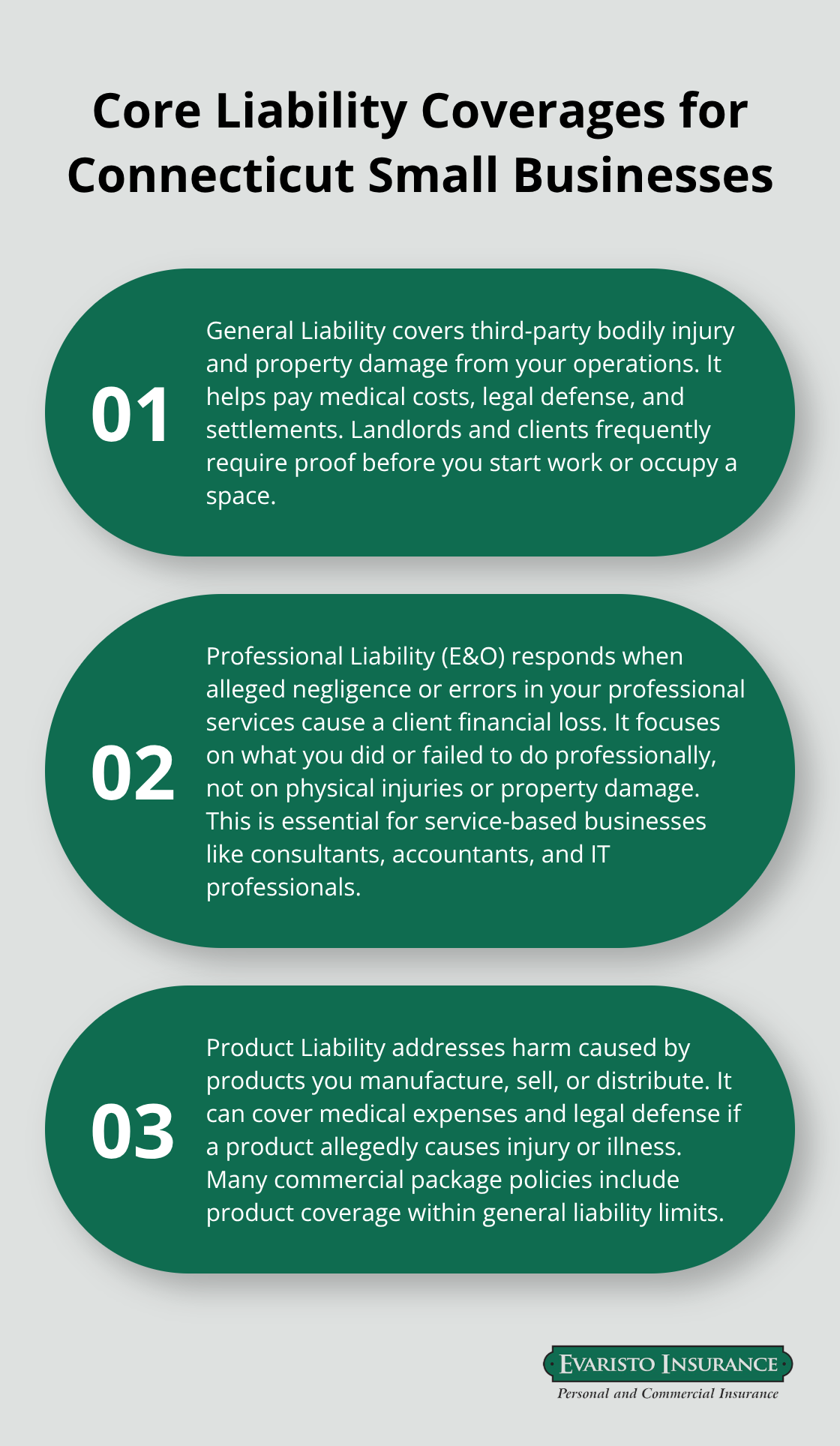
General liability protects your business when a third party claims bodily injury or property damage caused by your operations. If a customer slips on a wet floor in your Connecticut storefront or your worker damages a client’s equipment during a service call, general liability covers medical costs and legal fees. This coverage forms the foundation for virtually every small business in Connecticut. Most commercial landlords require it before you occupy a space, and many customers ask for proof before hiring you.
The coverage typically includes medical payments up to a certain limit, which can resolve minor incidents without a formal claim. Connecticut small businesses commonly carry general liability limits of 1 million dollars per occurrence, though some industries or client contracts demand higher limits. Your actual premium depends on your industry classification, revenue, location within Connecticut, and your loss history. A plumber in one town may pay differently than a plumber in another based on local risk factors and claim patterns in that area.
Professional Liability: Protection for Service-Based Businesses
Professional liability, also called errors and omissions or E&O coverage, protects service-based businesses when clients claim your work was negligent, incomplete, or caused them financial harm. If you’re an accountant and a client loses a tax deduction because of your oversight, or an IT consultant and your advice leads to a costly system failure, professional liability covers the legal costs and settlement. This coverage differs fundamentally from general liability because it focuses on what you did wrong professionally, not on physical injuries or property damage.
Connecticut professionals including consultants, real estate agents, bookkeepers, and contractors frequently purchase E&O coverage. This protection matters most when your professional judgment directly affects your clients’ financial outcomes.
Product Liability: Coverage for Manufactured or Sold Products
Product liability covers claims that arise from products you manufacture, sell, or distribute. If a customer suffers harm from a defective product or claims it caused injury or illness, product liability covers medical expenses and legal defense. Most Connecticut small businesses don’t need standalone product liability if they carry a commercial package policy, since many bundled policies include product coverage within general liability limits.
Understanding these three coverage types helps you identify which protections your Connecticut business actually needs. The next step involves recognizing the specific liability risks that threaten your operations.
Common Liability Risks Connecticut Small Businesses Face
Slip and Fall Incidents Cost More Than You Expect
Slip and fall incidents remain the most common liability claim Connecticut small businesses face. More than 8.8 million people were treated in emergency rooms for fall-related injuries in 2023 across the United States. Your Connecticut storefront, restaurant, or service location presents constant exposure-a wet floor after cleaning, ice near an entrance during winter, or clutter in a hallway can trigger a customer injury claim. Landlords in Connecticut often require general liability coverage specifically to protect against these premises-related incidents, and many lease agreements mandate minimum limits of $1 million. A single fall claim can exceed your deductible and push your premium higher for years, making prevention and proper coverage equally important.
Property Damage During Service Work Creates Unexpected Liability
Damage to client property during your work represents a second major exposure that Connecticut service businesses underestimate. When your technician punctures a client’s roof while installing an antenna, or your contractor’s equipment damages a customer’s flooring, general liability covers repair or replacement costs plus legal fees. Professional liability becomes critical here too-if your advice or workmanship fails and costs the client money, errors and omissions coverage protects you from negligence claims. Connecticut contractors, HVAC specialists, electricians, and IT consultants face this risk constantly.
The difference between a minor incident and a lawsuit often depends on how quickly you report the damage to your insurer and whether your coverage limits match the client’s property value. A homeowner with $500,000 in assets expects protection if your work causes significant harm, and your policy limits should reflect realistic exposure in your service area. Understanding these two major risks helps you recognize why choosing adequate coverage limits matters so much for your Connecticut operation.
How to Choose the Right Coverage Limits for Your Business
Assess Your Actual Liability Exposure
The standard answer of $1 million per occurrence works for many Connecticut small businesses, but it’s dangerously wrong for yours if your actual exposure differs. Most business owners pick coverage limits based on what competitors carry or what feels safe, rather than what their specific operations demand. Your industry, revenue, client base, and asset value should drive this decision, not guesswork. A cleaning service operating from a van faces far different exposure than a contractor renovating high-value homes. A consultant advising on financial decisions carries different risk than a landscaper.
Start by mapping your actual liability exposure. What’s the worst-case scenario in your business? If you operate a salon, a chemical burn or allergic reaction could cost $50,000 to $100,000 in medical bills plus legal defense. If you run a contracting business, property damage to a client’s home could easily exceed $500,000. Connecticut’s higher property values in many towns mean that damage claims tend to be larger than national averages. Talk to contractors in Fairfield County versus those in rural areas-premiums and recommended limits differ substantially because exposure differs.
Match Coverage to Your Industry and Contracts
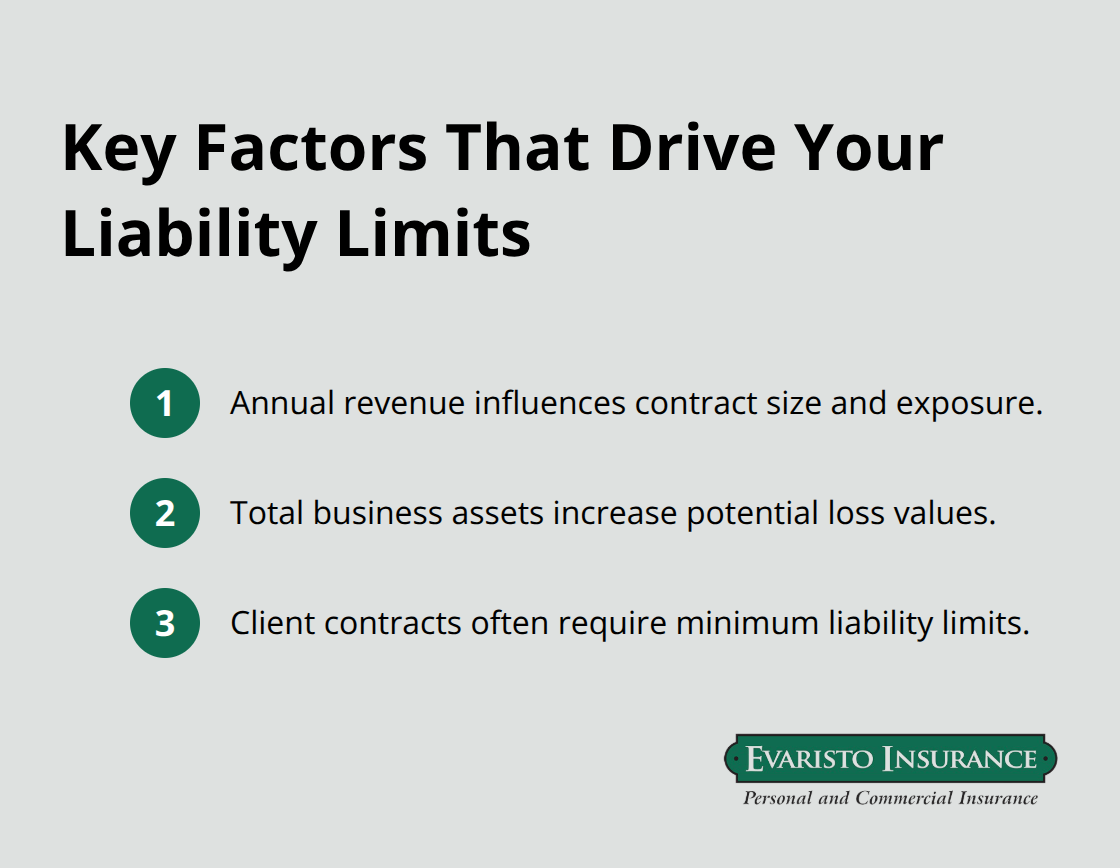
Your industry classification code matters enormously. A general contractor carries different risk than a handyman, even though both do similar work. Your carrier uses these codes to assess claims history and typical incidents in your trade. When reviewing coverage needs with Connecticut business owners, assessing your specific industry risks and matching them to the right coverage limits and deductibles emerges as essential. Three concrete factors matter: your annual revenue (higher revenue often means larger client contracts and higher exposure), your total business assets (property, equipment, inventory that could be damaged), and your client contracts (many require minimum liability limits of $1 million or higher).
That third point is critical-if your largest client demands $2 million in coverage and you carry $1 million, you lose that contract. Review your actual contracts and leases. Most Connecticut commercial leases specify minimum general liability limits. Many service contracts now require proof of $1 million to $2 million in coverage. Professional liability limits should match your annual revenue or the maximum financial impact of a single client relationship. If you bill $500,000 annually and lose a major client due to your error, professional liability should cover that exposure plus legal costs.
Compare Quotes and Evaluate Bundling Options
Comparing quotes from multiple carriers reveals how much your specific business profile affects pricing. A plumber in West Hartford might pay $600 annually for $1 million in general liability while an identical plumber in Ellington pays $520 because local claims history and premium competition differ by location. This is why shopping matters-one carrier may specialize in your industry and price it 30% lower than another.
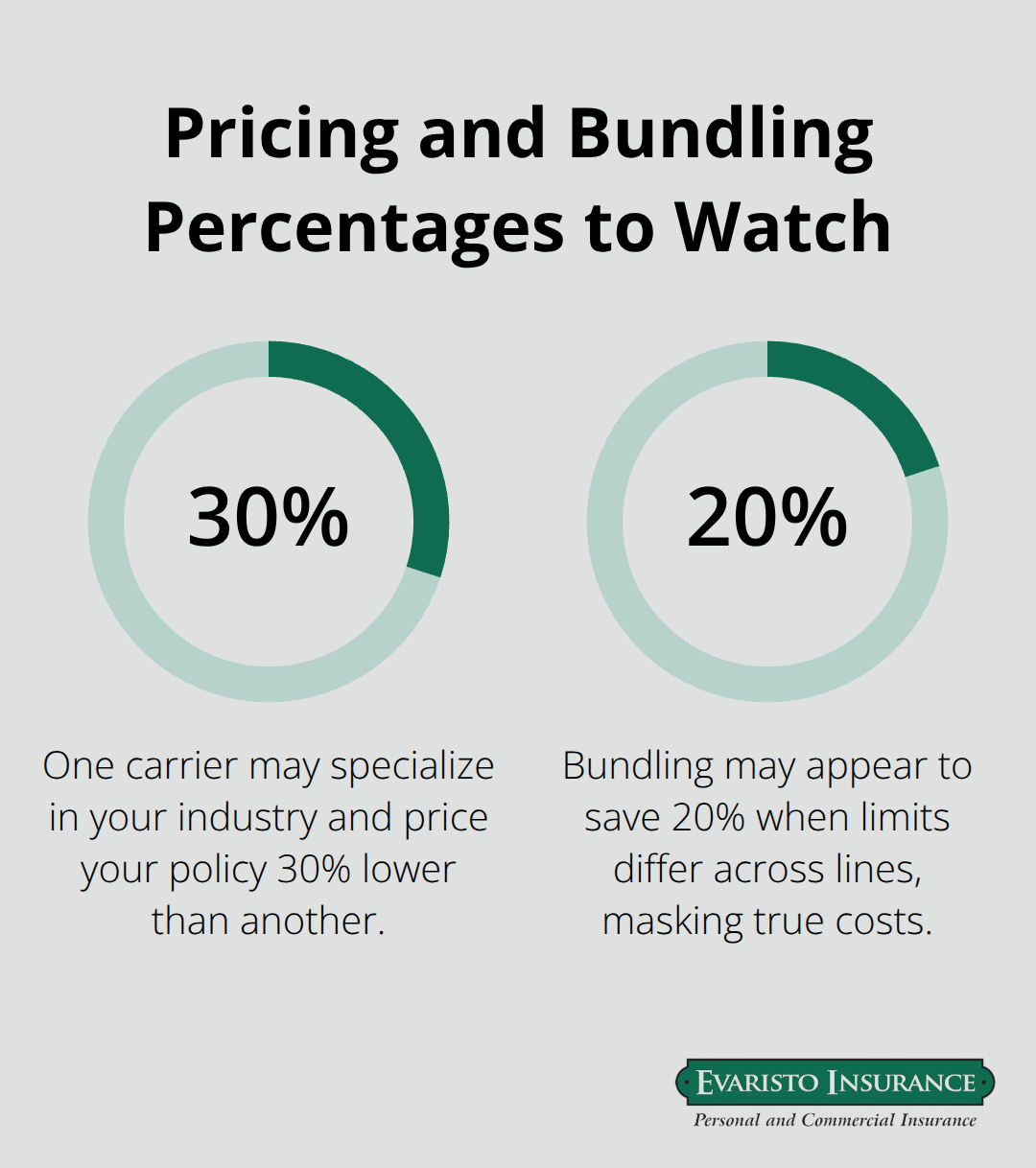
Connecticut business owners often bundle general liability with commercial property coverage in a Business Owners Policy, which typically costs less than purchasing policies separately. That bundled approach makes sense if you own your building or rent a space with valuable equipment. However, bundling can hide actual coverage costs-you might think you’re saving 20% when the carrier simply offers lower limits on one line to offset higher costs on another. Always compare apples to apples: same limits, same deductibles, same exclusions across all quotes.
Set Deductibles You Can Actually Afford
Deductible selection directly impacts both your premium and your out-of-pocket exposure after a claim. Raising your deductible from $500 to $2,500 might cut your premium 15% to 25%, but you must be able to afford that $2,500 payment if a claim occurs. Many Connecticut small businesses set deductibles too high because they chase lower premiums, then face financial hardship when a legitimate claim hits. Your deductible should be painful but payable.
One additional strategy that Connecticut contractors and service businesses often overlook is umbrella liability coverage. A $1 million general liability policy with a $2 million umbrella policy costs substantially less than a $3 million general liability policy alone, yet provides the same total protection. Umbrella policies activate only after your primary coverage exhausts, making them cost-effective for businesses that want higher limits without proportionally higher premiums on every policy line.
Final Thoughts
Liability coverage protects your Connecticut small business when incidents happen, not if they happen. Slip and fall claims, property damage during service work, and professional negligence occur regularly in Connecticut operations, and without proper small business liability coverage in place, you risk losing everything to a single lawsuit. The coverage types we’ve outlined-general liability, professional liability, and product liability-form the foundation that keeps your business standing after a claim hits.
Three concrete steps move you forward. First, calculate your actual exposure based on your industry, revenue, client contracts, and local property values instead of guessing at coverage limits. Second, compare quotes from multiple carriers to see how your specific business profile affects pricing, since location, classification code, and loss history create real differences in cost. Third, bundle coverages strategically and set deductibles you can actually afford to pay if a claim occurs.
We at Evaristo Insurance compare multiple top carriers to find coverage that matches your actual needs and budget. Contact Evaristo Insurance for a consultation, and we’ll review your operations, identify your liability gaps, and show you coverage options with real pricing that fits your Connecticut business.
Disclaimer: This blog post is for general informational purposes only and does not represent actual coverage, policy terms, or legal requirements. Insurance details vary by individual and jurisdiction. Please consult a licensed insurance professional for advice specific to your situation.

