
Tenant Damage Protection: Reducing Your Landlord’s Exposure
Tenant damage can wipe out your rental income and drain your reserves faster than you’d expect. Connecticut landlords face real financial exposure when tenants cause significant damage, and standard policies often leave critical gaps.
We at Evaristo Insurance help landlords understand exactly what protection they need. This guide walks you through tenant damage protection strategies that actually work.
What Damage Do Tenants Actually Cause?
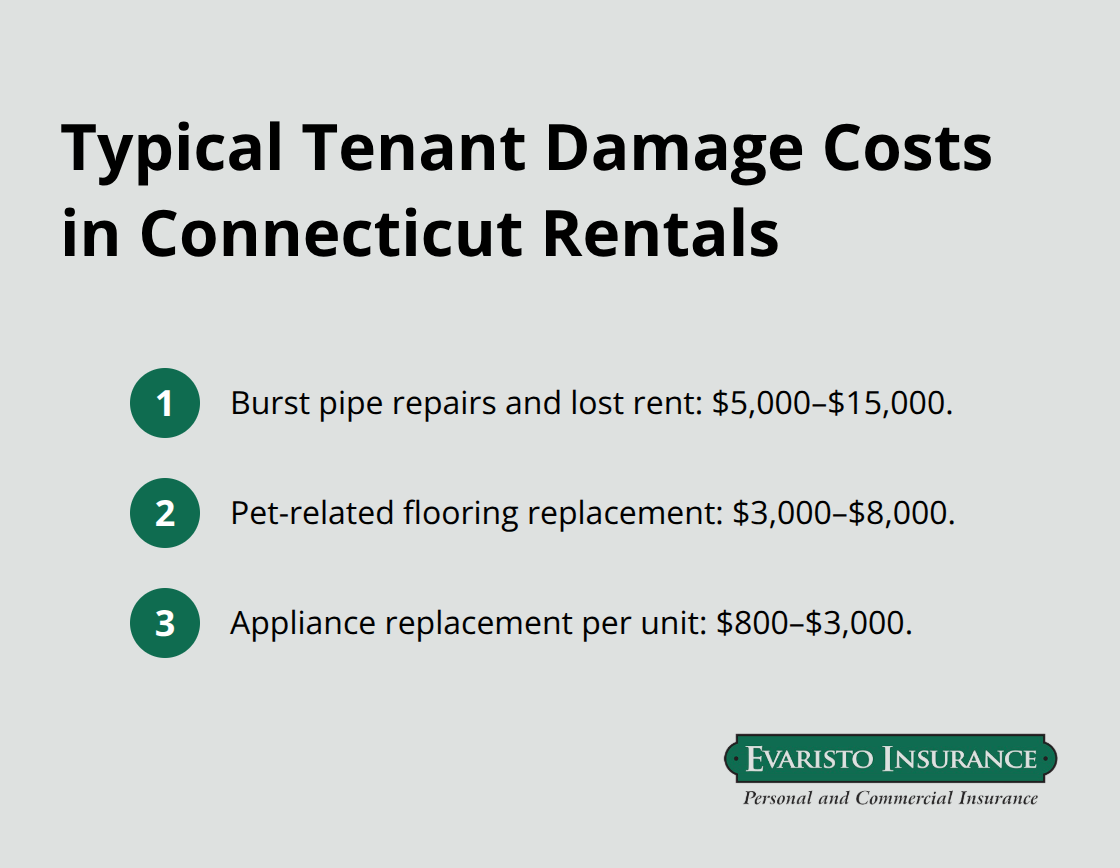
Tenant-caused damage falls into predictable categories, and Connecticut landlords encounter them repeatedly. Water damage from burst pipes, overflowing toilets, or neglected plumbing ranks as the most expensive. Structural damage to walls, floors, and ceilings comes next, followed by appliance damage and broken fixtures. Pet damage-scratched floors, stained carpets, urine damage to subfloors-creates expensive repairs that standard homeowners policies won’t cover on rental properties. Vandalism and intentional damage, while less common, spike during evictions or tenant disputes. The financial hit varies wildly. A burst pipe in winter costs $5,000 to $15,000 in structural repairs and lost rent. Flooring replacement for pet damage runs $3,000 to $8,000 depending on square footage. Appliance replacement costs $800 to $3,000 per unit.
Connecticut’s older housing stock amplifies these costs because replacement materials and labor rates for pre-1950s properties run 20 to 40 percent higher than newer construction, according to regional contractor data.
The Real Cost to Your Cash Flow
Connecticut landlords face median annual landlord insurance premiums around $2,610, yet many carry standard homeowners policies on rental properties that exclude tenant damage entirely. This creates a dangerous gap. If a tenant causes $10,000 in damage and your policy doesn’t cover it, you absorb the full loss plus lost rent during repairs. A three-month repair timeline on a $1,500-per-month unit adds another $4,500 in income loss. Connecticut’s tenant-friendly laws make recovery through small claims or security deposits slow and uncertain-most security deposit disputes take four to six months to resolve.
Coverage Gaps That Expose Your Property
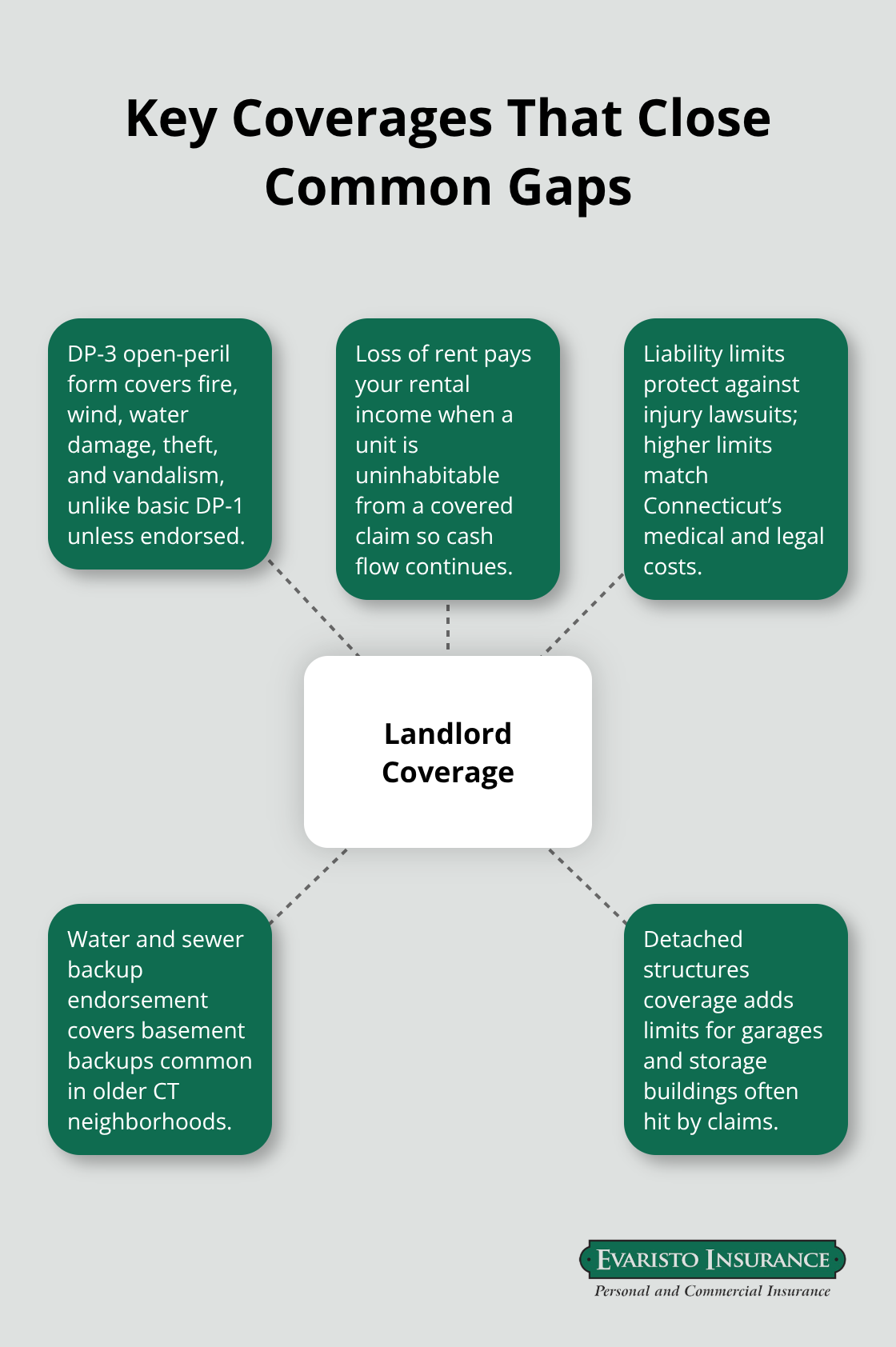
Standard DP-1 policies exclude water damage, theft, and vandalism unless you add them separately, leaving your structure vulnerable. DP-3 policies provide broader open-peril coverage for fire, wind, water damage, theft, and vandalism, but you must verify your current form. Loss of rent coverage-which reimburses rental income when a unit becomes uninhabitable from covered damage-exists only if you specifically add it. Without it, a fire or major water event stops your income cold while repairs proceed.
Liability Exposure You Can’t Ignore
Legal liability coverage protects you when tenants or their guests suffer injuries on your property, with typical limits ranging from $300,000 to $2 million per occurrence. Yet many landlords skip this protection entirely and face six-figure lawsuit exposure. Understanding what your current policy actually covers-and what it doesn’t-determines whether tenant damage becomes a manageable expense or a financial catastrophe. The right landlord insurance solution addresses these gaps directly, but selecting adequate coverage requires knowing exactly what protection options exist and how they work together.
Building the Right Landlord Insurance Foundation
DP-1 vs. DP-3: Which Policy Protects Connecticut Landlords
Landlord insurance in Connecticut comes in two primary forms: DP-1 and DP-3 policies. DP-1 covers named perils only-fire, lightning, wind, hail, and a few others-but explicitly excludes water damage, theft, and vandalism unless you pay extra for endorsements. DP-3 policies use open-peril coverage, meaning everything is covered except what’s specifically excluded. For Connecticut landlords, DP-3 is the practical choice because water damage from burst pipes and frozen plumbing occurs routinely in our climate, and tenants cause water damage frequently. Standard DP-1 leaves you exposed to the exact losses you face most often.
Liability Coverage That Matches Connecticut’s Risk Environment
Beyond structure coverage, landlord policies include legal liability protection when tenants or guests suffer injuries on your property. Connecticut law holds landlords responsible for maintaining safe conditions, so liability limits matter significantly. Most policies offer $300,000 per occurrence, but given Connecticut’s high medical costs and jury awards, many landlords should carry $500,000 to $1 million in liability coverage. If you own multiple properties or have significant net worth, umbrella coverage adds an extra $1 million to $3 million in protection for roughly $200 to $400 annually.
Essential Add-Ons That Protect Your Income and Property
Loss of rent coverage is where many Connecticut landlords fail themselves. This coverage reimburses your monthly rental income while a unit sits uninhabitable after fire, pipe bursts, or other covered damage. Without it, a three-month repair timeline costs you $4,500 to $5,000 in lost income on top of repair expenses. Water and sewer backup coverage, available for $50 to $100 extra per year, protects against basement flooding from municipal sewer failures-a real problem in older Connecticut neighborhoods. Vandalism and burglary coverage should always appear on rental properties; you must provide a police report when filing claims. Detached structures like garages or storage buildings account for significant claim frequency in the Northeast, so verify these structures appear on your policy with adequate limits.
Setting Coverage Limits Based on Replacement Costs
Replacement cost coverage pays to rebuild or repair at current market prices without depreciation, while actual cash value subtracts depreciation from the payout. For rental properties, replacement cost is essential because Connecticut’s older housing stock and high labor costs mean repairs run expensive. A roof replacement on a pre-1950s home costs $15,000 to $25,000; actual cash value might pay only $8,000 to $12,000 if your roof is 15 years old. The gap comes straight from your pocket. Try setting your dwelling coverage limit at 80 percent of your property’s full replacement value at minimum; many insurers recommend 100 percent. If your property would cost $300,000 to rebuild, carry at least $240,000 in dwelling coverage, preferably $300,000. Underinsurance means you won’t recover fully on major losses, and overinsurance just costs extra premium.
Getting Competitive Quotes for Your Connecticut Property
Connecticut’s median landlord insurance premium of $2,610 annually varies significantly by location and property condition. Urban properties in Hartford or Bridgeport typically cost more than suburban properties because of higher claim frequency and replacement costs. Properties built before 1950 cost roughly 20 to 40 percent more to insure than newer construction due to outdated wiring, plumbing, and materials. Online quotes take minutes once you provide your address and basic property details, giving you immediate pricing to compare across carriers. The right policy protects your investment, but selecting it requires understanding how tenant screening and lease agreements work together with your insurance to create a complete risk management strategy.
How to Screen Tenants and Draft Damage Clauses That Actually Work
Tenant Screening Reduces Damage Risk More Than Insurance
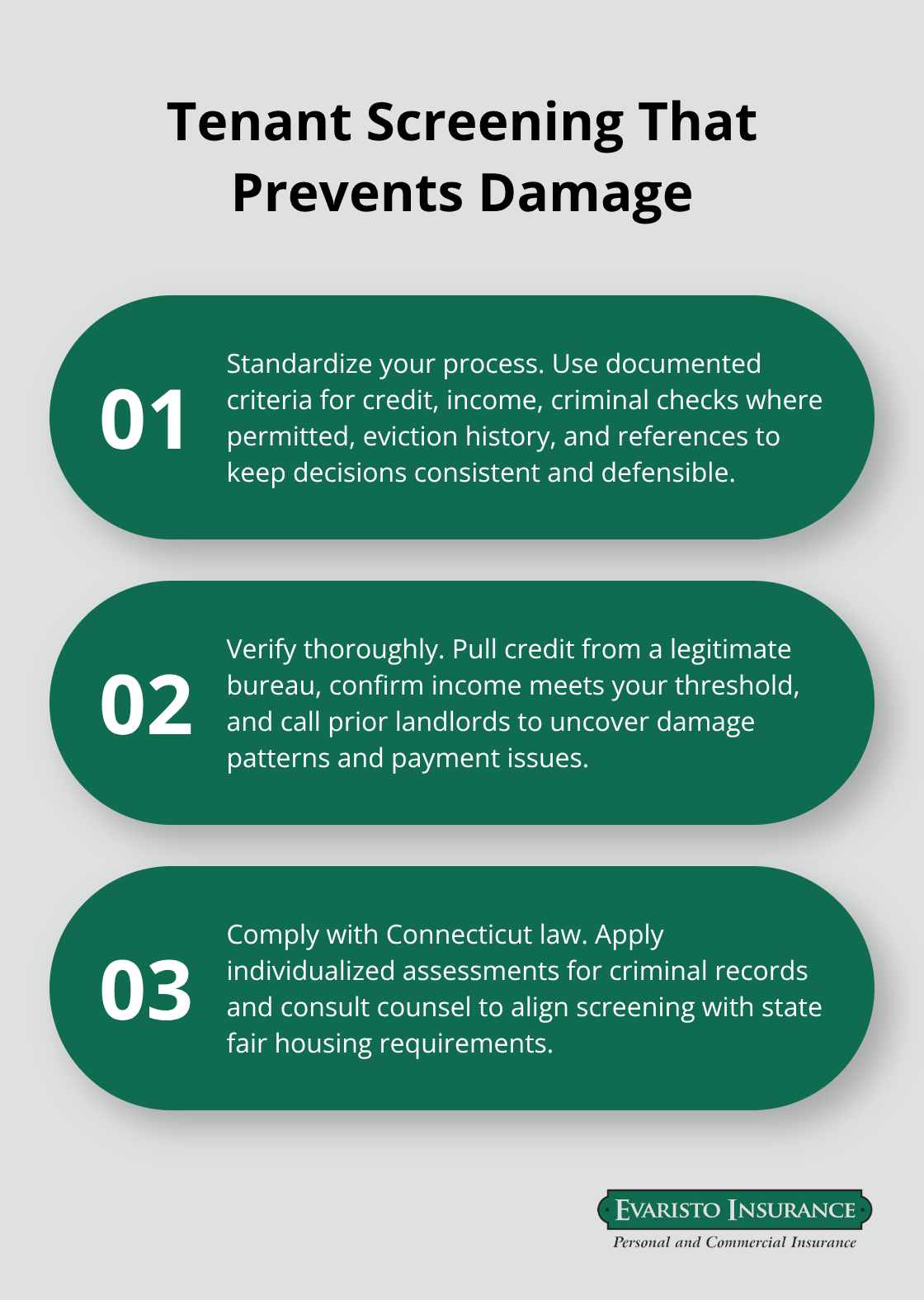
Tenant screening determines your damage risk more than insurance ever will. Connecticut landlords who skip thorough screening pay for it repeatedly through preventable damage claims and eviction costs that dwarf insurance premiums. Start with a consistent, documented screening process that covers credit history, income verification, criminal background checks where state law permits, eviction history, and landlord references.
The National Apartment Association emphasizes that documented screening processes reduce fair housing exposure while catching problem tenants before they damage your property.
Run credit reports through a legitimate agency to verify financial responsibility and payment patterns. Income verification should confirm the applicant earns at least 30 times the monthly rent annually-a tenant earning $2,400 monthly cannot reliably pay $1,500 rent and maintain the property. Call previous landlords directly rather than relying on written references; landlords speak freely about damage patterns, noise complaints, and maintenance issues when you ask specific questions. A tenant who damaged a previous landlord’s property will damage yours. Connecticut’s fair housing laws restrict criminal background checks for certain offenses and require individualized assessment, so consult a real estate attorney before implementing these checks.
Lease Agreements That Protect Your Property and Income
Once you’ve selected a tenant, the lease agreement becomes your legal defense against damage disputes and your roadmap for security deposit deductions. Your lease must clearly distinguish normal wear and tear from tenant-caused damage, define liability limits for guest injuries, specify pet policies with separate pet deposits, and detail maintenance responsibilities. The Connecticut Department of Housing provides mandatory landlord-tenant forms and model lease language aligned with state law; using these templates protects you legally and reduces ambiguity that leads to disputes.
Include explicit damage clauses that require tenants to report maintenance issues within 48 hours and prohibit DIY repairs-unauthorized repairs often create additional damage and liability exposure. A move-in checklist using the Connecticut Department of Housing’s Pre-Occupancy Walk-Through Checklist, completed with timestamped photos and signed by both parties, documents initial condition and prevents disputes over pre-existing damage. This single document eliminates the most common security deposit argument.
Regular Inspections Catch Damage Before It Escalates
Schedule interior inspections with proper legal notice-typically 24 hours in Connecticut-to identify water leaks, appliance problems, or tenant misuse before they escalate. A small water stain discovered during inspection becomes a $500 repair; the same leak ignored for three months becomes a $8,000 mold remediation and structural replacement. Document every inspection with dated photos, written notes, and repair receipts to create an auditable trail that supports future damage claims or security deposit deductions.
Prioritize quick repairs for issues that could worsen-a leaking roof or burst pipe requires immediate attention to prevent cascading damage. Connecticut’s nor’easters, ice storms, and heavy snowfall create seasonal vulnerabilities; schedule fall inspections before winter weather arrives and spring inspections after freeze-thaw cycles to catch ice dam damage and frozen pipe failures.
Renters Insurance Shifts Tenant Damage Risk Away From Your Policy
Require renters insurance with minimum liability coverage and verify proof before move-in; renters policies cover property damage or loss caused by theft, vandalism, severe storms, tornado, hurricanes, rain, wind, and fire, and provide liability protection for guest injuries, shifting risk away from your landlord policy. The Insurance Information Institute confirms that requiring renters insurance reduces landlord exposure significantly because tenant policies cover many losses that would otherwise trigger landlord claims. Collect annual proof of active renters insurance and document these verifications in your records.
When damage occurs, handle claims methodically: photograph the damage immediately, gather repair quotes from multiple contractors, document the tenant’s responsibility clearly, and file claims promptly with detailed supporting evidence. Connecticut landlords who combine thorough tenant screening, clear lease agreements with explicit damage clauses, and regular documented inspections reduce tenant damage losses by 40 to 60 percent according to property management industry data, making these practices as valuable as any insurance policy you’ll purchase.
Final Thoughts
Tenant damage protection requires three simultaneous actions: selecting the right insurance coverage, screening tenants thoroughly, and maintaining your property consistently. Connecticut landlords who skip any of these three components expose themselves to preventable losses that exceed insurance premiums by thousands of dollars annually. Your DP-3 policy with loss of rent coverage, liability limits matching Connecticut’s risk environment, and documented tenant screening processes form the foundation of real protection.
A single major water event or tenant-caused structural damage costs $8,000 to $15,000 in repairs plus three to six months of lost rental income. Connecticut’s median landlord insurance premium of $2,610 annually protects against exactly these scenarios, yet many landlords carry inadequate coverage or skip essential add-ons like loss of rent protection. The gap between what you think you’re covered for and what your policy actually pays often appears only after damage occurs, when it’s too late to adjust.
Pull out your declarations page today and verify whether you carry DP-1 or DP-3 coverage, confirm loss of rent protection appears on your policy, and check your liability limits against Connecticut’s high medical costs and jury awards. If your policy lacks these protections, contact an insurance professional who understands Connecticut’s rental market and can explain exactly what gaps exist in your current coverage. Evaristo Insurance has served Connecticut landlords since 1989, comparing multiple top carriers to deliver tenant damage protection that actually matches your property’s exposure.
Disclaimer: This blog post is for general informational purposes only and does not represent actual coverage, policy terms, or legal requirements. Insurance details vary by individual and jurisdiction. Please consult a licensed insurance professional for advice specific to your situation.

